The headlines paint a comforting fairy tale. A bruised regime, battered by years of Western economic warfare, finally blinks. The authoritarian ruler sends out emissaries to Washington to beg for relief. Western diplomats sit tall in their chairs, holding the moral ledger of the free world. It is a comforting narrative for people who understand nothing about how power actually operates in Minsk, Moscow, or Washington.
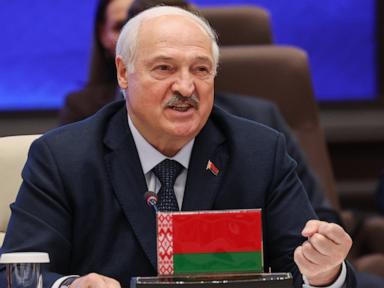
Alexander Lukashenko is not begging. He is negotiating from a playbook written over three decades of outlasting every single Western leader who thought they could outsmart him. When news breaks of backchannel talks between Belarusian officials and American envoys regarding sanctions relief, the mainstream media treats it as a sign of weakness. That is a fundamental error. In the brutal calculus of modern geopolitics, opening a diplomatic channel is never an admission of defeat. It is a tactical maneuver designed to test defenses, probe division among allies, and extract concessions while giving up nothing of permanent value.
The Anatomy of Sanction Failure
To understand why these talks are happening now, you have to dismantle the lazy consensus surrounding Western sanctions on Belarus. When the European Union and the United States clamped down on Belarusian potash, oil products, and state enterprises in the wake of the disputed 2020 election and the 2021 Ryanair flight diversion, the consensus was unanimous. The economy would buckle. The elite would fracture. The regime would fall or surrender.
None of that happened. Why? Because the global economy does not stop for moral posturing. Potash is a fundamental agricultural input. Crops do not care whether the fertilizer comes from a democracy or an autocracy; they need potassium to grow. When Western ports closed to Belarusian carriers, the trade routes simply rotated ninety degrees east and south. Russian railways absorbed the volume, moving cargo through Ust-Luga and Vladivostok. Chinese buyers stepped in as willing sponges for industrial inputs.
I have spoken with logistics operators and trade compliance specialists who spent millions of dollars building elaborate software suites to track sanctioned goods. Meanwhile, a medium-sized export firm in Minsk simply registered a shell company in a Central Asian republic, changed the letterhead on a bill of lading, and cleared customs without breaking a sweat. The global financial system is too porous, too fractured, and too vast for unilateral or even multilateral Western sanctions to create an airtight seal. Sanctions create a heavy friction tax, but they do not stop commerce. They merely transfer the profits from legitimate businesses to clever middlemen in Dubai, Istanbul, and Tashkent.
The Longevity Insurance Policy
Here is the uncomfortable truth that Western foreign policy establishments refuse to acknowledge: sanctions are the best political survival insurance an authoritarian regime can buy.
Consider what happens when a state is cut off from Western capital markets and trade networks. Domestic political opposition groups that relied on Western grants, NGOs, or cross-border commercial ties instantly find themselves branded as foreign agents or treasonous actors. The domestic economy is nationalized or consolidated under loyalist oligarchs. Independent business owners who might have funded political resistance are forced to kneel before the state for protection, licenses, and permits just to survive the regulatory storm.
Sanctions eliminate market pluralism. They concentrate economic power entirely in the hands of the executive branch. When trade flows through shadowy, state-sanctioned intermediaries controlled directly by the ruling clique, the regime does not grow weaker. It grows leaner, meaner, and completely insulated from internal democratic pressures. Lukashenko didn't survive three decades in power by being economically orthodox; he survived by weaponizing economic isolation against his own domestic challengers. Every time Washington tightens the screws, Lukashenko tightens his grip on the internal security apparatus.
The Moscow Balancing Act
The conventional wisdom dictates that Lukashenko is a vassal of Moscow, entirely dependent on Vladimir Putin for survival, utterly devoid of independent agency. There is structural truth to this imbalance. Since 2020, Belarus has relied heavily on Russian financial bailouts, military integration within the Union State, and subsidized energy imports.
Yet, sovereign survival is an exercise in managing dependencies so that no single master holds a monopoly on your air supply. Lukashenko has spent thirty years perfecting the art of strategic balancing. He takes Moscow's money, accepts its military protection, and adopts its rhetoric when necessary, but he constantly guards his ultimate independence.
Why meet with a US envoy? Because it sends a subtle, unmistakable signal to the Kremlin. It reminds Moscow that Minsk is not a wholly owned subsidiary. It keeps a backdoor open to the West, ensuring that Putin cannot treat Belarus as a conquered province without facing diplomatic blowback. It is a classic wedge strategy. By dangling the prospect of a moderated foreign policy or minor humanitarian gestures, such as the phased release of political prisoners, Lukashenko forces Washington to engage, while simultaneously signaling to Moscow that he can manage Western pressures on his own terms.
The Theater of Transactional Diplomacy
When Western envoys sit down across from Belarusian officials, the public communiques always emphasize human rights, the plight of political prisoners, and the restoration of democratic norms. These are necessary talking points for domestic consumption in Washington and Brussels. But behind closed doors, the conversation is entirely transactional.
Political prisoners in Minsk are treated by the regime not as tragic victims of state repression, but as political inventory. Releasing them without receiving anything in return is considered bad governance. Trading them for sanctions relief, diplomatic normalization, or unfreezing specific financial channels is a hard-nosed negotiation.
When the West engages in these backchannel talks, it validates that transactional framework. It proves to authoritarian leaders around the globe that if you hold out long enough, endure the initial economic shock, and retain control of your coercive apparatus, the West will eventually grow tired. Western policymakers suffer from short attention spans driven by electoral cycles, media fatigue, and competing global crises. Belarus knows that Washington has conflicts in the Middle East, rising tensions in the Indo-Pacific, and domestic political drama dominating its bandwidth. By simply staying put, waiting out the storm, and offering minor, reversible concessions, Minsk can peel away sanctions layer by layer.
Dismantling the Fallacies
Let us address the persistent questions that dominate policy forums and think-tank panels.
Are sanctions working? If the objective is to collapse the regime, overthrow the leadership, or force a complete democratic transition, the answer is an unequivocal no. If the objective is to punish bad behavior and signal moral disapproval while achieving zero structural change, then sanctions are a roaring success. They are expensive, performative bureaucratic rituals.
Why won't the US lift sanctions entirely? Because doing so without securing significant, irreversible concessions looks like a humiliating retreat. It shatters the myth of Western deterrence. Therefore, diplomacy moves at a glacial pace through secret channels, where minor trade adjustments, transit exemptions, or targeted waivers can be quietly negotiated out of sight of the press corps.
The Realpolitik Blueprint
If you want to understand how this plays out in practice, stop reading press releases from foreign ministries and start looking at freight manifests, customs clearance data in the Caucasus, and banking flows through non-aligned financial hubs.
The realpolitik blueprint for dealing with entrenched authoritarian states is devoid of moral sentiment. It is about recognizing that states pursue interests, not values. Lukashenko understands his interests with absolute clarity: survival, control, and regime continuity. Until Western policymakers understand that no amount of economic pressure will break a dictator who is willing to let his population bear the cost of isolation, they will continue to chase ghosts.
The meeting between the Belarusian leadership and the American envoy is not a sign of surrender. It is a reminder that the world does not bend to Western moral urgency. Power recognizes power. And right now, the regime in Minsk is betting that the West's desire for diplomatic engagement outweighs its stomach for a protracted, fruitless economic stalemate. They are right.