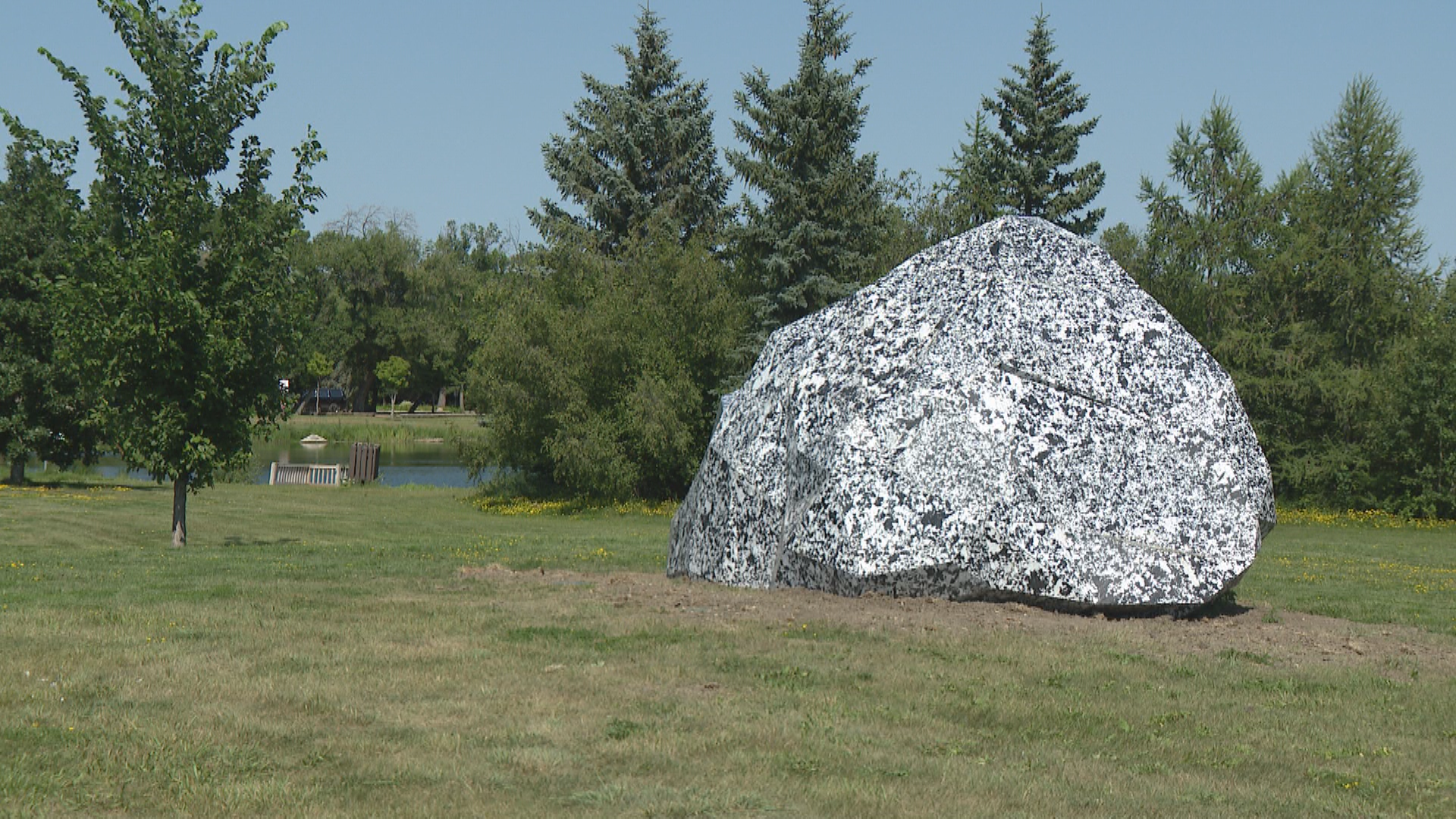
Everyone hates the sculpture. You hate it. The local radio hosts hate it. The commuter sitting in traffic on Idylwyld Drive hates it even more. When Saskatoon city council voted to uphold the funding behind a controversial $297,000 public art installation, the local comment sections erupted into predictable outrage. Another waste of taxpayer coin. Another monument to municipal vanity while pothole crews starve for budget.
The lazy consensus writes itself: bureaucrats are out of touch, modern art is a money laundering scheme for coastal elites, and real cities spend money on asphalt, snow removal, and sewer lines.
That consensus is entirely, comfortably wrong.
Saskatoon city councillors were not foolish to protect that $297,000 line item. They were accidentally practicing high-level urban psychology. If you want a city that actually functions as an engine of wealth and human curiosity, you should be cheering for the art. Not because it is pretty—it probably looks like a pile of painted sheet metal—but because public friction is the exact thing a growing city needs to buy.
The Comfort Trap of Municipal Populism
Let us look at the critique. The math is always deployed like a blunt instrument. Two hundred ninety-seven thousand dollars could buy a lot of gravel. It could patch a few hundred winter ruts on 22nd Street. It represents a tangible, measurable quantity of municipal service that every ratepayer can touch with their tires.
This is the accounting trap. It reduces a city to a glorified maintenance yard.
When you treat a municipality like a corporate facilities department, you optimize for zero friction. You fix the potholes, you trim the boulevards, you paint the crosswalks until the grid glows with sterile, suburban predictability. And in doing so, you kill the soul of the place.
I have watched mid-sized cities across North America obsess over cost containment until they bled every drop of cultural gravity. They saved millions on public art and community grants, only to wonder why their young talent packed up U-Hauls for Toronto, Vancouver, or Montreal at the earliest possible convenience. Young, ambitious people do not move somewhere because the asphalt is smooth. They move somewhere because something is happening. Sometimes, that "something" is a monumentally weird metal object that pisses people off so badly they argue about it in coffee shops for a month.
The Economics of Offense
Public art is never bought to be admired. That is the amateur mistake. Art in the public square is bought to provoke.
Think about the economics of attention. A city is competing in a brutal, borderless marketplace for human capital. Nobody tweets about a well-paved alleyway. A smooth road is an invisible baseline; it registers as zero in the human brain. You do not look at a flat piece of pavement and feel a sudden surge of civic pride or intellectual restlessness.
Now look at a $297K controversy. It generates free local media for weeks. It forces council meetings to run past midnight. It gives citizens a proxy war to fight over identity, taste, and the direction of the region. That friction creates a localized culture.
Imagine a scenario where Saskatoon defunded every piece of contentious art for the next decade, redirecting every penny into extra salt trucks. You would have the cleanest, most ice-free provincial backwater in the country, and it would be utterly dead behind the eyes.
Art functions as a lightning rod. It absorbs the ambient anxiety of a shifting demographic. Saskatoon is no longer just a grain-and-potash shipping hub; it is trying to anchor itself as an intellectual and cultural node on the prairies. Nodes require symbols. Symbols invite debate. Debate creates gravity.
The Myth of the Pragmatic Ratepayer
Let us address the populist argument directly. The people demanding that tax dollars stay strictly in the lane of core infrastructure are operating on a fundamental misunderstanding of how civic budgets actually work.
A municipal budget is not a household checkbook. You cannot simply sweep $297,000 out of a public art fund and drop it directly into pothole repair without breaking statutory funding streams, grant allocations, and long-term capital plans. A significant portion of public art funds are often locked behind specific cultural endowments or developer-contributed density bonuses that legally cannot be repurposed for civil engineering.
Even if you could shift the cash, the ROI on a pothole is zero percent. It depreciates the second the next freeze-thaw cycle hits.
A controversial art installation, however, operates like venture capital. Most venture bets fail. Some return multiples. A piece of art that sparks intense civic polarization achieves something rare: it forces a community to define what it is not. When citizens rally against a piece of public sculpture, they are articulating a shared sense of local identity in real time. They are drawing a line around their values.
You cannot buy that kind of self-awareness with a load of gravel.
The Real Scandal
The real scandal in Saskatoon isn't that the city spent $297,000 on a piece of metal people find confusing. The real scandal is that we expect our municipal governments to act as emotionless utility providers rather than patrons of a living, breathing culture.
When councils cave to the vocal minority who want every public dollar tied to a utility pole or a sewer pipe, they capitulate to a small-town scarcity mindset. They signal to the world that Saskatoon is terrified of its own shadow, unwilling to take aesthetic risks, and defensive about its place in the world.
That is the path to irrelevance.
The councillors who held the line on this funding understood something their loudest critics missed. Leadership isn't about doing what makes everyone comfortable on a Tuesday morning. It is about absorbing the groans of the short-sighted to build a place that people actually give a damn about on a Friday night.
Let them build the sculpture. Let it be weird. Let it rust, or shine, or offend every traditional sensibility within a five-block radius.
Your city doesn't need another smooth road. It needs a spine.