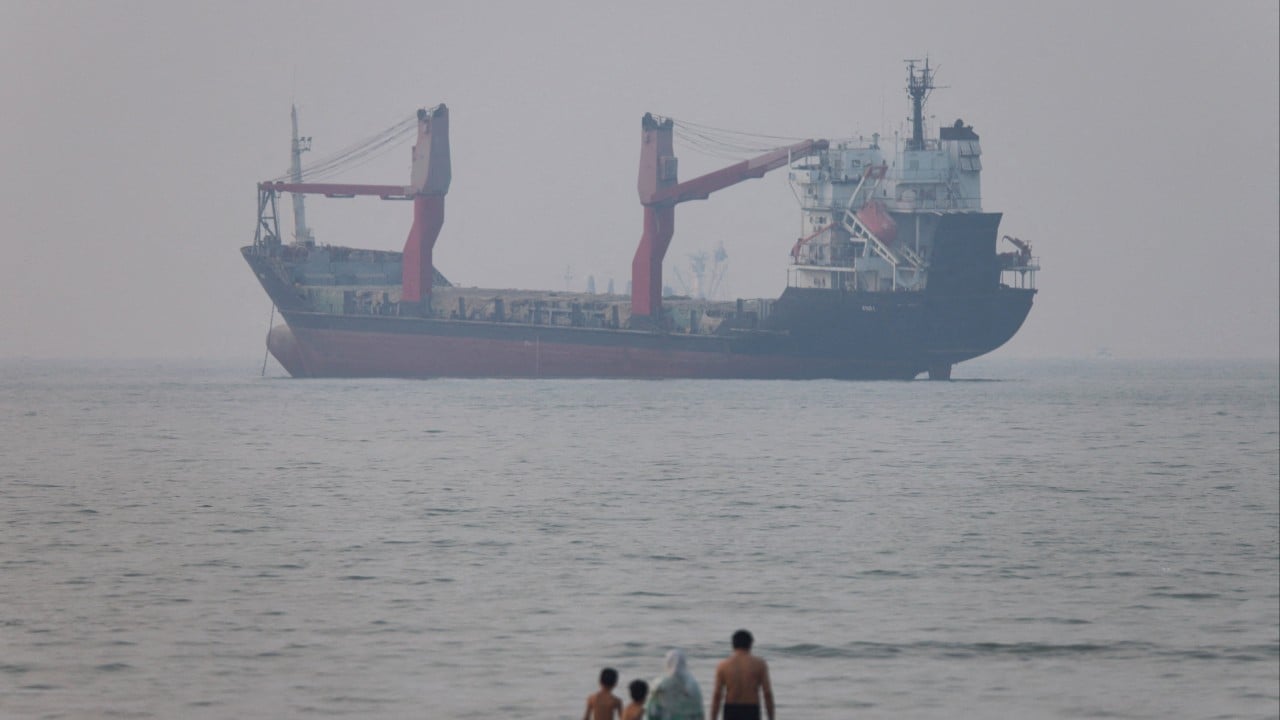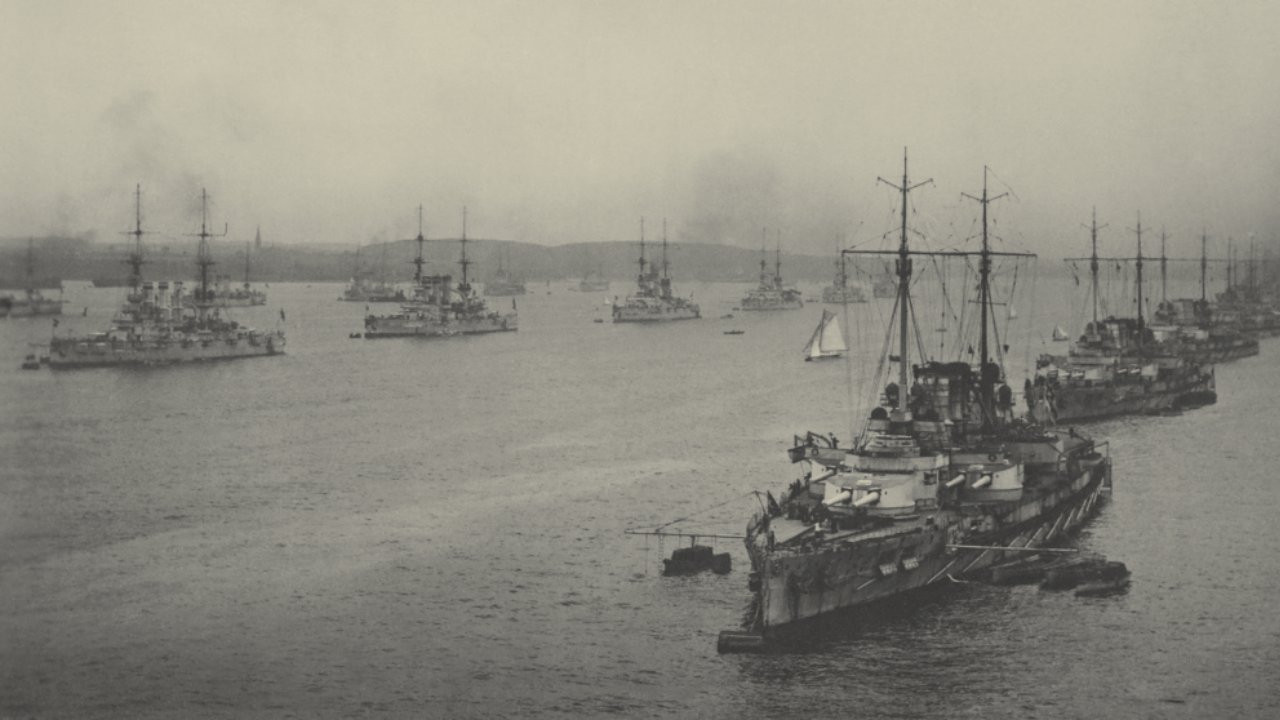
On a quiet June morning in 1919, the British Royal Navy found its triumph turned to ash. Within the cold, sheltered confines of Scapa Flow, Scotland, the Imperial German Navy executed a calculated act of defiance that defied the logic of the armistice. Rear-Admiral Ludwig von Reuter, fearing his interned fleet would be seized as spoils of war by the Allied powers, signaled his commanders to open their seacocks and wreck their own vessels. Fifty-two ships plunged to the seabed, creating the largest single-day loss of naval tonnage in history.
This was not merely a military maneuver. It was a final, desperate assertion of pride for a nation reeling from defeat. While the British viewed the event as an act of bad faith and a breach of the uneasy peace, the German crews saw it as the ultimate protection of their professional dignity. They refused to let their steel serve the victors. Yet, the story of this submerged graveyard does not end with the cooling of the Great War. It extends into the nuclear era, transforming these sunken relics into an unexpected resource for the contemporary world.
The maritime tragedy at Scapa Flow occurred because communication was as broken as the political landscape of Europe. Von Reuter operated in a vacuum of information. He knew the armistice had kept his fleet under Allied supervision, but he lacked clarity regarding the final terms of the Treaty of Versailles. Convinced that the British intended to force his hand and seize the warships on the day of the treaty's signing, he opted for destruction. He issued his secret order, and by evening, the fleet was gone.
What the German sailors did not know was that their actions were based on a misunderstanding of the peace conference’s timeline. The ultimatum they feared was not immediate. Their frantic scramble to destroy the fleet, which resulted in the final nine German casualties of the First World War, was a sacrifice predicated on a ghost.
Years later, the seabed off the Orkney Islands became an unlikely treasure trove. The ships that were not raised for scrap metal during the interwar period remained submerged, shielded by the deep, dark water. This isolation proved historically significant when the world entered the atomic age.
When the United States conducted the Trinity nuclear test in 1945, the atmosphere was permanently altered. Subsequent weapons testing by global powers dispersed radioactive isotopes across the globe. Modern steel, produced using atmospheric air, began to contain trace amounts of these particles. While this radiation is entirely safe for common infrastructure, it presents a problem for hyper-sensitive equipment. Instruments tasked with measuring radiation, or those involved in deep-space research and quantum physics, require materials with absolutely minimal background noise.
This created a niche demand for low-background steel. The battleships and cruisers at the bottom of Scapa Flow, forged before the nuclear age, had been bathed in seawater since 1919. They were untainted by the radioactive fallout that permeated the post-1945 world. As a result, segments of these wrecks became incredibly valuable. Engineers and scientists sought out this pre-nuclear metal to shield delicate detectors. The very ships designed to carry artillery now serve to protect the most sensitive technologies of the modern era.
The irony is sharp. The German fleet was sent to the bottom of the ocean to prevent it from being useful to the Allied navies, only to become a vital asset for scientific progress a century later. Today, most of the salvage operations have ceased. The remaining wrecks are protected under Scottish law, designated as scheduled monuments and marine sites.
Divers now descend to these sites to explore the twisted, barnacle-encrusted remains of the High Seas Fleet. They do not see mere scrap metal; they see a frozen moment of history where duty, honor, and strategic miscalculation collided. The silence of the seabed offers a stark contrast to the violence of the day the ships were scuttled.
The transition of these wrecks from naval waste to scientific necessity highlights the strange ways historical events echo through time. We often view the past as a finished chapter, a static narrative of dates and decisions. Yet, the material reality of that past remains active. The steel that von Reuter sank to spite the British is now contributing to medical imaging, quantum experiments, and the exploration of the cosmos.
The seven remaining wrecks—the König, Markgraf, and Kronprinz Wilhelm among them—sit as silent sentinels. They remind us that the consequences of human conflict are rarely contained within the timeframe of the battle itself. Even as the metal slowly succumbs to the salt and the current, its original function has been completely overwritten by the requirements of a different age. We preserve these ships not because they won the war, but because they survived to witness the world that followed.
Future researchers may eventually extract more material from the depths if the need for low-background metal outstrips the supply. For now, the deep waters of Scapa Flow hold the secret to why the fleet was lost, and why that loss remains essential to the way we understand the universe today. The final act of the Imperial German Navy did not end in total oblivion. It ended in a slow, submerged evolution.