The ring light does not care who is watching. It casts a sterile, glowing halo on the walls of a room that could belong to anyone. A phone sits rigidly on its tripod, framing a face illuminated by pixels and ambition. Millions of people scroll through feeds every single day, looking for a distraction, a joke, a reason to smile while commuting or sitting alone in the dark. To them, the creators on the other side of the glass are immortal. They are fixed entities of entertainment, trapped forever in a perpetual loop of high energy and effortless charm.
Then, the connection drops.
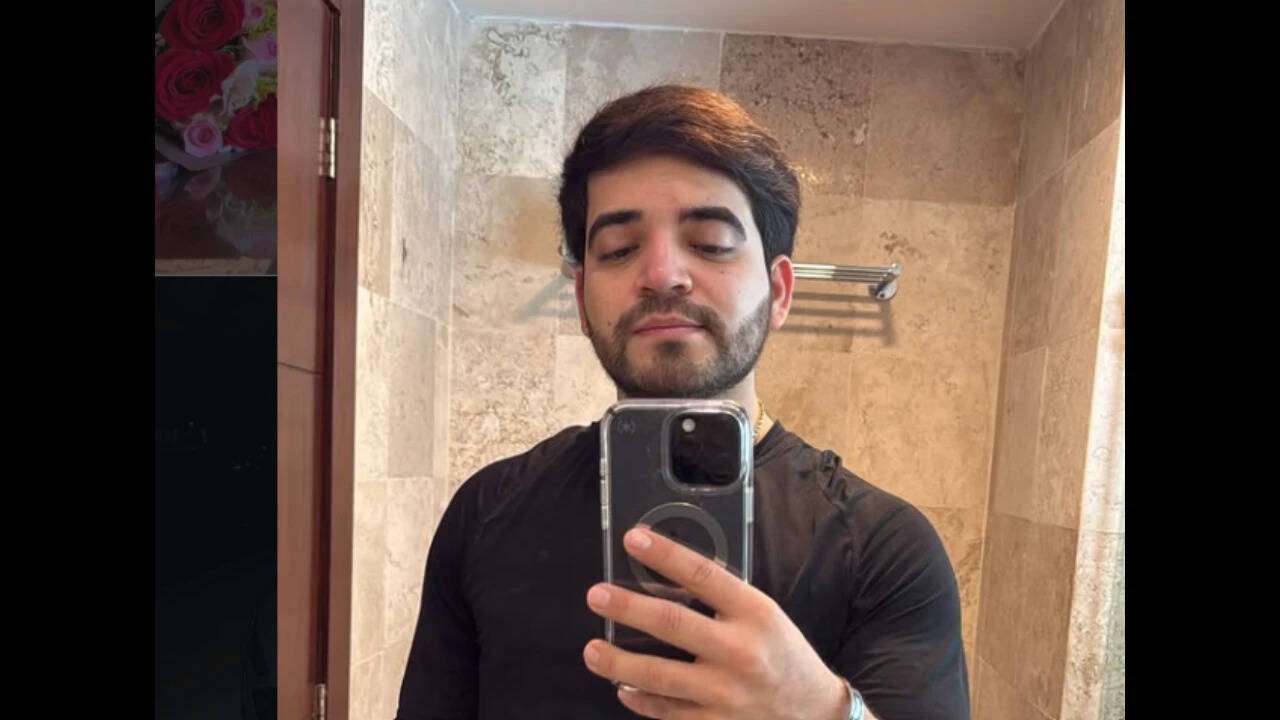
Cesar Gastelum knew the digital architecture of modern attention better than most. Operating out of Culiacan, Sinaloa—a city where the physical reality of the streets often clashes violently with the sanitized sheen of social media—he had built a following by bridging two entirely different worlds. On one side stood the vibrant, fast-paced economy of TikTok, where every trend is an invitation to belong. On the other side stood a geographic reality defined by tension, shadows, and an undercurrent of danger that most viewers across the globe could only imagine as fiction.
For the modern digital creator, streaming is an act of radical exposure. You invite thousands of strangers into your personal space. You perform live, reacting in real time to comments, gifts, and controversies. There is no safety net of editing. There is no second take. When you press go live, you surrender your privacy entirely to the algorithm and the audience.
On that particular day, the broadcast began just like any other. The chat moved in a steady cascade of emojis and greetings. Gastelum engaged with his audience, offering the casual banter that his followers had come to expect. It was ordinary. It was mundane. It was life happening on a smartphone screen.
Silence.
The abrupt shift from ambient noise and human speech to absolute nothingness is one of the most unsettling experiences of the digital age. A sudden disruption in a livestream does not immediately register as tragedy. Viewers assume a bad connection. A dropped signal. A phone battery dying at the worst possible moment. The chat continued to scroll for precious seconds, filled with questions marks and bewildered queries.
Where did he go?
Is the stream lagging?
Cesar?
The truth, when it pierced through the digital veil, was starkly physical and entirely permanent. Cesar Gastelum was shot dead during that live broadcast in Culiacan. The camera remained fixed, broadcasting an empty room or a altered perspective to an audience that transitioned in mere seconds from casual spectators to witnesses of a violent end.
To understand the weight of this event, one must look past the immediate shock value of a crime captured on video. We live in an era where the boundary between public persona and private existence has been entirely erased. Creators take their audiences everywhere—into their kitchens, their cars, and the streets of their hometowns. They monetize their presence, trading intimacy for engagement. But this hyper-visibility comes with a profound, terrifying vulnerability.
When you broadcast from a place like Culiacan, the background of your video is never just a backdrop. It is a living, breathing environment laden with historical context and systemic pressures. The city has long been synonymous with the complexities of the drug trade and the omnipresence of cartel culture. It is a place where public displays can attract unintended attention, where the casual bravado of social media can intersect brutally with the rigid, unforgiving codes of the underworld.
Gastelum was not merely an observer of this reality; he was navigating it under the microscope of a digital audience that demanded authenticity at any cost. Audiences today reward proximity to danger. They want thrills. They want to see the unfiltered texture of life in places far removed from their own comfortable suburbs. Creators feel the pressure to deliver, pushing boundaries, streaming from locations that carry inherent risks, all to satisfy the insatiable hunger of the feed.
Consider the psychological toll on the digital community that watched it unfold. Thousands of people watched a human life extinguish in real time, mediated only by glass screens and fiber-optic cables. They were separated from the violence by thousands of miles, yet intimately connected to it through the illusion of presence that streaming provides.
The aftermath of such an event leaves a peculiar kind of grief in its wake. It is decentralized, fragmented across comment sections, fan pages, and trending topics. People who never met the man feel a strange sense of loss because they invited him into their daily routines. He was the voice playing in their headphones while they worked, the face they checked in on before falling asleep.
And then there is the chilling reminder of how fragile our digital footprints truly are.
We pour our lives into the cloud, uploading memories, building brands, chasing metrics, and cultivating communities. We treat the internet as an enduring monument to our existence. Yet, as Gastelum’s final broadcast demonstrated, the digital realm can turn on a dime from a space of connection into a permanent archive of tragedy.
The ring light in that room in Culiacan eventually went out for good. The phone was collected, the investigation opened, the headlines written and consumed within a twenty-four-hour news cycle before the algorithm moved on to the next viral sensation. Millions of other streams started up simultaneously across the globe, filling the void with new faces, new voices, and new illusions of safety.
Yet, the questions remain suspended in the digital ether. How much of ourselves are we willing to trade for the glowing approval of strangers? At what point does the performance of modern life demand more than a person can safely give?
The screen goes dark. The room is quiet again. And somewhere out there, another notification chimes, demanding our attention.