The air inside the boardrooms of the Principles for Responsible Investment (PRI) usually carries the scent of expensive espresso and the heavy, invisible weight of $120 trillion in managed assets. It is a quiet space where the world’s most powerful fiduciaries decide which way the global financial winds will blow. For years, there was a conspicuous gap in the seating chart. One side of the global map was always described as a participant, a massive engine of growth, but never a true architect of the rules.
That changed with a quiet announcement regarding Clara Chan.
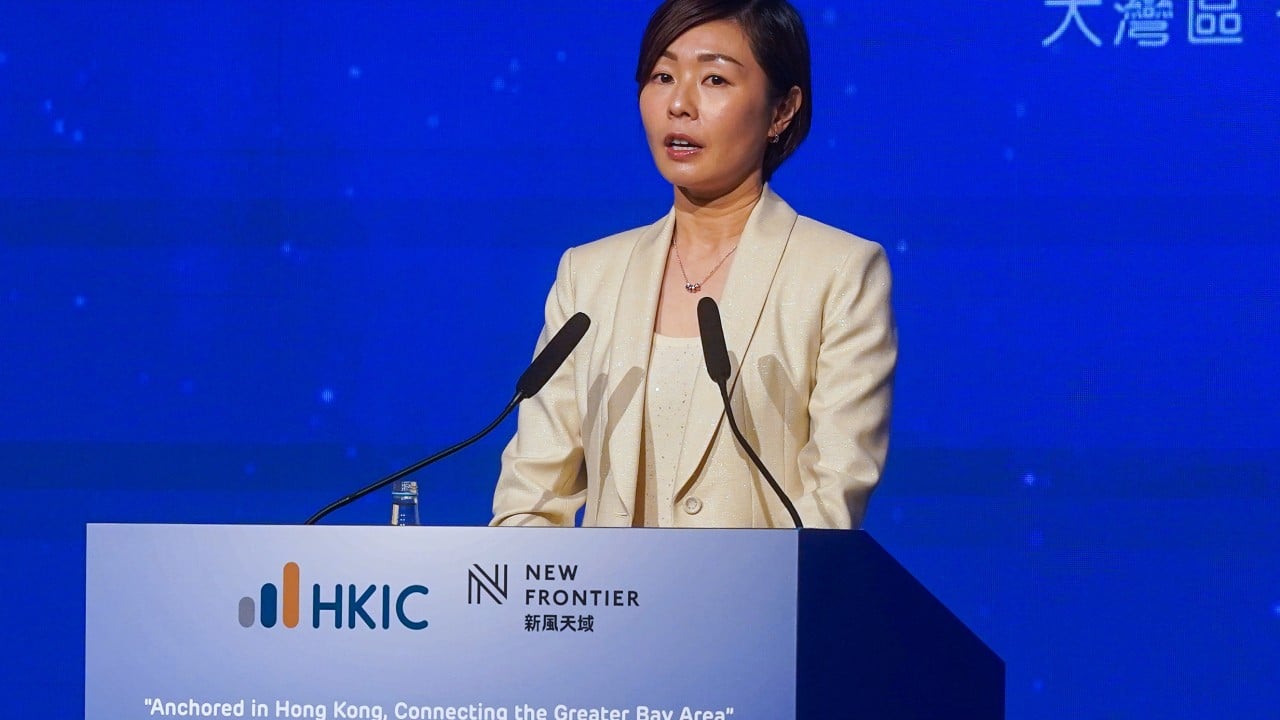
As the Chief Investment Officer of the Hong Kong Monetary Authority (HKMA), Chan didn’t just accept a board seat. She stepped into a role that no executive from a Chinese sovereign wealth fund had ever held. It was a moment of friction and fusion. To understand why this matters, you have to look past the dry press releases and see the chess board of global power. We are talking about the soul of how money behaves.
The Weight of a Trillion Dollars
Money is never just a number on a screen. It is a set of values translated into liquid form. When a sovereign fund—the literal savings account of a nation—decides where to park its billions, it isn't just seeking a five percent return. It is voting on the future of the planet.
For decades, the West dictated the "responsible" part of responsible investing. The London and New York offices drafted the frameworks. They decided what counted as "Green" and what was "Sustainable." Everyone else was expected to follow the manual. But the world is no longer a one-way street.
Chan’s arrival at the PRI board signifies a shift in the tectonic plates of financial diplomacy. She represents the Hong Kong Monetary Authority, an institution that sits at the jagged edge where Western capital markets meet the vast, complex reality of Chinese state-owned enterprise and private innovation.
Think of the global financial system as a massive, high-speed train. For years, the engineers were all from the same few schools, reading from the same blueprint. Now, someone who understands the tracks on the other side of the mountain has walked into the cabin. They aren't just a passenger anymore. They have a hand on the throttle.
The Invisible Stakes of the Boardroom
You might wonder why a seat on a board about "principles" matters in a world of high-interest rates and geopolitical skirmishes.
The reality is that these "principles" are the gatekeepers of modern capital. If a company cannot meet the ESG (Environmental, Social, and Governance) standards set by bodies like the PRI, it loses access to the cheapest, most stable pools of money on Earth. It becomes an outcast.
Until now, there has been a persistent, simmering tension between how China views its transition to a green economy and how the UN-supported PRI measures that transition. By bringing Clara Chan into the inner circle, the dialogue stops being a series of shouted demands across a canyon. It becomes a conversation across a mahogany table.
This is about the "Sovereign" in Sovereign Wealth. These funds represent the long-term survival of their people. When Chan speaks, she isn't just representing a bank; she is representing the financial stability of one of the world's most vital trade hubs.
Bridging the Great Divide
The challenge is immense. On one hand, you have the Western appetite for transparency and specific metrics. On the other, you have the East’s focus on massive-scale infrastructure and state-led transitions that don’t always fit neatly into a McKinsey slide deck.
Chan has spent her career navigating this specific tension. She is known for a certain clinical precision—a trait necessary when you are managing the Exchange Fund, which backs the Hong Kong dollar. Her job has always been to be the bridge.
But bridges get walked on from both sides.
The move is a gamble for both parties. For the PRI, bringing in a Chinese sovereign heavyweight risks criticism from hawks who believe the standards might be watered down to accommodate Beijing. For Hong Kong, it means opening their books and their philosophies to a level of international scrutiny that can be uncomfortable.
Yet, the alternative was irrelevance.
If the world’s second-largest economy and its primary financial gateway remained outside the room where the rules were written, the rules would eventually cease to matter. A standard that doesn’t apply to the biggest players isn't a standard; it’s a suggestion.
The Human Element in the Ledger
Statistics tell us that Chinese sovereign funds manage trillions. But those trillions are made of human decisions. They are the pensions of teachers, the infrastructure of future cities, and the research grants for the next generation of solar cells.
When we strip away the jargon of "fiduciary duty" and "multi-stakeholder governance," we are left with a simple truth: the world is trying to figure out how to stay wealthy without burning the house down.
Chan’s election wasn't a fluke. It was a recognition of necessity. The board members who voted her in—representatives from some of the largest pension funds in Europe and North America—know that you cannot solve a global climate crisis or a global wealth gap by ignoring the largest pool of capital in the East.
There is a specific kind of loneliness in being the "first." You carry the expectations of an entire region on your shoulders. Every vote Chan casts and every policy she influences will be analyzed for signs of bias or "softness."
Beyond the Press Release
The quiet rooms of the HKMA are a long way from the street markets of Kowloon, but they are inextricably linked. The stability of the currency, the price of imported goods, and the viability of local businesses all depend on how well Hong Kong can play the global game.
This board seat is a signal that the game has changed.
We often talk about "globalization" as if it is a finished product, something we bought off a shelf in the 90s. It isn't. It is a living, breathing, and often painful process of negotiation. It is about who gets to define what "good" looks like in the world of business.
Chan is stepping into a role where she must translate the needs of a massive, state-led economy into the language of international finance. It is a role that requires more than just a mastery of spreadsheets. It requires a mastery of human psychology and the ability to find common ground where most see only a fence.
The real story isn't the title or the board seat. It is the end of the era where the East followed and the West led. We are entering a period of co-authorship. It will be messy. It will be full of disagreements and late-night negotiations. There will be moments where the bridge feels like it might buckle under the weight of competing interests.
But for the first time, the map is complete. The empty chair has been filled. The person sitting in it knows exactly what is at stake, and she isn't there just to listen. She is there to write the next chapter of how the world's money is allowed to move.
The world of high finance just became a little less distant, and a lot more complicated.
In the hushed corridors where trillions are moved with a whisper, the voice in the room now has a different accent, a different history, and a very different set of pressures. That isn't just a win for a single executive or a single city. It is a cold, hard admission that the future of the global economy cannot be decided in a vacuum. The window is open, the light is on, and for the first time, everyone is finally at the table.


