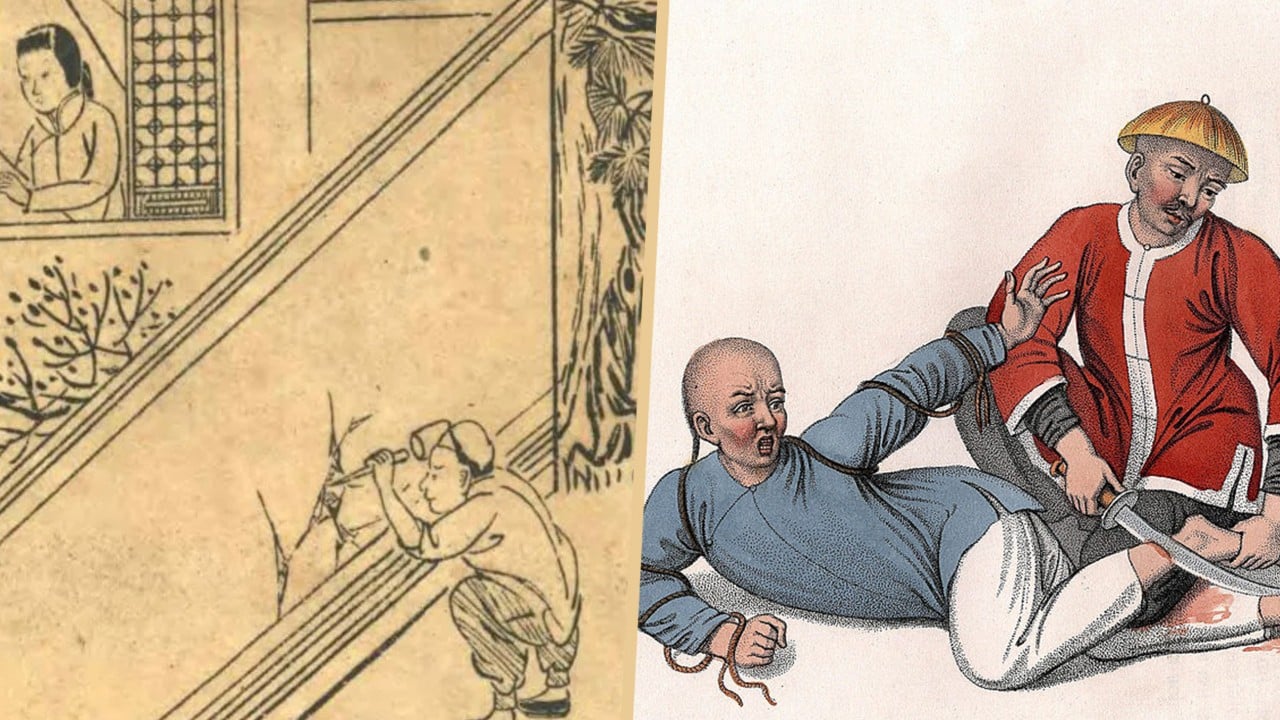
You probably imagine ancient Chinese thieves as simple street thugs or desperate peasants. That's a mistake. In the bustling markets of the Tang Dynasty or the crowded alleys of Ming-era Beijing, thievery wasn't just a crime. It was a craft. It was a discipline that required more technical training than most legitimate trades. These weren't just people looking for a quick payout; they were part of a complex social ecosystem with its own laws, gods, and terrifyingly effective techniques.
If you want to understand the reality of "mastering the shadows," you have to look past the martial arts movies. The history of Chinese crime reveals a world where a thief could walk through a locked door without a sound or empty a room while the occupants were wide awake. It's a gritty, fascinating, and sometimes bizarre history that most history books ignore because it’s not about emperors or wars. But it's about the people who truly controlled the night.
Why Ancient Chinese Thieves Were Specialized Professionals
Society back then didn't see thieves as a monolith. You had different "ranks" and specialties. This wasn't a free-for-all. Like the guilds of Europe, Chinese thieves operated in organized groups often referred to as the "Green Gang" in later periods, though their roots go back much further.
The "Gentlemen of the Beam" (Liangshang Junzi) is the most famous term for them. Legend says a scholar once saw a thief hiding on a ceiling beam and, instead of calling the guards, lectured him on morality. While the story is charming, the reality was much more surgical. These specialists trained from childhood. They developed what they called "Light Body" skills. No, they couldn't fly. They just knew exactly how to distribute their weight on fragile roof tiles so nothing would crack.
Thieves categorized themselves by their methods. Some were "climbers" who specialized in heights. Others were "burrowers" who literally dug through the pounded-earth walls of homes. If you lived in a rich neighborhood, you didn't just lock your door. You worried about someone coming through the floor.
The Brutal Training Behind the extraordinary skills
Don't think for a second this was easy. To become a professional thief in ancient China, you had to endure a physical regimen that would break a modern athlete. It wasn't just about strength; it was about sensory deprivation and extreme finger dexterity.
I've looked into the training manuals and oral histories passed down through folk tradition. New recruits often spent hours standing in silence to learn how to hear a heartbeat through a wall. They practiced "palming" objects by moving heavy iron balls through their fingers for years. This gave them the grip strength to scale a wall using only tiny crevices in the brickwork.
They also used "smoke" or "spirit incense." This wasn't magic. It was chemistry. They'd use herbal mixtures, often containing ingredients like aconite or hemp, to blow sedative smoke into a room through a bamboo tube. By the time they entered, the residents were in a drug-induced stupor. It's dark, it's efficient, and it worked.
The Five Elements of Stealth
Thieves often relied on a system loosely based on traditional philosophy to plan their heists. They studied the environment.
- Metal: Using thin wires or hooks to lift latches from the outside.
- Wood: Climbing trees or wooden pillars to bypass ground-level security.
- Water: Moving during heavy rain to mask the sound of footsteps and tools.
- Fire: Using small distractions or "fireflies" (tiny sparks) to lure guards away.
- Earth: Tunneling techniques that could take weeks of patient digging.
Tools of the Trade That Would Shame Modern Lockpicks
Ancient Chinese locks were incredibly sophisticated. They used "split spring" mechanisms that were hard to manipulate. To counter this, thieves developed the "Flying Claw" and specialized picks made of tempered steel.
The "Flying Claw" wasn't just a grappling hook. It was a multi-jointed tool that could grip onto almost any surface without making a loud metallic clang. They wrapped the chains in silk or leather to keep things quiet. They also used something called a "cricket bellows"—a small device that could squirt oil into a lock or hinge to ensure the door wouldn't creak.
Think about the discipline required here. You're hanging from a silk rope, thirty feet up, using a custom-made tool to silently pick a lock while the wind is howling. One mistake meant a quick trip to the executioner’s block. The stakes weren't just a jail sentence. They were life and death.
The Secret Language and the Thieves Code
You couldn't just walk up to someone and ask to join the underworld. They used a "hidden tongue" or hanghua. This was a coded dialect that changed every few years to stay ahead of the authorities. If you didn't know the word for "gold" or "constable" in their slang, you were an outsider.
Surprisingly, these groups had a strict ethical code. They often avoided stealing from the desperately poor, not out of the goodness of their hearts, but because it was bad for business. It drew too much heat for too little reward. They also had "protected" zones. Certain temples or guesthouses were off-limits because they were under the protection of a specific gang leader.
If a thief broke these rules, the gang handled it. Punishment was often more severe than what the government would do. We're talking about broken fingers or permanent exile. This internal policing kept the "industry" stable.
How the Rich Tried to Stop Them (and Failed)
The arms race between thieves and the wealthy was intense. Rich merchants didn't just rely on walls. They hired "Night Watchmen" who walked the streets with gongs and lanterns. But a gong is predictable. If you know the watchman passes every fifteen minutes, you have a fourteen-minute window.
Some estates used "alarm floors"—loose boards that would squeak or bells hidden behind curtains. The most effective defense was actually the "Tomb Guard" dog. These weren't your typical pets. They were trained to be silent killers. They wouldn't bark to warn you; they'd just wait in the dark and strike.
Yet, the thieves almost always found a way. They used "meat decoys" laced with the same sedative herbs they used on humans. Or they'd use a "human mimic" technique, where one thief would make the sound of a cat or a bird to mask the noise of another thief moving.
The Downfall and the Legacy
As China moved toward the modern era, these ancient methods started to fade. Gunpowder and more advanced mechanical security changed the game. But the DNA of these skills didn't just vanish. You can see echoes of these techniques in traditional Chinese opera and martial arts. The "acrobatic" elements we see today in films often draw directly from the real-life training of those ancient ceiling-stalkers.
Honestly, we should stop looking at these figures as just criminals. They were masters of physics, psychology, and engineering. They operated in a world without electricity, using only their senses and handmade tools to achieve things that seem impossible today.
If you want to apply any of this "shadow wisdom" to your own life—minus the crime—it's about the power of observation. The ancient thief succeeded because they noticed the things everyone else ignored. They knew which floorboard was loose, when the wind would shift, and how a lock felt under a needle.
Start by practicing your own situational awareness. Next time you're in a room, find three exits you didn't notice before. Listen to the rhythm of the building. Success in any field comes from seeing the details that others are too busy or too loud to notice.
Check out the works of Pu Songling in Strange Tales from a Chinese Studio if you want more "eyewitness" accounts of these figures. The stories are half-myth, but the descriptions of the thieves' tools and movements are rooted in the very real history of China's professional underworld.