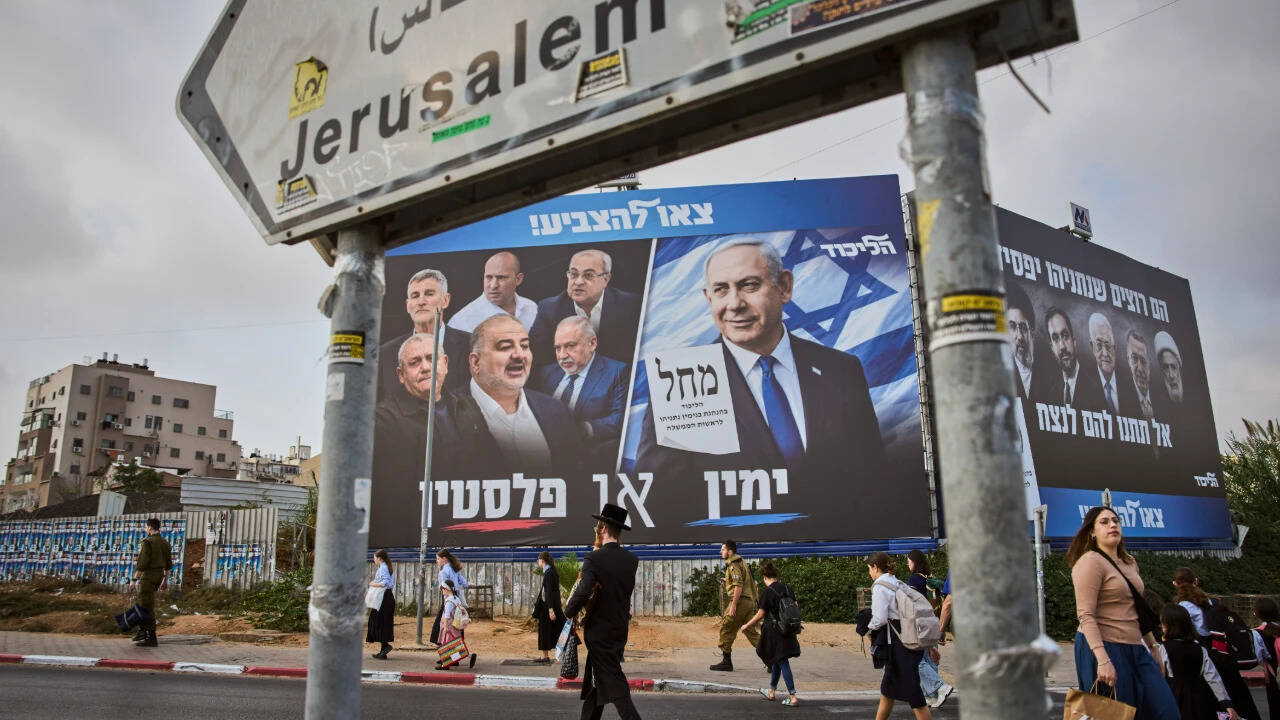
Military momentum rarely translates cleanly into ballot box magic. In Israel's upcoming elections, Prime Minister Benjamin Netanyahu is betting his entire political survival on a simple premise: voters will forgive the catastrophic failures of October 7, 2023, if they believe he delivered decisive security victories in Gaza and Lebanon.
Honestly, that's a massive gamble. And if you look closely at Israeli political history and current voter sentiment, the math doesn't automatically work in his favor.
Let's cut straight to the answer you're looking for. While tactical military successes against Hamas and Hezbollah have undeniably boosted Netanyahu's polling numbers from their post-October 7 lows, turning those gains into an outright Knesset majority remains an uphill battle. Israeli voters hold two competing thoughts in their heads at the exact same time. They applaud the intelligence coups and military operations in the north, yet a stubborn majority still holds the Prime Minister directly responsible for the worst intelligence and security collapse in the country's history.
The Security Paradox in Israeli Politics
You can't understand the current Israeli electoral mood without looking at the psychological whiplash of the past three years. Following the October 7 attacks, Netanyahu's Likud party cratered in virtually every major poll conducted by the Israel Democracy Institute and Channel 12. People were furious. The "Mr. Security" brand—the exact image Netanyahu spent decades cultivating—seemed permanently shattered.
Then came the military campaigns in late 2024 and throughout 2025. The systematic dismantling of Hezbollah's leadership in Lebanon, the pager operations, and the sustained pressure on Hamas leadership in Gaza shifted the national mood. Suddenly, Netanyahu wasn't just the guy who oversaw a disaster. He was the wartime leader who stared down international pressure and struck hard at Iran's regional proxies.
Likud began climbing back in the polls. By mid-2026, surveys showed Netanyahu's bloc recovering significant ground, making him competitive again in hypothetical head-to-head matchups against opposition figures like Benny Gantz, Yair Lapid, and Naftali Bennett.
But here's what most outside observers miss when they look at those rebounding numbers.
In Israel, polling recovery doesn't equal a governing coalition. Under Israel's proportional representation system, you need 61 seats out of 120 in the Knesset to form a government. Right now, the ceiling for Netanyahu's right-wing and ultra-Orthodox bloc remains stubbornly close to the mid-50s in most consistent polling averages.
Why? Because tactical wins don't erase strategic blame.
When I speak with analysts who track Israeli voting behavior closely, they point to a persistent ceiling. Voters who abandoned Likud after October 7 didn't suddenly turn into left-wing peaceniks. They moved to other right-wing or center-right options—figures like Naftali Bennett or Avigdor Lieberman—who offer a hawkish security stance without the baggage of Netanyahu's long tenure or his refusal to establish a state commission of inquiry into the October 7 failures.
What Most People Get Wrong About the "Mr. Security" Brand
There's a common misconception in Western media that Israeli voters simply swing right whenever rockets fly. That's overly simplistic. Historically, major security shocks in Israel actually tend to punish incumbents, even when the military eventually prevails on the battlefield.
Look at Golda Meir after the 1973 Yom Kippur War. Israel won that war militarily in dramatic fashion, crossing the Suez Canal and encircling the Egyptian Third Army. Yet the public fury over the initial intelligence failure destroyed the Labor Party's decades-long hegemony a few years later. Look at Menachem Begin after the 1982 Lebanon War, or Ehud Olmert after the 2006 war with Hezbollah. Tactical wins rarely wash away the stain of initial unpreparedness.
Netanyahu is trying to break that historical curse. His strategy relies on three distinct pillars:
- Framing the narrative around total victory: By keeping the focus on military achievements against Hezbollah and Hamas, his campaign tries to make the election a referendum on strength rather than accountability.
- Exploiting opposition fragmentation: The anti-Netanyahu camp is a messy coalition of secular centrists, left-wing Democrats, hawkish right-wingers like Lieberman, and Arab parties. They agree on who they don't want, not on what comes next.
- Highlighting diplomatic survival: Despite intense friction with Washington and European capitals over the conduct of the wars, Netanyahu's supporters view his resistance to outside pressure as proof that only he can stand up to the world.
It's a clever playbook. Really clever. Yet it runs smack into domestic realities that security headlines can't cover up.
The Domestic Fault Lines Threatening Netanyahu's Coalition
If this election were strictly a debate over military strikes in Beirut or Rafah, Netanyahu would probably cruise to victory. It isn't. The internal fractures inside Israeli society are arguably just as explosive as the regional threats, and they cut directly into Netanyahu's base.
The Ultra-Orthodox Draft Crisis
Nothing threatens Netanyahu's coalition math more than the Haredi (ultra-Orthodox) military draft exemption issue. After years of grueling reserve duty—where hundreds of thousands of secular and national-religious Israelis left their jobs and families for months at a time—the public tolerance for blanket draft exemptions for yeshiva students evaporated.
The Israeli Supreme Court ruled that the government could no longer fund yeshivas whose students evade the draft. This put Netanyahu in an impossible vise. If he passes a law exempting Haredi men from service, he alienates moderate right-wing voters and his own national-religious base, whose sons bore a disproportionate share of the casualties in Gaza and Lebanon. If he enforces the draft, the ultra-Orthodox parties—Shas and United Torah Judaism—bolt the coalition, and his government collapses instantly.
Security gains in Lebanon don't solve that math problem. A reservist who has done 300 days of duty doesn't care how well the air force performed in the north if he feels the political leadership is actively protecting a sector of society from sharing the burden.
The Hostage Dilemma and Public Trust
The fate of the hostages taken on October 7 remains an open wound in Israeli public life. For over two years, massive weekly protests in Tel Aviv and Jerusalem accused Netanyahu of prolonging the war and torpedoing hostage deals to appease far-right coalition partners like Itamar Ben-Gvir and Bezalel Smotrich.
Even as military operations rescued some captives and recovered bodies, the fundamental divide never healed. Roughly half the country believes the government prioritized political survival and military pressure over bringing citizens home alive. You can't campaign your way out of that kind of visceral distrust with glossy ads showing fighter jets.
The Economic Squeeze
Wars are wildly expensive. Israel's credit rating took multiple hits from agencies like Moody's and S&P during the prolonged multi-front conflict. The war effort cost tens of billions of dollars, forcing tax hikes, budget cuts, and a higher cost of living in a country that was already one of the most expensive places in the OECD.
Voters vote with their wallets too. When families feel the pinch of higher VAT taxes and rising grocery bills while government ministries bloat to keep coalition partners happy, "security gains" start sounding a bit hollow at the kitchen table.
How the Opposition Could Still Blow It
If Netanyahu's path to 61 seats looks rocky, why isn't the opposition popping champagne? Because they've mastered the art of snatching defeat from the jaws of victory.
To beat Netanyahu, the opposition needs a unified message and a clear candidate who can pull soft right-wing voters away from Likud. Right now, they have too many cooks in the kitchen. Yair Lapid leads the established centrist Yesh Atid party, Benny Gantz represents the traditional defense establishment, Yair Golan has consolidated the left under The Democrats, and Naftali Bennett looms as the wildcard who could siphon off disgruntled Likudniks.
Here's the brutal reality of Israeli coalition politics: an anti-Netanyahu bloc almost certainly cannot reach 61 seats without relying on either Avigdor Lieberman (a hardline secular nationalist) or the Arab-majority parties like Ra'am and Hadash-Ta'al. Getting Lieberman and Arab lawmakers to sit in the same government—or even support one from the outside—during a period of intense regional conflict is practically a fantasy.
Netanyahu knows this. He doesn't necessarily need to win 61 seats on election night to stay in power. If he can block the opposition from forming a viable alternative government, Israel slides back into the political paralysis of 2019–2022, leaving Netanyahu sitting in the Prime Minister's chair as a caretaker leader indefinitely.
What to Watch as the Campaign Heats Up
If you want to know whether Netanyahu's security gamble is actually paying off, ignore the loud rhetoric from party rallies and watch three specific indicators over the coming months:
- The "Soft Right" Defection Rate: Keep an eye on polls testing Naftali Bennett or a united right-wing alternative. If Bennett consistently pulls 15 to 20 seats, those voters are coming straight out of Netanyahu's hide. If those numbers shrink back toward Likud, Netanyahu's security message is working.
- Haredi Voter Turnout: Watch how frustrated ultra-Orthodox voters react to the draft standoff. If Shas and United Torah Judaism fail to secure a permanent legislative fix before election day, disillusioned Haredi voters might simply stay home, dropping the bloc's seat count by two or three crucial mandates.
- The State Commission of Inquiry: Pay attention to whether public pressure forces the establishment of an official state inquiry into October 7 before voters head to the polls. Any formal testimony exposing pre-war intelligence failures will instantly drag the public conversation away from recent military wins and back to the worst day in Israel's history.
Follow those three metrics, skip the cable news punditry, and you'll see the real direction of Israel's elections long before the final ballots are counted.