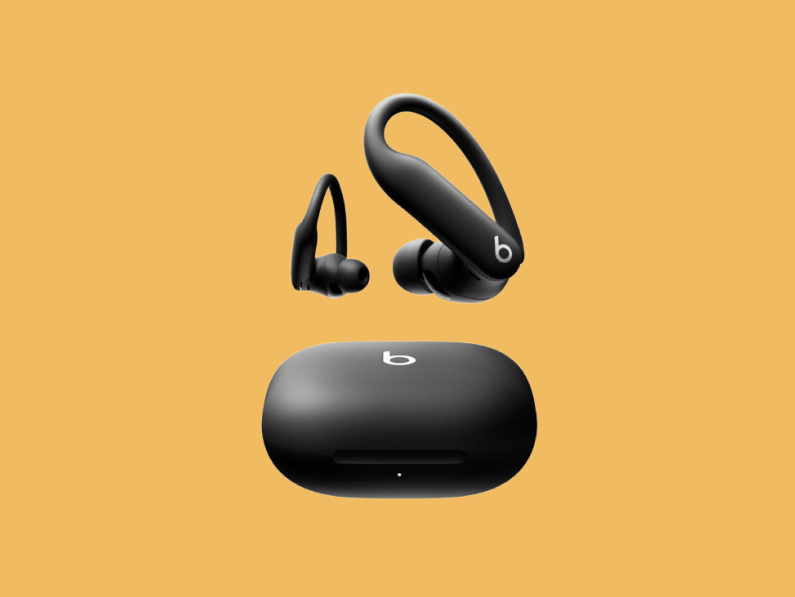
Selecting headphones for workouts, commutes, and long-haul travel fails when buyers treat acoustic performance, mechanical stability, and environmental isolation as independent features rather than competing constraints inside a fixed physical envelope. Every design choice in headphones for workouts, commutes, and travel alters how sound waves interact with the ear canal, how mechanical mass responds to acceleration, and how moisture or pressure degrades hardware reliability. To choose accurately, evaluate audio gear through four structural lenses: acoustic attenuation mechanics, biomechanical load transfer, environmental ingress and barometric stress, and signal-to-noise economics in high-ambience spaces.
The Structural Flaw in Typical Headphone Roundups
Conventional buying guides organize recommendations around brand reputation, battery claims, or subjective comfort impressions while treating workout, commute, and travel environments as interchangeable checklists. That approach obscures causal trade-offs. An earcup that excels at sealing out low-frequency cabin rumble traps heat during aerobic exertion, increases clamping pressure along the temporomandibular joint, and shifts mass outward on a lever arm during rapid head movement. Conversely, lightweight in-ear monitors or open-fit buds that stay planted during sprints leave low-frequency subway drones and jet engine harmonics largely unattenuated unless paired with aggressive digital cancellation and tight ear-tip seals. If you liked this piece, you should check out: this related article.
A second flaw is conflating passive isolation with active noise cancellation (ANC). Passive isolation relies on physical mass and acoustic impedance matching—dense foam, silicone ear tips, or circumaural cushions blocking high-frequency airwaves above roughly 1 kHz, where wavelengths are short enough for materials to reflect or absorb energy effectively. Active noise cancellation generates an anti-phase acoustic wave through a speaker driver to destructively interfere with incoming noise, which works best on predictable, low-frequency tonal and broadband rumble below roughly 500–1,000 Hz. Because wave propagation speed is finite and digital signal processing introduces group delay, ANC cannot cancel erratic, high-frequency transients such as clattering dishes, nearby voices, or sudden sirens. Understanding that division of labor immediately explains why no single form factor dominates every mobility scenario without compromise.
The Four Engineering Pillars of Mobile Audio
Rather than chasing a mythical "do-everything" model, map your primary use cases against four physical pillars that govern real-world performance. For another angle on this story, refer to the recent coverage from The Verge.
Acoustic Attenuation and Masking Economics
Every decibel of ambient noise you fail to block forces a listener to raise playback volume to preserve intelligibility or musical detail. In noisy transit cabins or busy gyms, raising volume to overcome background sound increases cochlear exposure and accelerates listening fatigue. Effective attenuation combines two mechanisms:
- Low-frequency cancellation: Feedforward microphones outside the housing sample incoming noise early, while feedback microphones near the driver monitor residual sound at the eardrum. Hybrid architectures pair both to widen cancellation bandwidth and stabilize performance against fit variations.
- High-frequency mechanical blocking: Dense memory foam tips, deep-insertion silicone flanges, or thick over-ear pads block mid-to-high frequencies where ANC phase alignment breaks down.
- Transparency and ambient pass-through: External microphones route outside sound back to the ear. The practical distinction lies in latency and wind-noise rejection; delay above a few milliseconds creates comb-filtering coloration with natural bone-conducted and direct sound.
Biomechanical Retention and Thermal Dissipation
Movement introduces linear acceleration and rotational torque, while exertion elevates skin temperature and sweat production. Retention depends on how forces distribute across anatomical contact points:
- Ear-canal friction and concha lock: In-ear designs rely on radial outward force from ear tips inside the cartilaginous outer canal, supplemented in sports models by wingtips or ear hooks braced against the cymba or cavum conchae.
- Clamping force and moment arm: Over-ear headphones clamp against the head and jawline. Heavier earcups increase rotational inertia during head turns, meaning clamping force must rise to prevent slip—at the cost of higher pressure on spectacle arms and skin.
- Microclimate heat buildup: Sealing the pinna inside a closed cup prevents convective and evaporative cooling around the ear. During intense workouts, trapped heat and sweat accelerate pad wear and can saturate acoustic ports or microphone grilles.
Environmental Ingress and Barometric Stress
Mobile audio operates outside climate-controlled rooms. Sweat is not pure water; it contains salts, oils, and acids that promote corrosion on solder joints, mesh screens, and charging contacts over repeated cycles. Ingress protection ratings indicate tested resistance to dust and water jets or immersion under laboratory conditions, not lifetime immunity to pressurized sweat or alkaline residue.
Travel adds a distinct physical stressor: rapid cabin pressure changes during climb and descent. Closed earcups and tightly sealed in-ear tips can create a pressure differential across the eardrum or flex delicate acoustic membranes if pressure-relief vents are obstructed or absent. Well-engineered travel housings incorporate controlled acoustic vents that equalize static pressure without leaking low-frequency isolation.
Signal Chain Reliability and Power Budget
Wireless mobile audio compresses digital audio over radio links subject to RF congestion in dense transit hubs, airports, and gyms. Codec selection, antenna placement inside plastic or metal housings, and packet-loss concealment determine whether audio stutters or drops when you turn your head or walk past interference sources. Battery capacity interacts directly with weight and thermal load: larger cells extend runtime for long flights, but add mass where it matters most—on the head or ear—and require careful thermal management during fast charging.
Environment-by-Environment Operating Logic
Evaluating each environment by its dominant physical constraints clarifies why form factors behave differently across scenarios.
High-Output Workouts
During running, lifting, or interval training, mechanical stability and moisture management take precedence over maximum low-frequency noise cancellation. Vigorous stride impacts and torso motion test retention; ear hooks or contoured fins distribute load better than friction alone. Sweat introduces both conductive moisture and salt crystallization, making sealed acoustic mesh, corrosion-resistant charging contacts, and washable or replaceable ear tips practical necessities.
Known fact: Over-ear closed-back headphones trap heat around the ears during sustained physical exertion, making them less suitable for high-sweat sessions than compact or stabilized in-ear designs. Educated hypothesis: As ultra-lightweight open-ear and bone-conduction designs mature, more athletes trading isolation for situational awareness on roads and trails will accept reduced bass extension in exchange for zero ear-canal occlusion and open-ear airflow.
The first operational trade-off in workouts is situational awareness versus isolation. Traffic on outdoor routes and moving equipment in gyms create hazards that complete acoustic sealing can mask, even when transparency modes are active. Choosing an open or ambient-aware approach lowers collision risk at the expense of punchy sub-bass in loud environments.
Daily Commutes
Commuting—whether on subways, buses, commuter rail, or walking through dense streets—is defined by variable noise spectra and frequent transitions. Subway tunnels and diesel engines generate heavy low-end rumble where ANC shines, while station announcements, approaching footsteps, and street traffic inject mid- and high-frequency transients that slip past active cancellation.
A practical commuting setup prioritizes fast, reliable ambient switching so you can hear platform alerts or street cues without pulling headphones off every two minutes. Fit consistency matters just as much: if ear tips shift while walking briskly, ANC effectiveness drops sharply because the acoustic seal at the ear canal is compromised.
Long-Haul Travel
Long flights and multi-hour train rides shift the optimization target toward sustained low-frequency attenuation, multi-hour comfort, and multi-day battery endurance. Cabin air is dry, seating is static, and continuous engine drone dominates the acoustic environment for hours at a time. Over-ear active noise-cancelling headphones often excel here because large earcups house bigger drivers and batteries while distributing weight across a padded headband—provided clamping force stays balanced over long stretches.
The second limitation in travel is physical bulk and charging discipline. Over-ear cases consume scarce carry-on or personal-item space, and running out of battery mid-flight leaves some ANC headphones dependent on passive acoustics that vary widely by model. Carrying a wired audio cable (where supported) and checking port compatibility before departure eliminates single-point battery failure.
A Step-by-Step Selection Workflow
Instead of shopping by superlatives, run a structured filter before comparing specific models.
- Rank your three environments by weekly hours and risk exposure. Assign primary, secondary, and occasional weight to workouts, commutes, and travel. Do not weight a once-a-quarter flight equally with five days of commuting or training if their trade-offs conflict.
- Select the primary form factor from physical constraints. Pick over-ear ANC when long-haul quiet and extended battery life lead and heat/bulk are acceptable; pick secure-fit in-ear models when sweat, movement, or pocketability lead; pick open or ambient-focused designs when outdoor awareness and airflow outrank isolation.
- Verify acoustic seal mechanics for your anatomy. Ear canal geometry and head shape vary widely across individuals. A technically superior ANC algorithm underperforms if ear tips fail to seal or earcups leak around glasses temples.
- Audit controls, microphones, and maintenance realities. Check physical button versus touch-control reliability with sweaty fingers or gloves, evaluate voice-call clarity in windy or noisy streets, and verify whether ear pads or tips are easy to clean or replace.
- Test against your worst-case scenario, not a quiet room. Judge fit, wind noise, and control responsiveness while moving or in realistic background noise rather than sitting motionless at a desk.
Where Conventional Advice Breaks Down
No hardware category solves every problem simultaneously. High-isolation designs that protect hearing in loud transit cabins can isolate you from environmental cues outdoors and feel stuffy during hard workouts. Lightweight, breathable designs that feel effortless during a run often lack the low-frequency attenuation needed to tame cabin rumble on a long flight. Furthermore, published specification sheets rarely capture how a specific ear tip or headband curve interacts with your individual anatomy, which remains a major source of real-world variance between reviewers and individual buyers.
Strategic Recommendation for Buyers and Builders
Treat personal audio selection as portfolio allocation across environments rather than a single-item jackpot. If your week splits sharply between high-sweat training and long-haul travel, pairing a dedicated, sweat-resistant workout set with a travel-focused noise-cancelling set—or choosing a versatile compact in-ear set with multiple tip sizes and strong ambient mode if you want one carry—will consistently outperform a compromise pick forced into incompatible roles. For product teams and curators building buyer guides, the decisive strategic move is to stop ranking products on abstract "best overall" scales and instead score them against explicit environmental failure modes: sweat and slip under load, seal loss on the move, high-frequency bleed in transit, and multi-hour pressure fatigue.