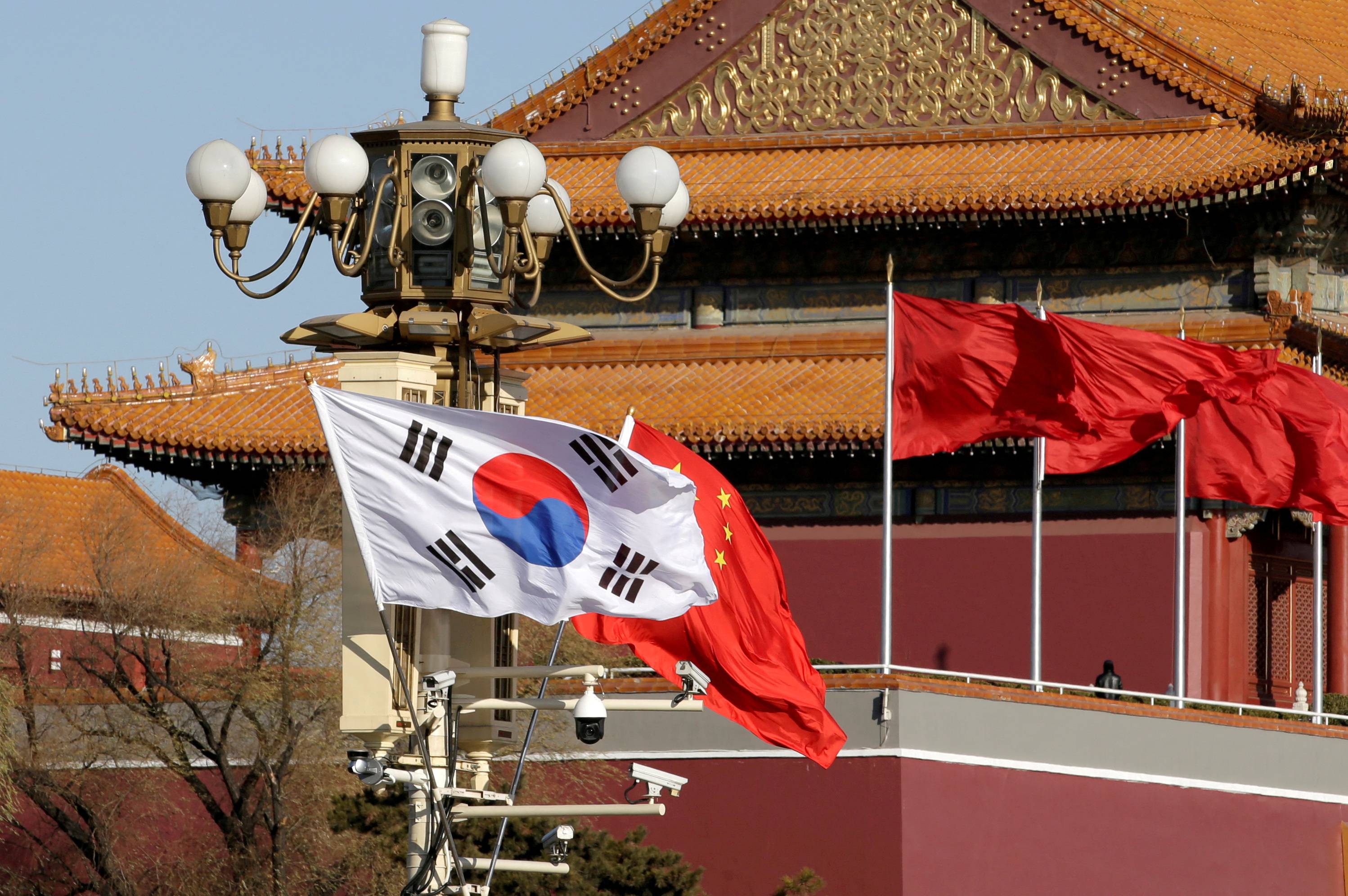
The media narrative is predictably frantic. The headlines scream that South Korea is "turning to China" as Donald Trump flirts with Pyongyang. It’s the kind of simplistic, binary reporting that ignores the actual mechanics of power in Northeast Asia.
They want you to believe this is a zero-sum game of alliances. They want you to think Seoul is pivoting away from Washington to seek comfort in Beijing’s arms because of a few scaled-back military drills.
This is amateur analysis.
South Korea is not "turning" anywhere. It is performing a high-wire act of statecraft necessitated by the fact that its security guarantees are no longer the fixed assets they were a decade ago. If you want to understand what is happening, stop looking for "loyalty" and start looking for "strategic autonomy."
The Myth of the Pivot
The consensus view—that Seoul is jumping ship to Beijing because Trump is playing golf-course diplomacy with Kim Jong Un—is a fundamental misunderstanding of the Lee Jae-myung administration’s foreign policy doctrine.
Pragmatism is the operative word here, not ideology.
For years, South Korea operated under the assumption that the U.S. security umbrella was a static constant. The 2026 reality is different. With Washington distracted by operations in Iran and a pivot toward hemispheric defense, the "security calculus" has shifted. Seoul isn't choosing Beijing out of love; they are hedging against the volatility of American domestic politics.
Imagine a scenario where your primary insurance provider announces they might stop covering your house during a storm because they’ve decided they’d rather spend their capital elsewhere. Do you call the insurance company "disloyal," or do you start shoring up the foundations and talking to the neighbors? Seoul is shoring up the foundations.
Why the China Narrative Collapses
The mainstream outlets love the "South Korea-China summit" angle because it fits the tired "Cold War 2.0" frame. They ignore the fundamental friction that makes a deep, strategic alignment between Seoul and Beijing impossible.
- Economic Interdependence: South Korea knows better than anyone that Beijing uses trade as a weapon. They have already lived through the THAAD-era retaliations. They aren’t seeking deep integration with China; they are seeking to minimize the impact of regional volatility on their own supply chains.
- The North Korea Variable: Beijing’s "support" for stability is a classic diplomatic hedge. China wants a North Korea that remains a buffer state, not a North Korea that causes so much trouble it invites an even larger U.S. military presence on its border. Seoul’s interest in talking to Beijing is an attempt to manage the North Korean threat, not to align with it.
- Internal Defense: While the media obsess over drill cancellations, they gloss over South Korea’s indigenous defense build-up. Seoul is fielding its own advanced missile defense systems—like the L-SAM—because they know that betting 100% on a foreign partner, even an ally, is a strategic failure.
The Wrong Questions
The media asks: "Is South Korea drifting into China's orbit?"
This is the wrong question. It assumes an orbit is something you fall into because of gravity. States choose their trajectories.
People ask, "Does this mean the alliance with the U.S. is over?"
That is an alarmist fantasy. The U.S.-ROK relationship remains the bedrock of Seoul's security. But the nature of that alliance is evolving from a patron-client relationship into a more transactional, business-like partnership. South Korea is being forced to grow up. They are learning that national interest rarely aligns perfectly with the whims of a volatile superpower leader.
The Brutal Truth About Trump and Kim
The "warmed up" rhetoric regarding Trump and Kim is distraction theater.
Kim Jong Un is not looking for a friend; he is looking for a formal acknowledgment of his nuclear status. Trump wants a headline. Neither party is doing anything to resolve the underlying security crisis. The fact that Kim continues to launch missiles while exchanging pleasantries with Washington proves that Pyongyang is playing a different game entirely—one based on leverage, not summitry.
If you are an investor, a policy wonk, or a concerned citizen, stop tracking the headlines about "diplomatic breakthroughs." They are designed to keep you agitated.
Track the hardware. Track the defense budgets. Track the internal shift toward "strategic autonomy" in Seoul.
South Korea is not "turning" toward China. They are simply realizing that in a world where the primary power is prone to erratic swings, the only reliable partner for a nation is itself. They are building a buffer zone around their national interests, and if that means talking to Beijing while Washington is busy elsewhere, it is not a betrayal—it is survival.
The era of relying on the predictable stability of the U.S. Indo-Pacific strategy is over. The era of the "transactional state" has begun. Watch how Seoul maneuvers in the coming months; they aren't looking for a savior, they are looking for a way to stay relevant in a neighborhood that is increasingly volatile.
The status quo has been dismantled. Don't look for it to return.