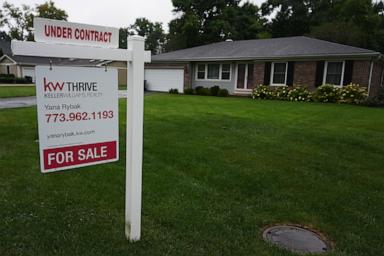
The ink on the closing documents is never just ink. It is a signature carved into forty years of tomorrow.
Meet Sarah and Marcus. In the autumn of 2020, they sat at a wobbly wooden kitchen table in a cramped apartment, staring at a laptop screen that glowed with a three percent interest rate. To them, those numbers felt like gravity had momentarily lost its grip. They bought a modest split-level house with a patch of clover-choked grass in the backyard, believing that the American rite of passage—the picket fence, the front door key turning in a lock for the first time—was a stable floor beneath their feet.
They had no idea how quickly that floor could turn into a high-rise balcony.
Fast forward to the present day. Across the country, the long-term United States mortgage rate has churned upward, clawing its way to 7.28 percent. It is the highest altitude these numbers have reached in nearly three years. For Sarah and Marcus’s younger brother, Leo, who is now trying to buy his first home, that three percent world is a distant, almost mythical Atlantis. At 7.28 percent, the math is brutal. It does not just alter a monthly budget; it amputates future possibilities.
Numbers on a financial ticker screen are sanitized. They are printed in columns of black and blue ink, spoken by analysts in tailored suits who lean against glass podiums. But numbers are people. Every fraction of a percentage point added to a home loan is an extra hundred dollars diverted from a grocery cart, a postponed dental appointment, or a child’s college savings fund.
Consider what happens when money suddenly becomes expensive.
When the cost of borrowing climbs from historic lows to over seven percent, the entire machinery of domestic life grinds to a heavy, protesting halt. Homeowners who locked in low rates years ago refuse to sell. Why trade a three percent mortgage for a seven percent monster? They stay put. They finish the basement. They build the nursery in the den. They become accidental lifers in homes they might have otherwise outgrown.
Meanwhile, first-time buyers are squeezed out into the cold. The inventory of available houses shrivels because nobody wants to step off their financial ledge. The market freezes into place, locked by fear and arithmetic.
To understand why this is happening, we have to look past the real estate pages and watch the broader economic engine. Inflation has proven stubborn, lingering like the smell of woodsmoke long after the fire has died down. To cool the fever, central bankers reached for their heaviest tool: the benchmark interest rate. When the central bank lifts its rate, mortgage lenders do not absorb the blow. They pass it down the line, stacking margins on top of margins until it lands squarely on the shoulders of families walking into credit unions and banking halls.
It is a chain reaction. Every upward tick of the Federal Reserve’s dial echoes outward, transforming into higher credit card payments, costlier car loans, and, most painfully, the towering wall of the modern mortgage.
We call this tightening. Economists use clinical terms like monetary policy transmission. But on the ground, it feels like walking through deep mud.
Imagine trying to map out your life when the rules of gravity shift every Tuesday. That is the reality for millions of prospective buyers today. They save diligently for a down payment, hitting every financial milestone only to watch the finish line retreat ten paces every time the weekly mortgage averages are published. They watch their purchasing power evaporate. A house that was comfortably within reach eighteen months ago now demands a monthly payment that consumes half a paycheck.
So what do people do? They compromise. They look further out from the city centers, trading hours of daily commuting time for square footage. They buy fixer-uppers that require financial CPR from day one. Or, heartbreakingly, they give up entirely, resigning themselves to a lifetime of landlord-controlled rent increases, watching the wealth gap widen while they stand on the outside looking in.
The real estate market is often described as a barometer of national health. If that is true, right now it is running a high, shivering fever.
Yet, human resilience has a stubborn way of bending harsh economics. People still fall in love. Families still grow. Children still need backyards to skin their knees in. The desire for a place to call one's own does not vanish simply because the macroeconomic climate turns glacial. Instead, buyers and sellers adapt. They explore adjustable-rate mortgages with cautious optimism, negotiate seller financing, or pool resources across generations, bringing parents and adult children together under single roofs to share the crushing weight of modern housing costs.
The seven percent wall is high, and it casts a long shadow over the landscape of contemporary life. But walls are made of stone, and stone can eventually be worn down by the persistent drip of time, innovation, and necessity.
Until then, families like Leo’s wait at the threshold, keys in their pockets, watching the numbers climb, hoping for the day when the ground beneath their feet finally stops shifting.