Paper trails do not bleed. They rust. They sit in damp archives, stacked in gray cardboard boxes labeled with bureaucratic precision, waiting for a key to turn.
In Paris, that key has just been forced into a lock that many powerful people preferred to leave rusted shut.
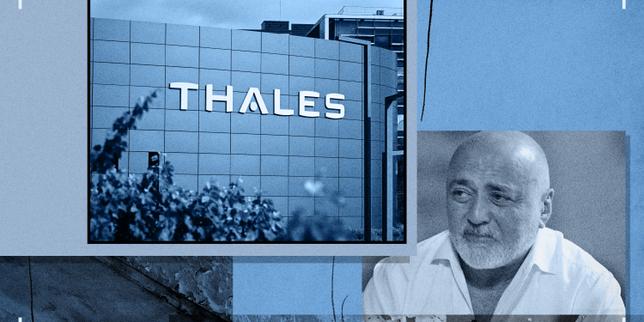
In the high-ceilinged offices of the judicial pole dedicated to fighting corruption, investigators are unspooling a thread that leads straight from the grand avenues of the French capital to the Caspian Sea. At the center of the inquiry are the defense contracts of Thales, the industrial giant whose radar systems and military hardware watch the skies of nations across the globe. But behind the glossy corporate annual reports and the quiet handshakes of statecraft lies a much darker story. It is a story brought to light not by an internal audit, but by the jagged voice of a whistleblower sitting behind iron bars.
To understand the weight of what is happening, you have to look away from the spreadsheets and look at the human cost of unmonitored power.
Consider the anatomy of a modern arms deal. To the public, it looks like charts, procurement goals, and bilateral trade summits. It looks clean. Men in tailored navy suits smile beneath crystal chandeliers, signing documents that promise security, modernization, and stability. Billions of euros change hands in digital blips across secure networks.
Yet every weapon system has a shadow. Every defense contract carries an invisible tax paid in accountability.
In the case of Thales and its dealings involving Azerbaijan, that shadow grew too large to ignore. The investigation unfolding now in France is probing suspicions of corruption, influence peddling, and the suspicious financial channels that oiled the machinery of these multi-million-euro agreements. And the catalyst for this reckoning? An insider. A former official who chose to speak out, only to find himself imprisoned—silenced by the very machinery he once helped grease.
There is an old, bitter truth in geopolitics: the people who build the architecture of power are rarely permitted to critique its foundation without paying a steep price.
When a state-backed defense giant exports technology to a region bristling with historical tension, the stakes are absolute. We are not talking about consumer goods or luxury cars. We are talking about dominance. We are talking about the capacity to track movement, to guide strikes, to alter the balance of power in a volatile corridor where empires have clashed for centuries. When money moves surreptitiously to secure those deals, the implications ripple far beyond a courtroom in Paris. They affect the credibility of Western democracies that preach transparency while winking at the back-alley commerce of military might.
The French judiciary is now tasked with untangling a web that spans multiple jurisdictions. Investigators are pouring over bank transfers, shell companies, and the dense legal architecture designed to conceal where corporate lobbying ends and state-sanctioned bribery begins. It is slow, grinding work. Documents are redacted. Servers are scrubbed. Witnesses suddenly develop selective amnesia.
Yet the truth has a stubborn habit of leaking out through the cracks in the armor.
When an ex-official speaks from a prison cell, warning of backroom dealings and illicit commissions, the public is forced to confront a sobering reality. The high-tech defense apparatus protecting our borders is frequently fueled by the lowest forms of human greed. The glossy brochures boasting of advanced aerospace and defense innovations obscure a subterranean ecosystem of middlemen, offshore accounts, and compromised oversight.
We must ask ourselves what kind of security we are actually buying. Is it the defense of democratic values, or is it the protection of profit margins dressed up as patriotism?
The inquiry into Thales is more than a routine legal probe. It is a stress test for the institutions that claim to police corporate corruption on an international scale. If the investigation stops at the lower-level fixers, it will prove that the system is only rigged to sacrifice pawns. If it climbs higher, into the suites where political ambition and corporate greed intertwine, it might just signal a shift in how the world handles the dark side of the military-industrial complex.
For now, the boxes in the Paris archives keep filling up. The lawyers pour over transcripts. The stock prices fluctuate by fractions of a percent, largely indifferent to the moral rot being exposed beneath the surface.
Somewhere in a damp cell, the man who blew the whistle waits. He knows what is buried in the dark. And slowly, agonizingly, the rest of the world is beginning to see it too.