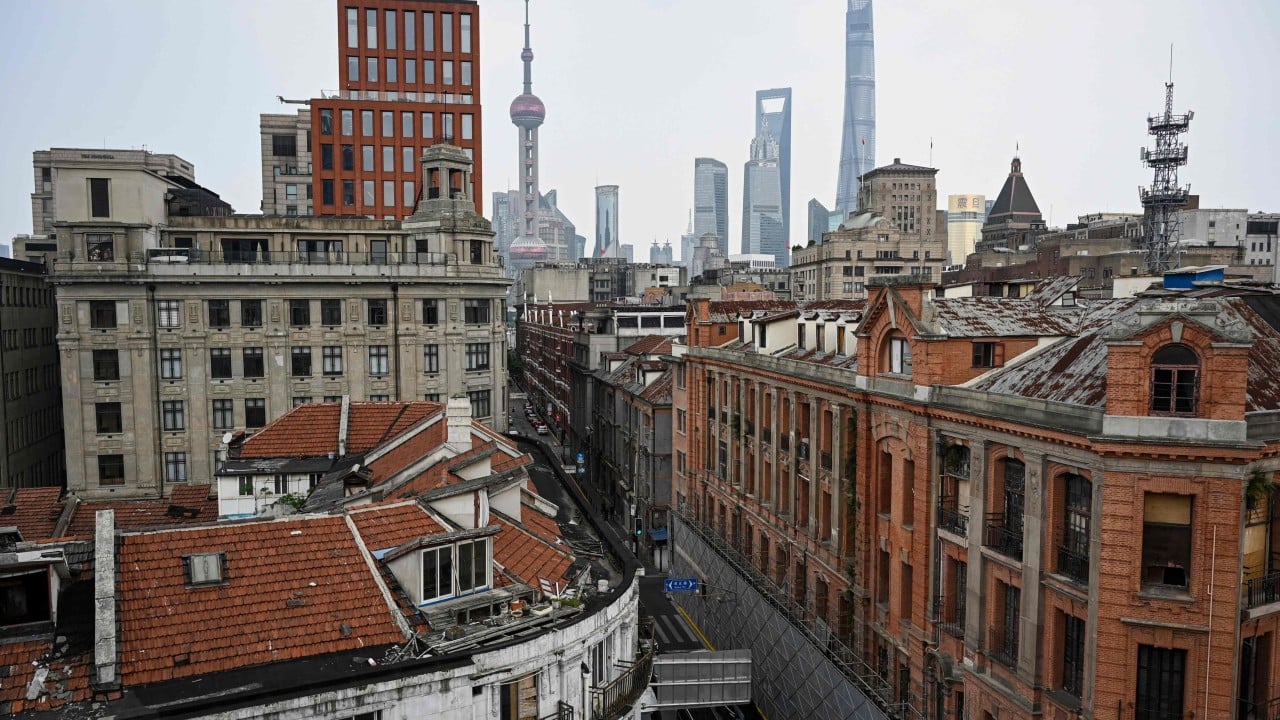
The regular policy proposals emerging from mainland advisory bodies always follow a predictable script. The latest narrative argues that Hong Kong is no longer sufficient to carry China’s global financial ambitions, and that Shanghai must aggressively step up to assume the mantle of the primary international finance hub.
It is a neat, patriotic story. It is also entirely wrong.
Advocating for Shanghai to eclipse or even match Hong Kong’s specific utility betrays a fundamental misunderstanding of what makes a global financial center function. The consensus view treats financial hubs like Lego sets—suggesting that if you simply build enough skyscraper office space, install massive data servers, and clear a trading floor, international capital will naturally flood the system.
It will not. Money does not care about infrastructure. Money cares about exit strategies.
The structural architecture of China's capital controls means Shanghai and Hong Kong are not competitors on a ladder; they are two entirely different species of animal. Attempting to force Shanghai into Hong Kong’s role ignores the core tension of the Chinese economic model: you cannot have a completely controlled domestic economy and a free-floating international financial hub at the same time.
The Illusion of the Shanghai Financial Takeover
Every few years, a fresh policy paper suggests that Shanghai’s massive transaction volumes in domestic equities, bonds, and commodities mean it is ready to anchor global finance. These arguments point to the sheer scale of the Shanghai Stock Exchange. They note the city's sophisticated clearing systems and the presence of major domestic institutions.
This view confuses size with international integration.
Shanghai is a massive domestic hub. It functions beautifully as a giant vacuum cleaner for internal Chinese liquidity, allocating domestic savings into state-backed enterprises and national champions. But it operates behind the Great Firewall of Capital. The Renminbi (RMB) is not fully convertible. Capital cannot move freely across the border without strict regulatory approval from the State Administration of Foreign Exchange (SAFE).
International capital operates under a simple rule: if it cannot leave instantly when a crisis hits, it will not enter in the first place.
Imagine a scenario where a New York-based hedge fund wants to deploy $500 million into a sudden market opportunity. In Hong Kong, that money moves in via the Hong Kong Dollar (HKD)—which is pegged to the US Dollar—trades, takes profits, and exits by lunchtime. No questions asked. Try doing that in Shanghai without running into a wall of bureaucratic approvals, quotas, and convertibility friction.
The Three Unalterable Pillars of Hong Kong’s Monopolistic Edge
Global finance relies on boring, unglamorous institutional machinery. Hong Kong possesses three specific structural advantages that Shanghai cannot replicate without Beijing completely dismantling its own domestic economic controls.
1. The Common Law System
Hong Kong operates under English Common Law, preserved under the Basic Law framework. This is not a superficial distinction; it is the bedrock of investor confidence. Common law relies on centuries of judicial precedent. Commercial disputes are adjudicated by an independent judiciary, often featuring seasoned international judges.
Mainland China operates under a civil law system where courts are explicitly tied to the state’s broader political objectives. If an international investment bank gets into a contractual dispute with a powerful State-Owned Enterprise (SOE) in a Shanghai court, who do you think wins? International investors will not risk billions on a legal framework where the rules can change retroactively to protect a national champion.
2. Full Capital Convertibility
Hong Kong has zero foreign exchange controls. The HKD is backed by one of the largest foreign exchange reserves in the world relative to the economy’s size. Money moves with absolute fluidity.
For Shanghai to match this, China would have to open its capital account completely. Doing so would trigger a massive, immediate outflow of domestic capital as Chinese citizens and corporations diversified their wealth globally. Beijing’s leadership knows this risk perfectly well, which is why they have kept the capital account tightly managed for decades.
3. The Separate Customs Territory
Hong Kong maintains its own status in international trade organizations, separate from the mainland. This buffer protects international transactions from the direct impact of trade wars, targeted tariffs, and sweeping sanctions that can hit mainland entities overnight.
The "Two-Pool" Reality of Chinese Finance
The lazy consensus views Shanghai and Hong Kong as rivals in a zero-sum game. The reality is that they form a deliberate, highly functional binary system designed by Beijing precisely because Shanghai cannot do what Hong Kong does.
To understand Chinese finance, you must understand the separation of the Off-shore and On-shore pools of capital.
| Feature | Shanghai (On-shore / CNY) | Hong Kong (Off-shore / CNH) |
|---|---|---|
| Primary Currency | Renminbi (Controlled) | Hong Kong Dollar (Pegged to USD) / Off-shore RMB |
| Legal System | Civil Law (State-aligned) | Common Law (Precedent-based) |
| Capital Mobility | Strictly Restricted by SAFE | Absolute Freedom of Movement |
| Target Audience | Domestic savers & SOEs | International institutional investors |
Beijing does not want Shanghai to become Hong Kong. If Shanghai became an open, free-wheeling international financial hub, the central government would lose its iron grip on domestic monetary policy. They would no longer be able to control the value of the Renminbi or manipulate domestic interest rates to prop up the property market or state industries.
Hong Kong exists to act as a valve. It lets international capital look into China, and it lets Chinese capital peek out, without letting the two pools mix so violently that it destabilizes the mainland economy.
Stop Asking if Shanghai Can Replace Hong Kong
The question itself is flawed. It presumes that China's leadership wants a single, western-style financial capital. They do not.
When policy advisors argue that Hong Kong is "not enough," they are technically right, but for the wrong reasons. Hong Kong is not enough to handle the sheer volume of internal Chinese debt refinancing and state corporate issuance—that is Shanghai’s job. But Shanghai is completely unequipped to handle the free flow of global institutional capital—that is Hong Kong’s job.
I have watched financial firms burn through millions trying to set up mainland operations on the assumption that the regulatory environment would "inevitably" liberalize and turn Shanghai into the next Manhattan. It is a mirage. The liberalization always stops exactly where state control is threatened.
If you are a corporate treasurer or an institutional allocator, ignore the policy papers predicting Hong Kong's obsolescence. Do not reallocate your regional treasury operations to the mainland based on political rhetoric.
Accept the structural reality. Shanghai is the factory floor of Chinese finance. Hong Kong is the global storefront. You cannot run a global business by moving your showroom into the middle of a locked warehouse.