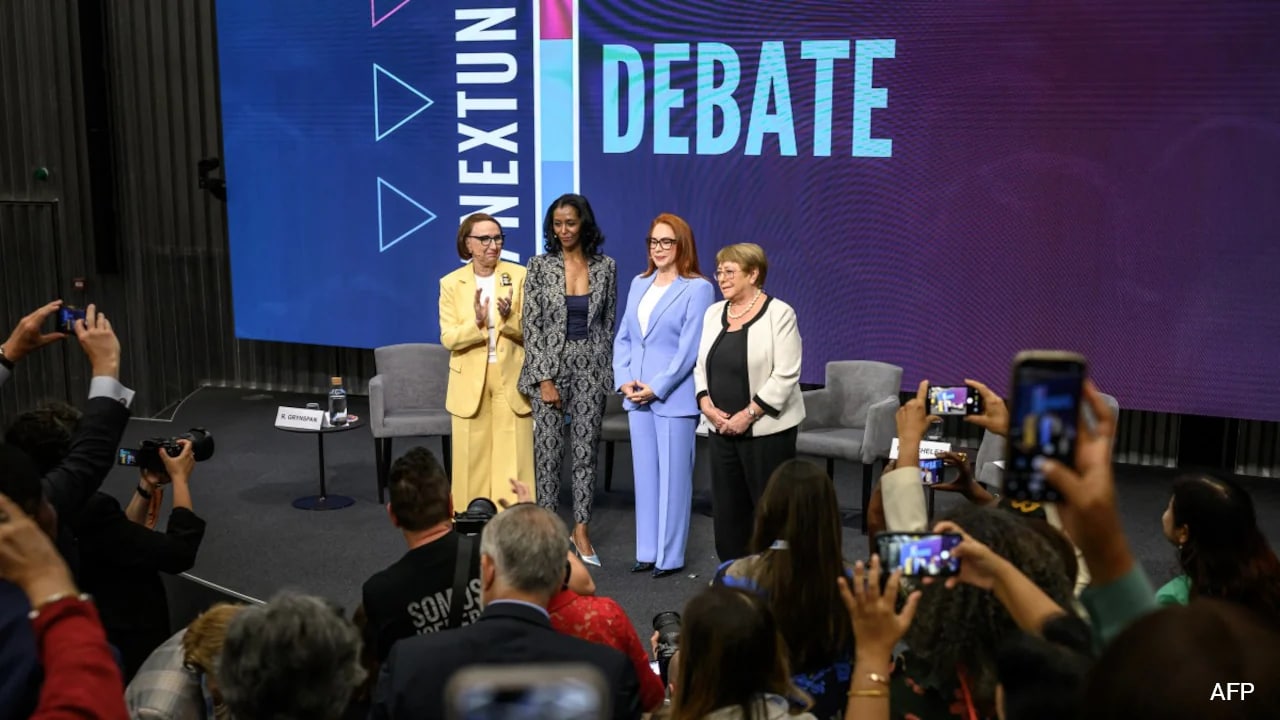
The United Nations has cycled through nine secretaries-general over eight decades, and every single one has been a man. As the selection process approaches for the next leader, a growing coalition of diplomats and member states is loudly declaring that it is time for a woman to run the global body. Yet the push for a female secretary-general faces a gridlock that has very little to do with qualification and everything to do with backdoor horse-trading among the world’s most powerful nuclear states.
Resolving this imbalance requires looking past the public relations campaigns. The true obstacle is an archaic selection process controlled by five permanent members of the Security Council who routinely prioritize malleability over merit.
The Illusion of a Transparent Selection
Historically, choosing a secretary-general resembled a papal conclave. The five permanent members of the Security Council—the United States, Russia, China, the United Kingdom, and France—met in windowless rooms, vetoed candidates who displeased them, and presented a single name to the General Assembly for a rubber-stamp vote.
This mechanism changed slightly in 2015. The General Assembly introduced public hearings and required candidates to submit formal resumes and vision statements. This reform aimed to inject democracy into a famously opaque system. It allowed high-profile women, including former New Zealand Prime Minister Helen Clark and former Bulgarian UNESCO chief Irina Bokova, to present their credentials openly.
The transparency was mostly an illusion. When the actual voting began via straw polls in the Security Council, the traditional power dynamics reasserted themselves. The informal straw ballots used color-coded papers to distinguish the votes of permanent members from elected ones. A single discouraging vote from a veto-wielding power effectively ends a candidacy, regardless of how well that candidate performed in public debates. Antonio Guterres ultimately secured the post, proving that while the stage had changed, the directors remained the same.
Regional Rotation vs Gender Equality
A major systemic barrier to a female secretary-general is the unwritten rule of geographic rotation. The UN splits its 193 member states into five informal regional groups. Custom dictates that the office of secretary-general should rotate among these regions every ten or fifteen years.
Eastern Europe remains the only region that has never held the top job. Consequently, many diplomats argue that the next secretary-general must come from an Eastern European state. This creates a mathematical squeeze. If the selection pool is restricted to a specific geographic zone, the number of viable, high-ranking female candidates shrinks dramatically.
This regional requirement forces a conflict between two competing diversity goals. Should the UN prioritize regional fairness, or should it prioritize gender equality? In practice, major powers use these geographic rules as a shield. They can publicly support the idea of a female leader while privately vetoing specific candidates under the guise of defending regional rotation.
Why Major Powers Prefer Weak Leaders
The UN charter describes the secretary-general as the chief administrative officer of the organization. This definition is intentionally modest. The architects of the post-war order did not want a global president; they wanted a global secretary.
$$\text{Power Balance} = \text{P5 National Interests} > \text{UN Independent Authority}$$
Strong, charismatic leaders with independent domestic mandates often clash with the Security Council. Former Secretary-General Boutros Boutros-Ghali pushed an activist agenda that alienated the United States, leading to Washington vetoing his second term in 1996. The lesson for ambitious diplomats was clear. To win the office, you must minimize your political target profile.
Many of the women frequently mentioned for the role—such as prominent heads of government or international agency chiefs—possess strong, defined political identities. They have track records of taking decisive stances on trade, human rights, and military alliances. In the eyes of the permanent five, a record of strength is often a disqualifying liability. The system rewards compromise candidates who excel at bureaucratic navigation rather than bold leadership.
The Geographic Gridlock of the Midstream Selection
The geopolitical friction between Washington, Beijing, and Moscow is sharper now than at any point since the end of the Cold War. This hostility directly impacts who can realistically compete for the top UN job.
Consider the Eastern European dilemma. Any candidate from an Eastern European nation that has joined NATO or taken a hard line against Russian foreign policy will face an immediate veto from Moscow. Conversely, any candidate perceived as sympathetic to Russian interests faces an automatic veto from the United States, Britain, or France.
This polarization leaves a minuscule path for candidates from neutral or non-aligned nations. Finding a female candidate who is acceptable to Washington, non-threatening to Beijing, and trusted by Moscow is an extraordinarily difficult diplomatic puzzle. The candidates who survive this filtering process are often those who have said the least on controversial topics, diluting the potential impact of breaking the gender barrier.
Moving Past Symbolism
A female secretary-general would undoubtedly carry immense symbolic weight. It would signal that the world's premier diplomatic body is no longer a closed shop for male statesmen. Symbolism does not solve structural dysfunction.
If a woman assumes the office under the current rules, she will inherit the same crippled executive authority that has stymied her predecessors. She will still face a Security Council paralyzed by vetoes, a budget controlled by reluctant donors, and an administrative apparatus resistant to modernization. True progress requires pairing gender parity with structural reform. Member states must push to alter the voting system, perhaps by requiring the Security Council to present multiple candidates to the General Assembly, or by eliminating the secret veto for administrative appointments.
Without these operational changes, the appointment of a female leader risks becoming a cosmetic fix for a systemic failure. The international community must decide whether it wants a woman in the room simply to change the photography, or to change the distribution of global power.