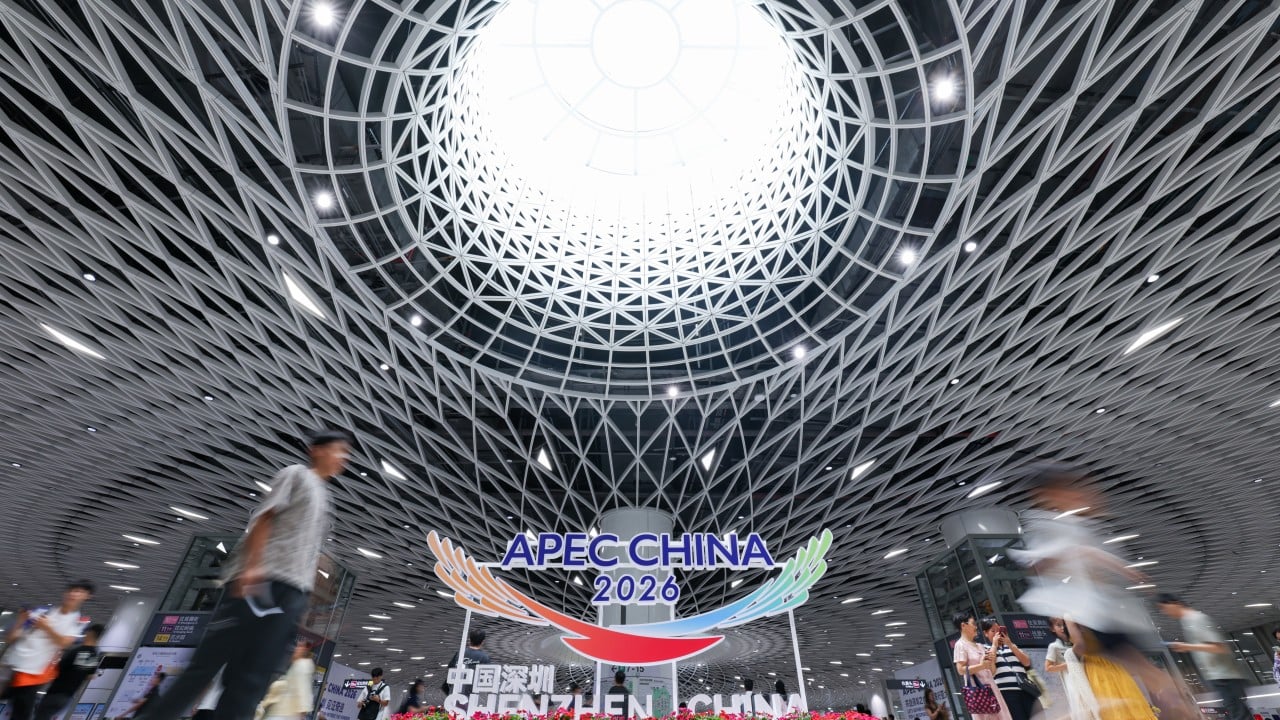
Hosting a major global summit sounds glamorous until you look at the logistics required to pull it off without a single public slip. Right now, Shenzhen is wrapping up final preparations for the Asia-Pacific Economic Cooperation (APEC) meetings, and the stakes for China's southern tech hub couldn't be higher.
Most people think of Shenzhen as a city that already runs like clockwork. You see the gleaming skyscrapers in Futian, the massive port terminals in Yantian, and the headquarters of global tech giants, and you assume hosting international leaders is just another Tuesday. That assumption misses the reality on the ground.
China has hosted APEC twice before—first in Shanghai in 2001 and later in Beijing in 2014. Both of those cities had decades of diplomatic muscle and state-level protocol infrastructure built into their DNA. Shenzhen doesn't have that luxury. It's a relatively young metropolis built on manufacturing, cross-border trade, and breakneck commercial speed rather than formal statecraft. Turning a hyper-dense commercial engine into a locked-down diplomatic fortress is an entirely different beast.
What Makes Shenzhen Different From Beijing or Shanghai
If you've ever spent time moving through Shenzhen during a normal business week, you know the city never really stops. Nearly 18 million people live and work packed into a narrow strip of land bordering Hong Kong. Unlike Beijing, with its wide ceremonial boulevards designed for motorcades, Shenzhen's urban layout is tight, vertical, and constantly congested.
Shutting down major arteries for visiting heads of state creates an immediate ripple effect. Traffic doesn't just slow down; it backs up into cross-border freight corridors that supply global electronics chains. Local planners have had to figure out how to isolate summit venues without choking off the daily commerce that keeps the city's economy breathing.
Here's what local authorities are actually dealing with behind the scenes:
- Cross-border friction with Hong Kong. Thousands of commuters, executives, and cargo trucks cross checkpoints like Futian, Huanggang, and Shenzhen Bay every single day. Tightening security screening for APEC delegates means balancing strict perimeter control with keeping border crossings functional.
- Airspace management in one of the busiest corridors on earth. Shenzhen Bao'an International Airport sits right next to Hong Kong International Airport and Guangzhou Baiyun. Coordinating VIP flight arrivals in airspace that already operates near maximum capacity requires millimeter-level precision.
- Urban density around core venues. Major conference centers in Futian and Nanshan sit directly beside residential towers, shopping malls, and subway hubs. Securing a perimeter there isn't like cordoning off a suburban resort.
Honestly, anyone who has managed large-scale events in the Pearl River Delta knows how tricky this geography gets. One unexpected bottleneck on Binhai Boulevard can stall half the city within twenty minutes.
How Shenzhen Is Testing Its Infrastructure Under Pressure
Cities don't just flip a switch a week before world leaders land. Over the past several months, Shenzhen has rolled out phased urban upgrades and operational drills designed to catch weak points before international cameras arrive.
Municipal teams have focused heavily on grid reliability, transit rerouting, and emergency response times. You can see the physical changes across key districts—freshly paved expressways, upgraded smart traffic signals, and expanded automated customs lanes at major ports of entry.
- Simulated motorcade runs during peak hours. Rather than running drills only at 3 a.m. when roads are empty, traffic police have tested route clearances during heavy daytime flows to measure real recovery times.
- Digital twin crowd and traffic modeling. Shenzhen leans heavily on its homegrown tech sector, using real-time sensor networks and AI-assisted traffic management to predict congestion spikes before they freeze intersections.
- Hospitality and multilingual readiness. Unlike Beijing, where international diplomatic hotels have hosted state visits for decades, Shenzhen's service sector is mostly geared toward corporate travelers and trade show attendees. Hotels across Nanshan and Futian have spent months drilling staff on diplomatic protocol, dietary requirements, and emergency medical coordination.
It's a massive operational rehearsal. And while the hardware looks impressive, software and human coordination are usually where cracks show up first.
The Geopolitical Weight Behind the Logistics
Let's be real about why this matters beyond traffic cones and hotel bookings. APEC brings together 21 member economies representing roughly 60 percent of global GDP and nearly half of world trade. When China hosts, the event doubles as a high-stakes showcase of governance, stability, and economic openness.
Choosing Shenzhen sends a deliberate message. Beijing wanted to put its innovation economy front and center rather than relying on traditional political capitals. For foreign executives and trade ministers flying in, the city itself is the pitch—proof that China's tech manufacturing ecosystem remains indispensable despite ongoing tariff disputes and supply chain shifts.
That creates zero margin for error. A transit breakdown, a customs bottleneck, or a visible security lapse doesn't just embarrass local officials. It undermines the exact narrative of competence and efficiency China wants international guests to take home.
What Travelers and Businesses Should Expect Right Now
If you have business in Shenzhen or plan to transit through Hong Kong around the summit window, don't assume your usual routine will hold. Even with smart traffic systems in place, temporary road closures, heightened ID checks on the metro, and stricter cargo inspections at land ports will affect movement across the city.
Build extra buffer time into every airport transfer and cross-border trip. Book accommodations well away from the main Futian and Nanshan security perimeters unless your meetings require you to be inside the zone. Most importantly, monitor official municipal transit notices daily rather than relying on standard navigation apps, which often lag behind real-time police diversions during high-level diplomatic events.