The pre-dawn silence on an October morning in 2017 shattered under the weight of tactical boots, shouted commands, and the concussive blast of a flash-bang grenade inside an Atlanta-area residence. Federal law enforcement officers had breached the wrong address, terrorizing an innocent family that included a young child. Nearly a decade later, the ongoing legal battle stemming from that chaotic morning offers a masterclass in the structural barriers that shield federal agencies from financial and legal reckoning, even when their operatives make catastrophic errors.
When citizens find themselves the victims of severe operational blunders by federal actors, seeking judicial recourse is rarely a straightforward path. Instead of a clear route to civil justice, plaintiffs face an intricate labyrinth of legal doctrines, statutory exceptions, and jurisdictional hurdles. The recent ruling by the United States Court of Appeals for the Eleventh Circuit highlights a profound asymmetry in how the American justice system treats ordinary citizens versus the institutions meant to serve them.
The Anatomy of an Operational Failure
To understand the weight of the recent court decisions, one must examine what transpired on that day. Federal Bureau of Investigation SWAT personnel targeted a house on Denville Trace, operating under the belief that it belonged to a suspected gang member. The actual target was located three houses away on an entirely different street.
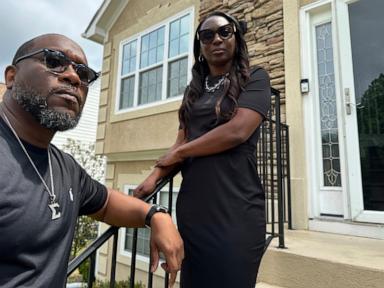
Occupants Trina Martin and Toi Cliatt scrambled for safety in a bedroom closet as armed agents flooded their living space. Cliatt was pulled to the floor and handcuffed while family members experienced acute terror. The agents realized their mistake only after checking identification documents and confirming the physical address against their operational targets.
In civil litigation, mistakes of this magnitude typically form the bedrock of standard negligence or tort claims. Yet, when the defendant is the federal government, standard rules of liability bend and distort. The central friction point in these cases involves the Federal Tort Claims Act (FTCA), a statute designed to allow private citizens to sue the United States for torts committed by federal employees acting within the scope of their employment. However, the statute contains a dense thicket of exceptions.
The Immunity Wall
For years, government attorneys have utilized various statutory shields to dismiss lawsuits before they ever reach a jury. In this specific litigation, the legal journey has wound its way through the federal court system, reaching even the United States Supreme Court before returning to the appellate level.
While the appellate panel permitted claims to move forward against the individual agent who led the operation, it simultaneously barred the family from maintaining a direct lawsuit against the federal government itself under existing circuit precedent. This dynamic creates a stark paradox for plaintiffs. An individual officer may face financial and professional exposure, yet the agency that planned, funded, and executed the faulty operation remains structurally insulated.
Legal analysts note that this division exposes a fundamental flaw in modern accountability structures. Individual law enforcement officers often operate under doctrines like qualified immunity or specialized statutory interpretations, making personal judgments notoriously difficult to penalize in a civil court. Meanwhile, the federal agency escapes direct financial liability, dampening the institutional incentive to overhaul training, address mapping protocols, or refine intelligence gathering.
The Broader Implications for Civil Liberties
The ramifications of these court battles extend far beyond a single residential street in Georgia. Across the country, wrong-address entries and botched tactical raids have repeatedly resulted in property destruction, psychological trauma, and physical harm. Each time an appellate court restricts the scope of accountability under the FTCA or individual constitutional tort theories, a clear message is sent regarding the distribution of risk between the state and the citizen.
When the government executes a search, the immense power of the state is brought to bear on private citizens. If that power is wielded carelessly due to faulty GPS usage, unverified intelligence, or poor inter-agency communication, the burden of that failure should logically rest with the institution that initiated the action. Instead, procedural doctrines consistently shift the burden onto the victims, requiring them to navigate decades of complex litigation merely for the right to present their case.
Even the judges who applied the restrictive precedent in the recent Eleventh Circuit decision expressed visible frustration, pointing out the limits imposed by prior rulings while encouraging broader judicial review. Yet, until higher courts or legislative bodies dismantle these structural immunities, the reality on the ground remains unchanged. Innocent families whose homes are mistakenly breached by federal task forces are left to fight an uphill battle against an entrenched system, where getting a day in court is treated as a monumental legal victory rather than a basic constitutional right.
The path toward genuine reform requires legislative clarity that removes the artificial barriers shielding federal agencies from the consequences of operational negligence. Until lawmakers choose to redefine sovereign immunity in the context of modern law enforcement practices, accountability will remain elusive, dependent entirely on the endurance of ordinary citizens willing to spend years fighting a monolithic state apparatus.
This video provides additional context regarding the legal complexities and public discussions surrounding the federal appeals court ruling on the Atlanta FBI wrong-house raid.