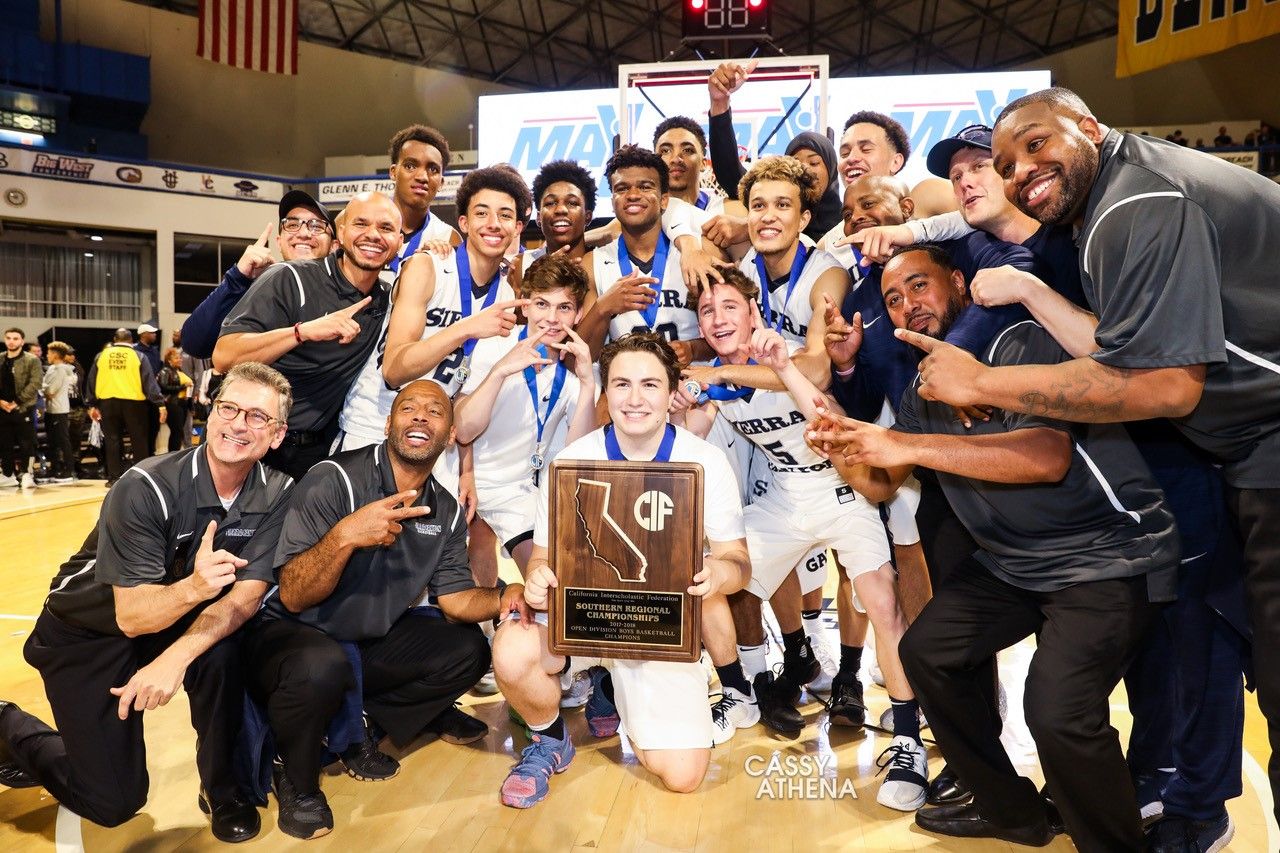
The local sports desk is currently choking on its own confetti. If you read the standard wrap-up of Sierra Canyon’s latest Open Division title, you’ll see the same tired narrative: "grit," "culture," and "a testament to hard work." It’s a comfortable lie. It’s the kind of story people tell when they want to keep their press credentials and avoid the awkward reality that what we just witnessed wasn't a high school championship—it was a corporate merger.
Sierra Canyon’s "domination" isn't a sports story. It’s a logistical achievement. We are watching the slow-motion death of the neighborhood underdog, replaced by a hyper-efficient, venture-capital-adjacent talent farm that has more in common with a European soccer academy or a G-League affiliate than it does with the high school experience we pretend to celebrate.
The Myth of the "Level Playing Field"
The sports media loves the David vs. Goliath trope, but they conveniently forget that Goliath usually wins because he has a better supply chain. When a school can pull elite talent from across three counties and two time zones, "coaching" becomes a secondary variable.
Let’s be honest about the mechanics of the Open Division. The CIF (California Interscholastic Federation) created this tier specifically to silo these "super-teams" away from the mere mortals. But instead of fixing the parity issue, it validated a two-tier system where the rich get richer.
In a standard high school ecosystem, a coach works with the kids who grew up in the zip code. You develop a raw 6'4" sophomore into a 6'8" senior powerhouse. At Sierra Canyon, you don't develop; you acquire. If a hole exists in the roster, it is filled by a transfer who is already a four-star recruit. This isn't "building a program." It’s roster management. I’ve seen coaches at public schools spend decades building a culture only to have their best player poached by a private powerhouse the moment he hits a growth spurt. That’s not competition. That’s a hostile takeover.
The Professionalization Trap
We are told that this level of competition is "preparing these kids for the next level." That sounds noble until you look at the psychological toll of the "pro-style" schedule. We are forcing 16-year-olds to navigate a world of brand deals, national TV slots, and private jets.
By the time these players hit a college campus, they aren't hungry—they're burnt out. They’ve already experienced the peak of the mountain. They’ve had the documentary crews following them since the eighth grade. The "Open Division Title" is just another box to check for the brand, not a core memory for a group of friends who grew up together.
The Hidden Cost of the Super-Team Model
- The Erasure of Local Rivalries: When one school collects all the regional talent, the Friday night lights go out everywhere else.
- Developmental Stunting: Third-option players on a super-team would be first-option stars at their local high schools. They lose thousands of "clutch" reps because they are busy being role players for a national powerhouse.
- The Transfer Portal Infection: High school basketball now mirrors the worst parts of the NCAA. If a kid doesn't get enough shots in December, he's at a new school by January.
The "Culture" Defense is a Smoke Screen
When critics point out the absurdity of these rosters, the defenders always retreat to the word "culture." They claim Sierra Canyon wins because they "work harder."
Every kid in the Open Division works hard. The kid at the bottom-tier public school getting up at 5:00 AM to hardware-store weights works just as hard as the kid at the $40,000-a-year private school with a professional strength coach. The difference is the resources.
If you give a chef Wagyu beef and a Michelin-star kitchen, and give another chef a pack of frozen patties and a broken hot plate, you don't praise the first chef’s "culture" when the steak tastes better. You acknowledge the quality of the ingredients.
Stop Asking if They Are Good
The question "Is Sierra Canyon the best team?" is the wrong question. Of course they are. They are designed to be. The real question is: "Is this still high school sports?"
If we continue down this path, we might as well drop the pretense of education entirely. Let’s stop pretending these players are "student-athletes" in the traditional sense and admit they are assets in a high-stakes marketing machine.
The Contrarian Fix
If the CIF actually cared about the spirit of the game, they wouldn't just group the super-teams together. They would implement a hard cap on transfers or a "homegrown" quota. But they won't. Why? Because Sierra Canyon sells tickets. They bring the cameras. They bring the clicks.
The "domination" we’re celebrating is actually a monopoly. And in every other industry, we recognize that monopolies are bad for the health of the ecosystem. They stifle innovation, they crush smaller competitors, and they eventually make the product boring.
Watching a team of future pros beat a team of future accountants and insurance adjusters isn't "greatness." It’s an exhibition. If you want to see real basketball, stop looking at the schools with the Nike contracts and start looking at the programs doing more with less.
The Open Division trophy is shiny, but it's hollow. It represents the victory of recruitment over development, and the triumph of the brand over the community. Stop clapping for the inevitable.
Go find a gym where the kids actually live in the same neighborhood. That’s where the game is still alive. Everything else is just a commercial.