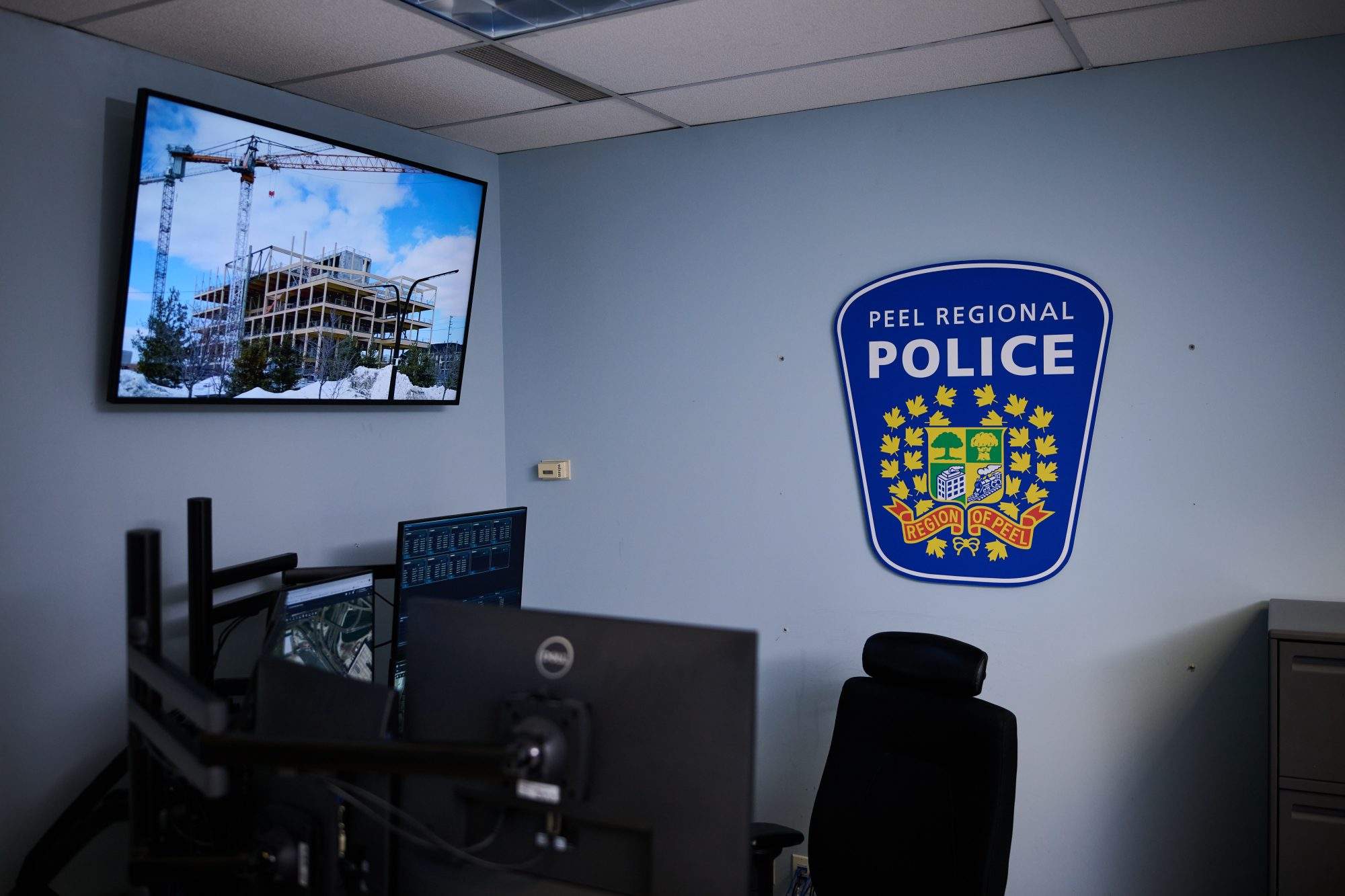
The locker room of a police precinct has a very specific smell. It is a mixture of heavy-duty laundry detergent, leather polish, gun oil, and old sweat. For months, or sometimes years, that smell disappears from a suspended officer’s life. Then, on an ordinary Tuesday, the key turns in the lock again. The metal door swings open. The uniform, crisp and smelling of dry cleaning, hangs waiting.
Putting it back on is not as simple as fastening buttons. For a more detailed analysis into similar topics, we suggest: this related article.
When Peel Regional Police officers tied to the multi-year internal investigation known as Project South recently stepped back into active duty, there were no press conferences. No banners welcomed them back to the hallways of the division. Instead, there was only the quiet, heavy reality of a system resetting itself. The public notices were brief. The official statements were sterile. But behind the clinical language of administrative law lies a complex web of human emotion, fractured community trust, and the invisible scars left on a region trying to figure out what justice actually looks like from the inside out.
Trust is fragile. It shatters instantly. Rebuilding it takes an agonizingly long time. For further information on the matter, comprehensive reporting can be read at NPR.
The Weight of the Sidelined Badge
To understand what happens when an officer returns from a long suspension, you have to understand the psychological weight of the badge itself. When a person becomes a police officer, the job quickly consumes their entire identity. It dictates how they sit in restaurants, how they watch a crowd, and who they talk to at backyard barbecues.
Imagine a hypothetical officer named Marcus. He is not a real individual from the case file, but a composite of what the data and human psychology tell us about suspended law enforcement personnel.
When Marcus is suspended, the department strips him of his external identity. His service weapon is locked in a vault. His badge is taken. He is told to go home and wait. For months, his mornings change completely. The adrenaline rushes of the shift are replaced by the slow, suffocating crawl of daytime television and backyard pacing. His neighbors look at him differently when he fetches the mail. The local grocery store becomes a gauntlet of avoided glances.
During Project South, this was the reality for multiple individuals embedded within the Peel police infrastructure. The investigation itself was a dark cloud hanging over the service, a complex probe into allegations that struck at the core of organizational integrity. For the public, it was a headline about accountability. For those inside the circle, it was a prolonged period of professional purgatory.
Then comes the call. The investigation has run its course, the administrative tribunals have cleared a path, or the legal thresholds for continued suspension have expired. The department orders them back to work.
The return is a jarring transition. An officer does not simply pick up where they left off. The world moved on while they were gone. New policies were written. New faces filled the briefing rooms. The cruiser smells different. More importantly, the eyes of their peers follow them down the corridor. Some of those eyes hold sympathy. Others hold deep, unspoken skepticism.
The View from the Street
Step outside the precinct walls and the perspective shifts dramatically. Walk down the sidewalks of Mississauga or Brampton, the sprawling, diverse communities that the Peel Regional Police are sworn to protect. Here, the return of suspended officers triggers an entirely different set of emotions.
Consider a local small business owner. Let's call her Priya. She runs a storefront in a neighborhood that has seen its share of ups and downs. To Priya, the police are supposed to be an absolute certainty. When she calls for help, she needs to know that the person arriving in the flashing lights represents unshakeable integrity.
When news breaks that officers involved in a major internal probe are back on the streets, Priya does not read the dense legal frameworks or the collective bargaining agreements that govern police suspensions. She sees a system that feels closed off from the people it serves. She wonders if the officer patrolling her block is fully committed to her safety, or if they are carrying the resentment of a long fight with their own employers.
This is the invisible tax of police misconduct investigations. The currency of policing is not bullets or patrol cars; it is legitimacy. Every time an internal scandal makes headlines, the value of that currency drops. When officers return to duty without a clear, transparent explanation to the community, the public often feels left in the dark.
The system operates on rules, procedures, and legal precedents. The street operates on feelings, respect, and daily interactions. Bridging that gap is one of the most difficult challenges modern law enforcement faces.
The Machinery of the Process
The legal mechanisms that govern how a police service handles suspensions are remarkably rigid. In Ontario, the Police Services Act has long dictated the strict parameters of how officers can be sidelined and under what conditions they must be paid or returned to active duty. It is a framework designed to ensure due process, preventing arbitrary punishment before a full investigation concludes.
But the machinery is slow. It grinds along at a pace that satisfies lawyers but infuriates the public.
During a long suspension, an immense amount of pressure builds up within the organization. The command staff must balance the legal rights of the employee with the fierce demand for public accountability. It is a high-wire act performed in the spotlight of media scrutiny.
When an investigation like Project South reaches the stage where suspensions are lifted, it usually means the formal legal requirements for keeping those individuals away from work have no longer been met. It does not always mean a grand exoneration. Often, it simply means the bureaucratic process has concluded its current phase, and the strict rules of employment law require a return to active status.
For the officers, this means stepping back into a role where they must enforce laws while having just survived a grueling encounter with the internal enforcement of their own organization. The psychological adjustment is immense. They must project authority on the street while feeling profoundly vulnerable within their own ranks.
The Thin Blue Line of Companionship
Inside the station, the atmosphere during a return is thick with unspoken tension. Policing is a profession built on intense mutual reliance. When you step into a dangerous situation, you need to know, without a shadow of a doubt, that the person next to you has your back completely.
When an officer returns from a prolonged suspension related to an internal probe, it tests those bonds.
Some colleagues will offer a quiet nod in the hallway, a gesture of solidarity from those who believe the system can be overly harsh on its own. Others will keep their distance. They worry about the stain of association. They wonder if the returning officer’s focus is sharp enough for the high-stakes environment of active patrol. A split-second delay in a dark alleyway can be fatal. Trust among peers must be earned all over again, shift by shift, call by call.
The returning officers often find themselves assigned to modified duties or specific units at first, a transitional phase designed to ease them back into the rhythm of the work and assess their readiness. It is a period of intense observation. Every report they write is scrutinized. Every radio transmission is logged. They are under a microscope, operating in an environment where the margin for error is non-existent.
Healing a Fractured Lens
The real work does not happen in the courtroom or the administrative offices. It happens on the pavement. It happens when a cruiser pulls up to a scene, the door opens, and an officer steps out to interact with a citizen who is having the worst day of their life.
For the Peel community, the resolution of Project South’s suspension phase is a reminder of how deeply interconnected the police and the public truly are. The service cannot operate effectively without the cooperation of the neighborhoods it patrols. If the community stops talking to the police, stops reporting crimes, or stops trusting the motives of investigators, the entire structure of public safety begins to crumble.
The path forward requires an acknowledgment of the friction. It demands an understanding that the legal conclusion of a case is merely the beginning of a social healing process.
The uniform is back on. The shift schedule is set. The keys to the cruiser are in hand. As the engine starts and the vehicle rolls out of the station lot into the Brampton night, the past remains a heavy passenger in the rearview mirror. The city waits, watching closely to see what kind of justice will be delivered in the days ahead.