The alarm clock didn’t matter. At 6:15 AM in Dubai, the usual symphony of a household—the frantic search for a matching sock, the hiss of the espresso machine, the heavy thud of a backpack hitting the floor—simply didn’t happen. Instead, there was a heavy, unnatural stillness. It was the kind of silence that usually only follows a massive desert thunderstorm. But the sky outside was clear. The air was still. The disruption wasn't coming from the clouds; it was coming from the horizon.
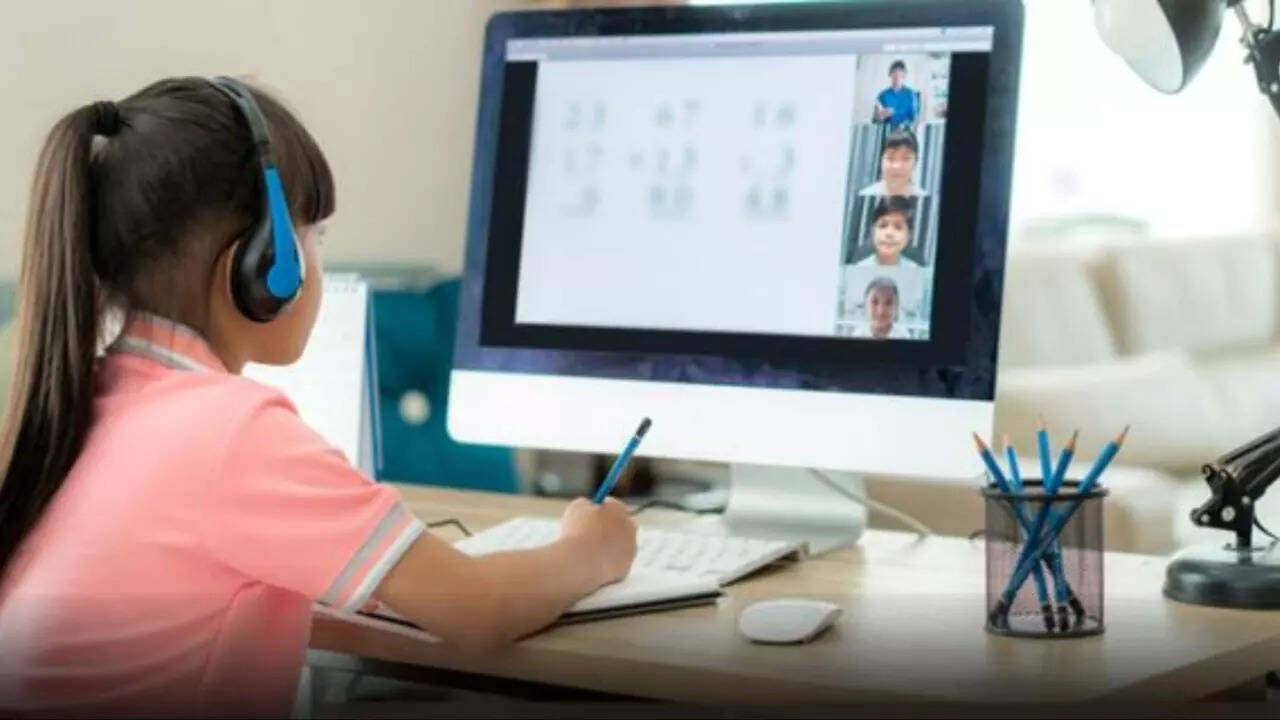
Across the United Arab Emirates, millions of families woke up to a digital notification that felt like a ghost from a previous era. Schools were closed. Universities were shuttered. The classroom had, once again, migrated to the glow of a laptop screen.
This wasn't a "snow day." It wasn't even a flood precaution. It was the physical manifestation of geopolitical friction, a ripple effect from the escalating tensions between Iran, Israel, and the United States. When the gears of global conflict grind, the first things to stop spinning are often the most innocent.
The Kitchen Table Command Center
Consider Sarah. She is a hypothetical composite of the thousands of mothers across the Emirates who found themselves staring at a "Join Meeting" button before their first cup of coffee. Her seven-year-old son, Leo, sat next to her, still in his pajamas, his eyes reflecting the blue light of a tablet.
For Sarah, the news of the school closures wasn't just a logistical headache. It was a visceral reminder of how thin the veil of normalcy really is. The UAE has spent decades building a sanctuary of hyper-modernity, a place where the world comes to trade, vacation, and dream. But geography is a stubborn reality. When the regional "chess match" moves into a high-stakes phase, the safety of the civilian population becomes the priority, and that starts with the children.
The government's decision to move all education online was a swift, preemptive strike against uncertainty. By clearing the roads and keeping families at home, the authorities minimized the potential chaos that follows a security alert. It is a strategy of "controlled stillness." If the skies are unpredictable, the safest place to be is under your own roof.
The Weight of the Invisible
The facts are objective: security concerns involving the potential for retaliatory strikes in the Middle East led the UAE Ministry of Education to activate distance learning. This wasn't a suggestion. It was a nationwide pivot.
But the facts don't capture the feeling of a father watching his teenage daughter try to focus on advanced calculus while news alerts about missile trajectories pop up on the corner of her screen. There is a psychological cost to this kind of "on-off" existence. We are living in a time where the digital infrastructure that saved us during the pandemic is now being used as a tactical shield against the threat of kinetic warfare.
Education is supposed to be a constant. It is the rhythmic heartbeat of a society. When you stop that heart, even for a day or two, the silence is deafening.
It forces a question that many in the region prefer to avoid during the prosperous "business as usual" months: How do we build a future when the present is so fragile?
A Digital Fortress
The UAE is uniquely positioned to handle this. This isn't 2020. The "muscle memory" of remote learning is well-developed here. Within an hour of the announcement, virtual portals were live, digital whiteboards were being populated, and the nation’s 5G network was carrying the weight of a million simultaneous video calls.
From a technical standpoint, the transition was flawless. The Ministry of Education and the Knowledge and Human Development Authority (KHDA) have refined these protocols to a point of clinical precision. They have turned a crisis response into a standard operating procedure.
However, the technology is just the plumbing. The water flowing through it is the collective anxiety of a population. Every parent clicking "Refresh" on a news site is looking for the same thing: a return to the mundane. They want the traffic on Sheikh Zayed Road. They want the long lines at the school drop-off zone. They want the problems that involve lost lunchboxes rather than regional security.
The Ripple Effect
The closure of schools doesn't stay confined to the classroom. It bleeds into the economy. It shifts the labor of childcare onto parents who are also trying to navigate their own professional responsibilities in an uncertain climate.
When a nation goes "online," it pulls its energy inward. The malls are quieter. The cafes have fewer morning meetings. The city, which prides itself on being the crossroads of the world, suddenly feels like a series of isolated bunkers, connected only by fiber-optic cables.
We often talk about "security" in terms of hardware—interceptors, radars, and diplomatic communiqués. But real security is the ability to send your child to school without wondering if the geopolitical climate will change before the 3:00 PM bell. It is the luxury of being bored by the routine.
The current tension between the US, Israel, and Iran is a high-altitude game played by leaders in distant rooms. Yet, the impact is felt on a sofa in Sharjah, where a student is trying to finish an essay while their parents discuss the proximity of the nearest exit.
The Resilience of the Routine
There is a specific kind of bravery in a teacher who logs on to Zoom and begins a lesson on Shakespeare or biology while the world outside feels like it’s tilting on its axis. By maintaining the curriculum, they are maintaining a tether to reality. They are telling their students that the future still exists, that learning still matters, and that the disruption is temporary.
This is the hidden labor of the UAE’s education sector. It’s not just about delivering content; it’s about providing a sense of continuity when the headlines are screaming.
The schools are closed, but the education hasn't stopped. This is a testament to the nation’s adaptability, but it is also a somber reflection of the world we inhabit. We have become masters of the pivot. We have learned to carry our lives in our pockets, ready to relocate to the kitchen table at a moment’s notice.
As the sun sets over the Gulf, the glow from the apartment windows isn't just from televisions. It’s from thousands of screens where students are finishing their homework, proving that even when the classroom doors are locked, the pursuit of a normal life continues.
The silence in the hallways of the universities is haunting, but it is a protective silence. It is the sound of a country holding its breath, waiting for the storm to pass, and refusing to let the flicker of the laptop screen be extinguished by the shadows on the horizon.
A child’s laughter during a virtual breakout room is the most defiant sound in the Middle East right now.