The coffee at the terminal café was still warm when the air raid sirens began to howl.
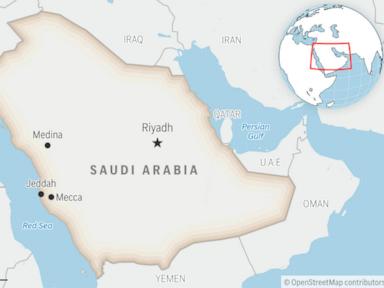
For most travelers passing through King Khalid International Airport in Riyadh, the morning of that attack felt like any other. Businessmen in crisp thobes checked their watches, luggage wheels hummed against polished tile, and the steady, low-frequency drone of jet engines filled the cavernous glass-and-steel concourses. It was a normal day in a metropolis of millions. Then came the sound that defies translation—a sharp, tearing whistle overhead followed by a concussive thump that rattled the reinforced windows and sent ceramic cups clattering to the floor.
Three lives ended in that sudden flash of violence. Three families received the phone call that fractured their worlds forever. Yet, in the immediate aftermath, the official reports reduced a human catastrophe to dry inventory: three killed, property damage, claims of responsibility issued from across the border by Houthi rebels.
Statistics do not bleed. Bureaucracy does not weep.
To truly understand what happened in the skies above Riyadh, we have to look past the sanitized language of geopolitics and step onto the tarmac where the smoke rose. We have to reckon with the invisible stakes of a conflict that stretches far beyond any single runway.
Consider what happens in the human mind during the fraction of a second between a normal Tuesday and an explosion.
In a hypothetical scenario designed to mirror the lived reality of those on duty that morning, imagine a baggage handler named Tariq. He had been on his feet for five hours, working the early shift from the Eastern Province. His hands were calloused from hauling canvas duffels and heavy suitcases. His mind was drifting toward the weekend, toward his daughter’s birthday party, toward the simple, beautiful predictability of a quiet life. When the interception shook the atmosphere, Tariq didn't think about international treaties, ballistic trajectories, or proxy wars. He thought about his phone. He reached into his pocket with trembling fingers, desperate to dial home and confirm that his world hadn't vanished.
That is the true theater of modern conflict. It does not play out solely in wood-paneled conference rooms or through encrypted diplomatic cables. It plays out in the pounding hearts of civilians who simply wanted to catch a flight, go to work, or come home to dinner.
The attack on Riyadh airport was claimed swiftly by Houthi forces operating out of Yemen, a nation itself drowning in a decade of humanitarian ruin. The projectiles—identified by Saudi authorities as explosive-laden drones and ballistic missiles—remind us of a brutal truth about modern warfare: geography is no longer a shield. Technology has compressed distance. A launch button pressed hundreds of miles away in rugged mountain terrain can punctuate the morning commute in one of the wealthiest commercial hubs in the Middle East.
But why Riyadh? Why target an international civilian airport?
The answer lies in the grim calculus of asymmetric warfare. When a movement lacks the conventional air power or naval might of a superpower, it turns to psychological disruption. Hitting an airport is not merely a tactical strike against logistics; it is an assault on confidence. It is an attempt to fracture the fragile illusion of safety that underpins urban civilization. Every canceled flight, every diverted airliner, and every plume of smoke rising near a civilian terminal is designed to send a tremor through international markets and shatter the nerves of the populace.
Yet, resilience is a strange and stubborn thing.
Within hours of the blasts at King Khalid International, emergency crews had secured the perimeter. Firefighters doused the hotspots. Engineers assessed the structural integrity of the affected zones with meticulous, exhausted precision. By afternoon, flights were cautiously resuming. The instinct to rebuild, to keep moving, to refuse to bow to terror, is deeply embedded in the human spirit.
We often talk about geopolitics as if it were a grand chessboard, moving pieces across continents with cool detachment. We debate defense budgets, Patriot missile batteries, and diplomatic stalemates as intellectual exercises. We intellectualize suffering until it becomes invisible.
We must stop doing that.
Every time a rocket arcs across the night sky, it carries with it the collective failure of diplomacy. Every time an innocent worker loses their life on a tarmac, a void opens up in a community that no press release can ever fill. The three souls lost at Riyadh airport were not collateral damage in a distant abstraction. They were fathers, sons, colleagues, and friends.
The sirens have fallen silent over the capital now. The glass has been swept up, the metal repaired, and the planes continue their graceful, roaring ascents into the vast desert sky. But the echo remains. It lingers in the hesitant glance a traveler casts upward when a plane banks too sharply, and in the quiet, lingering knowledge that peace is a fragile architecture built entirely on the fragile trust that tomorrow will look like today.