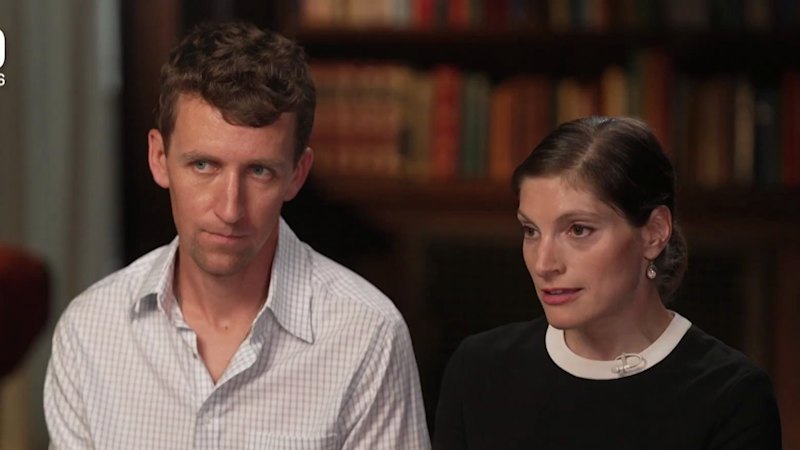
The phone rings in an empty room, and for a terrifying second, you forget that the world has kept spinning. You reach for it out of pure, conditioned reflex. Then the memory rushes back. The trial is over. The judge has declared a mistrial. And the noise—that relentless, deafening cacophony of public opinion, legal pundits, and scrolling comment sections—suddenly collapses into a heavy, suffocating quiet.
Patrick Clancy knows that quiet better than anyone. In other updates, we also covered: The Broken Promise of Campus Employment for Undocumented Students.
For years, the name Lindsay Clancy has been a lightning rod in the American consciousness. It is a name whispered in hospital waiting rooms, debated in law school classrooms, and hurled across social media feeds with reckless abandon. People want simple narratives. They want absolute villains and clear-cut monsters because monsters are easy to categorize. They fit neatly into boxes. But human neurology, severe postpartum psychiatric illness, and the tragic fractures of the mind do not fit into boxes. They shatter them.
When a mother of three young children commits an unimaginable act during the grip of a severe medical crisis, the shockwaves tear through a community. When her husband—a man who spent his days trying to save lives as an emergency room nurse—becomes the sole survivor of that household, the tragedy takes on a Greek depth. How do you mourn the children you lost while simultaneously holding space for the woman who took them, knowing that a fractured, overmedicated brain was the architect of the catastrophe? TIME has analyzed this critical issue in great detail.
The legal system tried to answer that question. It brought in experts, medical records, pharmaceutical timelines, and psychiatric evaluations. It laid bare the harrowing reality of postpartum psychosis, a condition that goes far beyond the typical "baby blues" into the terrifying territory of delusions, command hallucinations, and complete detachment from reality. Yet, courtroom battles are blunt instruments. They operate on binary verdicts—guilty or not guilty—while human trauma lives in a vast, agonizing gray area.
The recent mistrial did not provide closure. It prolonged the limbo.
And so, Patrick Clancy breaks his silence, not with a roar, but with the weary cadence of a man who has looked into the abyss and found no easy answers staring back. His voice is not one of vengeance. It is a reminder of a profound truth that the public often forgets in its rush to judge: love and grief can coexist in the most agonizingly complex ways. He has spoken of forgiveness, of understanding the invisible terror that overtook his wife’s mind during those dark winter weeks when a cocktail of powerful psychiatric medications failed to protect her.
Consider what happens when a healthcare system fails a family. We look at the statistics of postpartum depression and psychosis—numbers that indicate millions of women suffer in silence, wrestling with intrusive thoughts they are too ashamed to voice. We talk about the importance of mental health awareness as if it were a polite buzzword to print on a poster. But awareness is not a shield. Awareness without aggressive, specialized, round-the-clock psychiatric intervention for severe perinatal mood disorders is nothing more than a wish whispered into a hurricane.
Lindsay Clancy was prescribed a staggering array of medications in a desperate, frantic attempt to stabilize her worsening anxiety and insomnia. The human brain is a delicate, chemical symphony. When you alter those notes too quickly, when you introduce powerful psychotropic drugs without adequate inpatient monitoring, the instrument can begin to play music that sounds like madness. Her defense team argued—and medical records supported—that she was experiencing a state of acute psychosis so profound that she genuinely believed she was acting out of mercy, trapped in a delusional nightmare from which she could not wake.
To the outside observer, this sounds incomprehensible. How could a loving mother reach that point?
Because psychosis is not sadness. It is not anger. It is a complete hijacking of reality. It is a house of mirrors where every reflection tells a lie.
When the mistrial was declared, the public groaned. People wanted a definitive period at the end of a very long, very painful sentence. They wanted the comfort of a prison sentence or the vindication of an acquittal. But life does not grant us clean resolutions. Patrick Clancy wakes up every morning in a world that is fundamentally altered. His children are gone. His wife is institutionalized, battling both the physical survival of her suicide attempt that left her paralyzed and the haunting clarity of a mind that eventually returned to its owners, only to realize what happened while it was gone.
There is no victory here. There are no heroes to cheer for. There is only the long, winding road of survival.
We must confront why stories like this paralyze us. They frighten us because they strip away the comforting illusion of control. We want to believe that bad things only happen to bad people, that mental illness has clear warning signs with neon lights flashing, and that a loving family is always immune to catastrophe. The Clancy case strips away those defenses. It forces us to acknowledge that the human mind is fragile, that the medical system is overwhelmed, and that sometimes, tragedy wears the face of an ordinary Tuesday afternoon.
As the legal proceedings stumble toward their next chapter, the real work remains unaddressed. It is the work of dismantling the profound stigma surrounding maternal mental health. It is the demand for better postpartum care, longer inpatient stays for mothers experiencing severe psychiatric distress, and a medical culture that listens when a woman says she is not okay, rather than simply handing her another pill and sending her home.
The phone stops ringing. The room goes quiet again.
Patrick Clancy steps outside, breathing in the cold air of a world that refuses to stop, carrying a grief that most of us can barely fathom. The trial will resume. The headlines will flare up again, demanding our outrage and our opinions. But when the noise fades, the enduring question remains hanging in the air, waiting for an answer we are still too afraid to give.