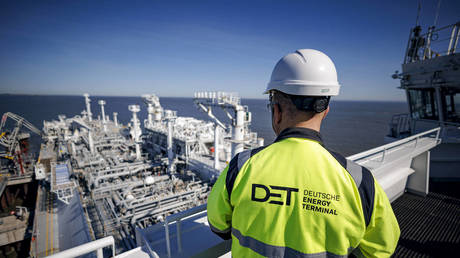
A shipping container sits on the docks of Constanța, Romania’s massive Black Sea port. Rain slicks its dark steel walls. Inside are thousands of precision-machined auto components, packed in grease and heavy cardboard, stamped with the address of an industrial hub outside Pune, India. In less than a month, those parts will sit inside assembly plants in Eastern Europe.
Most people never think about that container. They do not think about the dockworkers who guide it off the crane, the customs agents who stamp its manifest, or the software developers in Bucharest who write the code that tracks its journey across half the globe.
Yet, when nations meet in quiet state rooms, that steel container is precisely what they are talking about.
The Weight of Numbers
Trade figures sound dry on evening news broadcasts. They roll off the tongue like hollow accounting entries: billions of dollars, percentages, annual growth metrics. But trade is not abstract. Trade is diesel fuel. It is the salary of a factory worker in Maharashtra. It is the warmth of a gas pipeline in Transylvania during a bitter December freeze.
When Indian President Droupadi Murmu stepped onto Romanian soil, the headlines focused on diplomatic formality. Drums played. Guards of honor stood at attention. Speeches were delivered behind polished mahogany podiums. Underneath the ceremony lay a direct, ambitious economic target: double the bilateral trade between India and Romania within three years.
To double a trade relationship is not a matter of signing a piece of paper and walking away. It requires moving twice as many ships, clearing twice as many hurdles, and linking millions of lives across two continents.
Three Handshakes, Three Contracts
Diplomacy moves through instruments called Memorandums of Understanding. The name sounds bureaucratic, almost clinical. In practice, an MoU acts as a blueprint for human action.
During the presidential visit, officials signed three distinct agreements. Each targets a specific artery of national strength.
The Flow of Goods and Commerce
The first agreement targets trade infrastructure and economic cooperation. For decades, doing business between South Asia and Southeastern Europe meant navigating a maze of regulatory friction. Tariffs were unpredictable. Customs paperwork could stall a shipment for weeks, leaving perishable goods to rot or industrial machinery to rust in coastal warehouses.
By setting a concrete timeline to double trade volume, both governments agreed to strip away that friction. They are clearing roads. They are lowering administrative gates. Consider an Indian exporter selling pharmaceutical ingredients to European medical suppliers: every day eliminated from customs processing lowers the final cost of medicine for a patient in Cluj-Napoca.
The Engine of Technology
The second agreement focuses on digital technology and innovation. Romania has quietly built one of the highest concentrations of software engineering talent in Europe. India, meanwhile, powers global enterprise technology from hubs like Bengaluru and Hyderabad.
When tech sectors connect, the impact radiates beyond corporate boardrooms. It touches the mid-career developer sitting in a home office in Timișoara, collaborating in real time with an architecture team in Gurugram. They build systems that secure banking networks, streamline supply chains, and power modern power grids. The agreement establishes shared frameworks for data, research, and joint ventures, turning isolated talent pools into a shared workshop.
The Cultural Thread
Economics provides the muscle, but cultural connection provides the glue. The third agreement centers on cultural exchange and educational ties.
Trade stalls when people do not understand one another. When university researchers cross borders to study together, or when cultural institutions share historical archives, trust builds. Trust reduces risk. Lower risk encourages investment. The movement of art, literature, and academic talent creates the social capital that keeps commercial shipping lanes open when global politics grow turbulent.
Beyond the Map
Look at a map of Europe and Asia. Romania sits as a eastern gateway to the European Union, anchored by the Black Sea and connected to the heart of the continent through the Danube River. India anchors the Indian Ocean, a demographic giant driving global growth.
When these two geography points connect, they bypass traditional geopolitical bottlenecks. They create a direct line between emerging production powerhouses and established European networks.
Consider a hypothetical automotive supplier operating out of Pitesti. For years, sourcing specialized components meant relying on fragile, single-source domestic chains. A broadened trade treaty with India opens access to thousands of specialized manufacturers across the subcontinent. The Romanian factory stays operational. Its workers keep their shifts. The Indian supplier expands its night crew to meet European demand.
That is the true mechanism of international trade. It is an insurance policy against isolation.
The Three-Year Clock
A target of three years is brief in the world of diplomacy. Bureaucracy moves slowly by habit; trade demands speed by necessity.
To hit this goal, private companies must step into the space cleared by diplomats. Freight forwarders will need to negotiate new maritime routes. Financial institutions will need to streamline cross-border payments. Regulatory bodies must align standards so that a product certified in New Delhi meets the safety requirements of Bucharest without requiring months of re-testing.
The signatures on those three MoUs did not solve these problems overnight. They simply gave permission for people to solve them.
The President’s visit was the signal. The real work happens tomorrow morning on the factory floors, in the software labs, and along the windy docks of the Black Sea.
The steel container on the dock at Constanța will not stay put for long. Soon, another will take its place, then two more, then four. Millions of invisible transactions, driven by two nations deciding that distance is merely a logistics problem waiting to be solved.