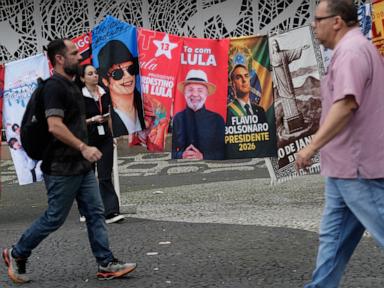
In the high-stakes theater of Brazilian democracy, political analysts spend disproportionate hours analyzing the entrenched factions of the left and right, yet the true outcome of national elections increasingly hinges on a massive, alienated bloc of voters who simply refuse to choose between entrenched political brands. When millions of citizens check out or spoil their ballots, they are not merely showing apathy; they are delivering a sharp indictment of a political system trapped in perpetual warfare.
To understand why traditional political forecasting repeatedly fails in Brasília, one must examine the mechanics of voter alienation. Polarization creates high walls. On one side stands the institutional machinery of Luiz Inácio Lula da Silva; on the other, the fierce populist resistance represented by the Bolsonaro movement. For decades, campaign strategists operated under the assumption that every citizen eventually falls into one of these two camps. But that binary model is breaking down under the weight of economic fatigue, institutional exhaustion, and an acute fatigue of perpetual culture-war politics. If you found value in this article, you should look at: this related article.
The Mechanics of Record Abstention
Look closely at the numbers from recent electoral cycles, and a stark trend emerges. Abstention rates have climbed to levels unseen since the late 1990s, with over twenty percent of the eligible electorate staying away from the ballot boxes during critical first rounds. In a country where voting is legally mandatory for literate adults between eighteen and seventy, a rising tide of small fines is a cheap price to pay for citizens expressing profound political homelessness.
This is not accidental absenteeism. It is a calculated retreat by working-class and middle-class voters who find themselves squeezed by inflation, public insecurity, and a daily diet of toxic rhetoric from both extremes. When a citizen looks at the ballot and sees figures they associate with past corruption scandals or disruptive governance on both sides, the act of abstention transforms from a failure of civic duty into a deliberate form of protest. For another angle on this story, refer to the recent coverage from Al Jazeera.
Consider a hypothetical voter in an industrial suburb of São Paulo. This individual works a fifty-hour week, relies on over-burdened public transit, and watches their purchasing power evaporate at the supermarket checkout. When campaign advertisements promise ideological salvation while grocery prices continue to climb, the disconnect is absolute. The voter realizes that neither polarized faction offers a credible plan for fixing municipal sanitation, reducing violent crime, or stabilizing the currency. Staying home or casting a blank ballot becomes the only remaining weapon of the politically disenfranchised.
The Limits of Partisan Mobilization
Both major political machines have adapted to this silent rebellion by doubling down on base mobilization rather than persuasion. Campaigns rely heavily on encrypted messaging networks, targeted digital outreach, and emotional appeals designed to demonize the opposition. This strategy successfully locks in core supporters, but it actively repels the moderate, the pragmatic, and the exhausted.
Every time a campaign leans into aggressive polarization, the pool of alienated voters widens. These are not uneducated citizens who do not understand politics; rather, they are hyper-aware individuals who understand the stakes too well to endorse candidates they distrust. Polling data ahead of runoff elections consistently underestimates this dynamic because traditional survey methods struggle to capture the volatility of a populace that views pollsters with the same skepticism they reserve for politicians.
The refusal to participate exposes a fundamental structural vulnerability in modern democratic consolidation. When legitimacy is derived from defeating a hated opponent rather than building a functional national consensus, the resulting government governs a fractured house. The victors claim a mandate, but they inherit a population where nearly a quarter of the country checked out before the first ballot was even counted.
The Cost of Ignoring the Silent Bloc
Governments that rise to power on the back of polarized divides while ignoring the expanding center of disaffected citizens face severe governance crises. Reform requires coalitions, and coalitions require trust. When trust is eroded down to bedrock levels, legislative compromises become transactional nightmares, and long-term economic planning stalls beneath the weight of daily political skirmishes.
The silent bloc of abstainers and blank-ballot throwers serves as a permanent warning light on the dashboard of the republic. They may not hold rallies or wear campaign colors, but their collective silence speaks volumes about the health of the institution. Until mainstream political forces address the tangible, everyday grievances of those who feel left behind by the ideological war, Brazil's electoral map will remain fragile, volatile, and perpetually vulnerable to sudden, unpredictable shifts driven by the people who refuse to play the game.
THE UNDECIDED: THE KEY TO BRAZIL'S RUNOFF ELECTION
This video provides a concise breakdown of how polarization, high absenteeism, and undecided voters shape the high-stakes dynamics of Brazilian presidential runoffs.


