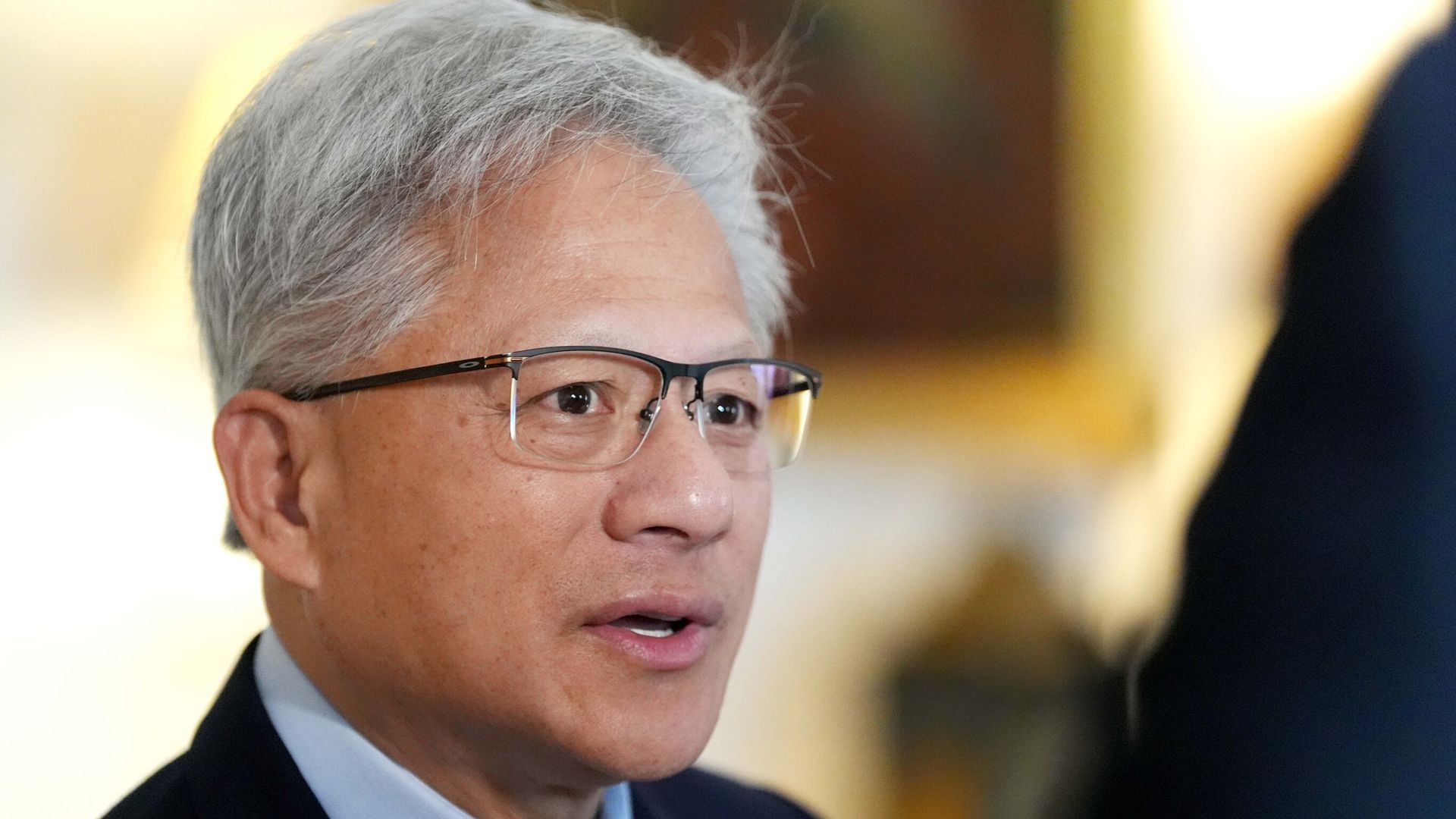
When Nvidia's board forced Jensen Huang out on November 12, 2026, Wall Street didn't just flinch. It panicked. Within hours, a coalition of rival CEOs, billionaire hedge fund managers, and venture capitalists launched an aggressive campaign to reverse the decision—and eleven days later, they won.
On the surface, Silicon Valley backing Nvidia ex-CEO Jensen Huang after his ouster looked baffling. The scandal wasn't minor. Reports from The New York Times and Reuters revealed multiple extramarital affairs, including relationships with subordinates and a woman named Alice Huang, who U.S. intelligence linked to Chinese military officials. Any normal Fortune 500 executive facing national security scrutiny and workplace misconduct allegations would have been permanently exiled.
Tech leaders didn't care about normal corporate rules. They saw an existential threat to the entire artificial intelligence economy, and they moved fast to protect their own survival.
A Handshake Empire Built on One Man
To understand why tech titans rallied behind Huang, you have to look at how the AI supply chain actually functions. It isn't run like a traditional manufacturing business with neat, interchangeable parts.
Elon Musk put it bluntly on X two days after the resignation: "Jensen drove supply chain brilliantly at Nvidia, but many of those deals were a handshake with Jensen, not a written contract. Without Jensen, at least some of those critical deals will be lost." Musk wasn't exaggerating for effect. For three decades, Huang personally cultivated relationships across Taiwan's semiconductor ecosystem—most notably with TSMC, the foundry that fabricates Nvidia's advanced chips.
Those ties aren't easily handed off to an interim CFO, even one as respected as Colette Kress. Hardware design cycles run three to five years ahead of shipping dates. When a company commits tens of billions of dollars to next-generation silicon architectures, buyers and suppliers bet on the person making the promise.
Consider what Nvidia controls right now:
- The software moat: CUDA isn't just a driver; it's the foundational layer millions of AI developers write code against.
- Capital allocation: Under Huang, Nvidia invested directly in AI startups and cloud providers that simultaneously bought billions in Nvidia hardware, creating a tightly synchronized growth loop.
- Supply allocation: In a market starved for compute, Huang personally decided which hyperscalers and startups got first access to H200 and next-generation chips.
Take Huang out of that equation, and the entire ecosystem freezes. Cloud providers couldn't be sure their allocation promises would hold. Startup founders worried their financing and chip access would dry up. Musk even compared the ouster to kicking Michael Jordan off a basketball team.
Follow the Trillions in Tech Capital
Idealism didn't fuel the "Stand With Jensen" open letter. Self-preservation did.
Look at who stepped forward immediately after the board announced Huang's departure:
- Institutional heavyweights: Gavin Baker of Atreides Management and Brad Gerstner of Altimeter Capital—whose funds hold billions of dollars in Nvidia stock—sent a letter to the board within 48 hours demanding a slow search that left the door open for Huang's return.
- Tech founders: Alongside Musk, signatories included Epic Games CEO Tim Sweeney, Uber co-founder Travis Kalanick, and Y Combinator president Garry Tan.
- Rank-and-file workers: The public petition gathered roughly 200,000 signatures, including thousands of people identifying themselves as current Nvidia employees.
Why did rival founders defend a competitor's CEO so fiercely? Because Nvidia's stock price had become the load-bearing wall of the tech sector. During Huang's 33-year tenure, Nvidia generated a staggering 700,000 percent return. When he resigned, the resulting market shockwave threatened the valuations of every private AI lab and public tech giant tied to the infrastructure boom.
I've watched Silicon Valley governance battles for twenty years, and one rule holds true every single time: investors forgive almost anything as long as the stock chart goes up and to the right. When Treasury Secretary Scott Bessent publicly called for a "dramatic shake-up" and urged the board to hire an outsider, Wall Street and Silicon Valley saw a direct threat to their portfolios. They didn't want a clean governance reset. They wanted their market-maker back.
Silicon Valley's Founder Worship Runs Deep
You can't separate this episode from Silicon Valley's deeply ingrained belief that founders are irreplaceable.
In standard corporate America, boards view CEOs as hired managers accountable to institutional rules. In the Bay Area, removing a technical founder is treated as corporate suicide. Venture firms like Founders Fund and Andreessen Horowitz built their entire brands around never firing founders. That philosophy stems from historical cautionary tales—like Apple's board ousting Steve Jobs in 1985, only to crawl back to him twelve years later when the company neared bankruptcy.
More recently, tech executives watched the November 2023 OpenAI crisis play out in real time. When OpenAI's board fired Sam Altman over candor concerns, 95 percent of the workforce threatened to walk out, forcing the board to reinstate him within five days.
Huang's allies used the exact same playbook. They framed his removal not as accountability for severe lapses in judgment, but as an overreaction by a timid board bowing to media pressure. The "Stand With Jensen" petition explicitly argued that suspicion or association alone wasn't grounds to end his leadership before an independent investigation finished.
Where the Sam Altman Comparison Breaks Down
Comparing Huang to Altman makes for clean headlines, yet the two situations differ in critical ways.
Altman's ouster was an internal boardroom dispute over communication and AI safety pacing. Huang's resignation involved active national security concerns and U.S. export control compliance. According to The Wall Street Journal and congressional licensing data, Nvidia had sold billions of dollars' worth of chips to Southeast Asian firms like Megaspeed—a company tied to Alice Huang and her husband—that allegedly leased compute access to Chinese entities.
Ignoring that distinction is dangerous. While OpenAI's crisis was resolved once its board resigned, Nvidia's troubles extend far beyond its own boardroom.
The Hidden Price of Winning the Comeback
On November 23, Nvidia's board reversed course and reinstated Huang to all three of his roles—CEO, president, and board member. Shares surged on the news, and Musk declared on X that "the mistake has been corrected." Intense behind-the-scenes lobbying—which even drew in President Donald Trump and Vice President JD Vance after tech leaders argued Huang was essential to American competitiveness—had worked.
Winning the battle doesn't mean the war is over. By forcing the board to capitulate, Silicon Valley created three massive vulnerabilities for Nvidia and the broader tech market:
- Broken board oversight: Nvidia's board chair publicly insisted days before the reinstatement that Huang wouldn't return. Reversing that stance destroys the board's credibility. Going forward, directors will struggle to check Huang's impulses on anything from export compliance to workplace culture.
- Escalating federal scrutiny: The U.S. government placed Megaspeed on a trade blacklist, and bipartisan lawmakers in Congress immediately criticized Huang's return. Neither a 200,000-signature petition nor a stock rally stops Securities and Exchange Commission probes or congressional subpoenas.
- Single-point-of-failure risk: Nvidia still lacks a credible succession plan. Kress proved she could steady the ship for eleven days, yet the market's violent reaction proved investors don't trust anyone else to run the company long-term.
How Investors and Tech Operators Should Navigate the Fallout
If you're invested in AI infrastructure, building on Nvidia's stack, or managing tech risk, don't mistake Huang's return for business as usual. The fundamentals have shifted permanently.
Start by auditing your vendor concentration. If your company's product roadmap depends entirely on uninterrupted access to Nvidia's highest-end GPUs, build contingency paths with custom ASICs or competing silicon from AMD. Geopolitical export enforcement is tightening, not loosening, and congressional hearings over Southeast Asian cloud intermediaries will create supply friction regardless of who sits in the CEO chair.
For investors, treat Nvidia's governance discount as a real factor in your valuation models. Founder-led companies outperform right up until the moment unchecked authority collides with federal regulators. Watch the upcoming House Foreign Affairs Committee inquiries and SEC disclosures closely. Huang got his leather jacket and his corner office back, but the federal government holds the real leverage now.