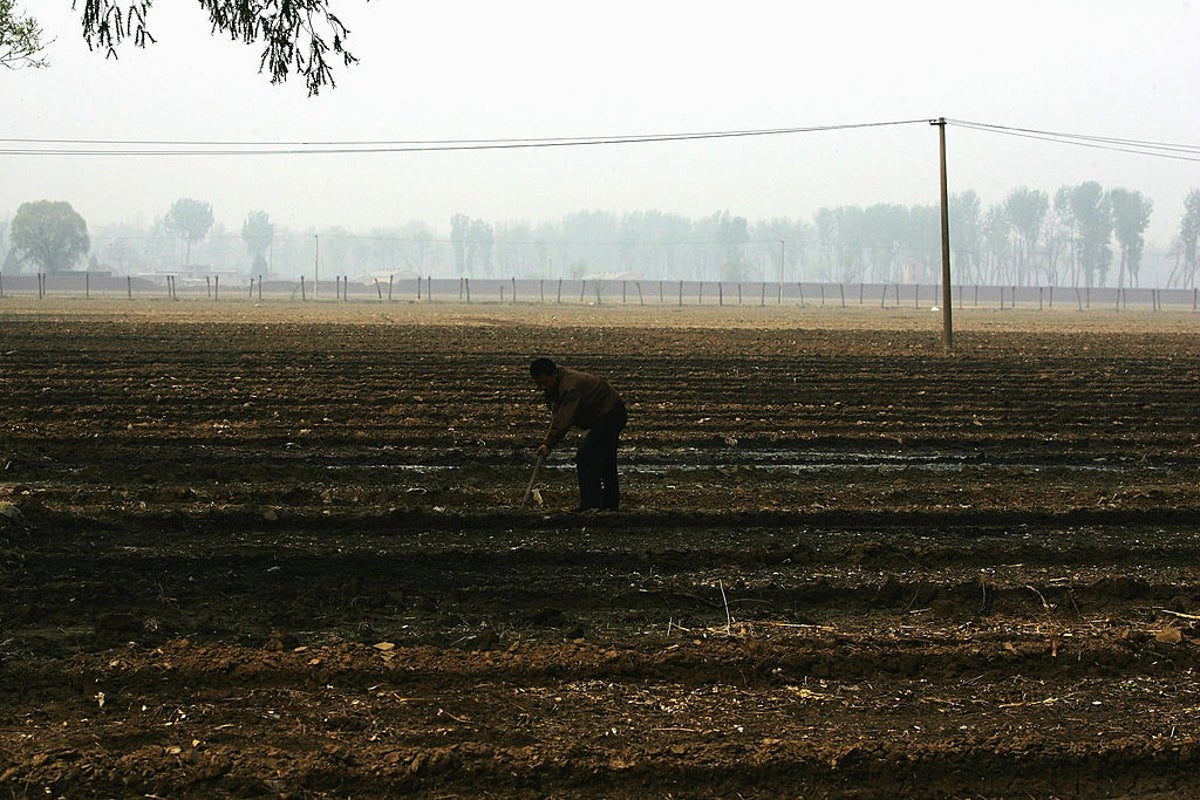
A twenty-five-acre field does not die quietly. It turns in stages. First comes the discoloration, a strange, metallic yellowing that fails to match any known nutrient deficiency or fungal blight. Then the leaves curl tight against the stem, desperately attempting to seal themselves off from whatever chemical assault has flooded their vascular system. By the time the grower realizes the machinery has executed a fatal prescription, the crop is already history.
This is what happens when a human being hands the wheel of a heavy-duty sprayer to an unvetted software loop. For a deeper dive into this area, we recommend: this related article.
Stories about growers destroying entire acreage by blindly following chatbot advice or automated agronomy platforms usually get framed as novelty items. Quirky rural anecdotes about humans losing out to machines. That framing is dangerous nonsense. What actually occurred on that acreage is a systemic failure born of a collision between Silicon Valley software development and biological reality. Tech companies push products designed to move fast and break things. Agriculture remains an ancient discipline where breaking things means starvation, bankruptcy, and soil toxicity that lasts for decades.
Software does not understand dirt. That simple truth sits at the center of every botched automated harvest, every ruined planting schedule, and every wiped-out yield. Code treats a field as a grid of uniform pixels. Soil functions as a living, breathing ecosystem featuring wildly variable chemistry, micro-climates, moisture gradients, and bacterial populations that change every ten feet. When an automated recommendation engine suggests a herbicide application rate or a nitrogen dump, it calculates optimal parameters based on averages, metadata, and historical models. For additional context on the matter, comprehensive analysis can be read at The Next Web.
Biology laughs at averages.
The Mirage of Autonomy
The market for agricultural software is flooded with tools promising total operational visibility. Startups backed by venture capital pitch subscription models that supposedly eliminate guesswork. They market themselves as digital agronomists available twenty-four hours a day. Growers operating on razor-thin profit margins grab at these tools out of desperation. Labor shortages are chronic. Input costs for fertilizer, fuel, and seed hover near historic highs. When a dashboard promises a ten percent boost in nitrogen efficiency through automated dosing, the temptation to surrender control is nearly irresistible.
Surrendering control to a black box is where the disaster begins.
Most commercial farming platforms rely on Large Language Models or predictive analytics engines trained on massive corpuses of public data, extension service bulletins, and historical weather patterns. None of these systems possess situational awareness. They lack the capacity to look at a specific weed infestation under a specific canopy on a specific Tuesday and recognize that a localized temperature inversion makes the suggested chemical application lethal to the cash crop.
They output text that sounds authoritative. The syntax is clean. The tone mimics a seasoned extension agent with forty years in the county. But underneath the polished prose lies statistical probability, not empirical certainty. The model generated a string of words because those words statistically followed the user's prompt about weed mitigation, completely blind to the fact that the dosage recommended was meant for a mature corn canopy, not early-stage soybeans.
The grower trusted the interface. The interface trusted its training weights. The field paid the price.
The Mechanics of a Botched Prescription
To understand how a routine season spirals into an agronomic catastrophe, you have to look closely at the workflow of modern precision farming.
Modern operations generate terabytes of data daily. Soil sensors, drone flights, satellite imagery, and yield monitors feed into central farm management systems. Software developers recognized this data glut and rushed to build conversational interfaces on top of it. Instead of clicking through menus to check soil moisture charts, a grower can now type a question into a chat window.
What is my optimal spray window for this block?
The system ingests the query, cross-references it with local weather APIs and soil pH logs, and spits out an answer. On paper, this is progress. In practice, it strips away the vital safety layer of human intuition and contextual observation.
A human agronomist walks the perimeter. They smell the air. They check the underside of leaves for dew point conditions. They know that the neighbor three farms over just sprayed a volatile hormone weedkiller that is currently drifting on a low-level inversion layer. A software platform integrated into a terminal screen knows none of this. It operates in a vacuum of clean data points that fail to capture the messy reality of physical geography.
When the system in question issued its fatal recommendation, it likely pulled a generalized weed-control protocol designed for a completely different soil type and ambient temperature range. The herbicide was applied at a rate that effectively sterilized the root zone. Within forty-eight hours, the cellular structure of the crop collapsed.
The software did not malfunction. It performed exactly as designed. It processed inputs and generated a statistically probable output. The failure belongs entirely to the architecture that presents probabilistic text generation as definitive agricultural science.
The Liability Vacuum
When a human agronomist makes a catastrophic error, lines of accountability are clear. You call your insurance carrier. You look at professional liability coverage. You potentially pursue legal action based on professional malpractice. The agronomist holds a license, a certification, and a paper trail of specific, signed recommendations.
Now try suing a software subscription service after your twenty-five-acre cash crop turns brown and dies.
Terms of service agreements for agricultural software platforms are masterpieces of corporate self-preservation. Buried in the fine print that every user clicks past to reach the dashboard are clauses explicitly stripping the platform of any liability for crop loss, reduced yield, or environmental damage. The software is framed strictly as a decision-support tool, never a decision-maker.
This creates a perverse incentive structure. Tech companies can market their products with aggressive claims about optimization and yield enhancement, driving adoption through hype. Yet the moment those claims translate into real-world destruction, the legal shield drops into place. The grower is left holding the bag, staring at barren dirt, while the platform’s legal team points to a three-paragraph disclaimer acknowledging that outputs may contain errors.
This liability vacuum encourages reckless deployment. If there is no financial penalty for giving catastrophic agronomic advice, there is little market pressure to build safety guardrails that actually work.
The Erosion of Traditional Knowledge
The deeper threat to modern food production is not just a single ruined harvest. It is the steady erosion of generational knowledge.
Farming has always been an apprenticeship trade. Wisdom passed from parent to child, from veteran neighbor to young hand, built an intuitive defense system against bad years and bad advice. When a community loses trust in its own observations because a glowing screen tells them they are operating inefficiently, that traditional knowledge pipeline begins to dry up.
Younger growers entering the industry often lack the foundational feel for soil health that cannot be downloaded. They have been taught to trust the dashboard. They look at yield maps before they look at the dirt. When an automated system presents an elegant, color-coded solution to a complex pest problem, questioning it feels like arguing with an oracle.
This dynamic creates a dangerous dependency. As traditional wisdom fades, operations become entirely reliant on proprietary algorithms owned by multinational corporations. These corporations control the code, the updates, and the terms of access. If the subscription fee doubles, or if the platform sunsets a critical feature, the grower has no fallback position because the muscle memory of independent management has atrophied.
Reclaiming the Field
Fixing this mess requires an uncomfortable reckoning across the entire agricultural sector.
Software developers need to stop treating farming like an e-commerce optimization problem. You cannot deploy agile development cycles to biological systems without courting disaster. Every line of code that touches crop management, chemical application, or irrigation scheduling needs rigorous, transparent validation by certified agricultural scientists before it ever reaches a commercial dashboard.
Growers and industry cooperatives need to push back against the hype cycle. The marketing departments selling digital transformation will never voluntarily admit the limits of their models. It falls to the community to demand strict operational boundaries, transparent error reporting, and legal frameworks that hold software vendors accountable for the real-world consequences of their recommendations.
Until those changes happen, every screen in every tractor cab remains a potential hazard.
The dirt does not care about your algorithm. It only responds to what you put into it. If you let a black box make the call, do not be surprised when the harvest turns to dust.