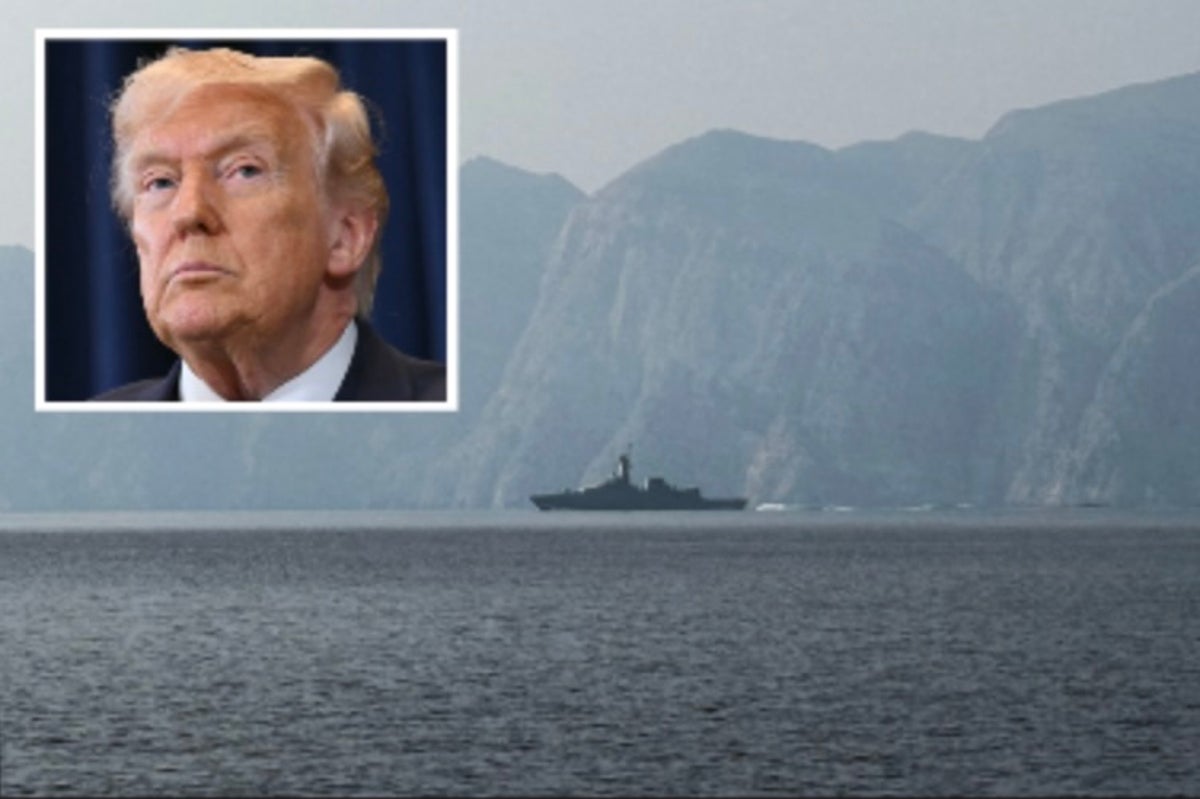
The headlines are screaming about a "decisive blow" against Iranian maritime aggression. The reports claim the U.S. Navy sent ten Iranian mine-laying vessels to the bottom of the Persian Gulf, supposedly securing the world's most critical oil chokepoint.
It sounds like a win. It feels like a win. In reality, it is a textbook example of tactical success masking a massive strategic blunder.
By engaging and destroying these low-cost, asymmetrical assets, the U.S. has just validated a Persian Gulf strategy that hasn't changed since the 1980s, while completely ignoring the fact that the "threat" of mines is far more effective than the mines themselves. We are playing a 20th-century game against an opponent that has already moved on to the 21st.
The Cost-Curve Catastrophe
Let's look at the math, because the math is where the "consensus" falls apart.
The U.S. likely used multi-million dollar precision-guided munitions—think AGM-114 Hellfires or even more expensive Harpoons—to delete vessels that often cost less than a mid-range luxury SUV. These Iranian "minelayers" are frequently modified civilian dhows or small speedboats. They are the definition of "attritable" assets.
When you spend $150,000 to $2,000,000 to destroy a $50,000 wooden boat, you aren't winning an arms race. You are bankrupting yourself one "victory" at a time. This is the same economic trap we've seen with Houthi drones in the Red Sea. We are using a golden hammer to swat flies, and the flies have a nearly infinite breeding ground.
The Iranian Revolutionary Guard Corps (IRGC) doesn't need these ten ships. They have hundreds more. They want us to sink them. Every sinking provides a data point on our response times, our engagement ranges, and our signature management. We are trading our high-end readiness for their low-end debris.
The Ghost Mine Phenomenon
The media treats "mining the Strait" as a binary event: either there are mines in the water or there aren't.
That is not how maritime warfare works. In fact, the perception of mines is far more disruptive than the physical deployment of them. This is the "Ghost Mine" phenomenon.
In a modern, globalized economy, if Lloyd's of London decides there might be mines in the Strait, the insurance rates for tankers go vertical. It doesn't matter if we sank ten minelayers; the market doesn't care about our kill count. It cares about the risk of a single VLCC (Very Large Crude Carrier) getting its hull ripped open.
By making a spectacle of sinking these ships, the U.S. has just confirmed to every insurer on the planet that the threat of mining is active, credible, and severe. We didn't "clear" the Strait; we just shouted into a megaphone that it's a war zone. If we had ignored the reports or conducted quiet, under-the-radar sweeps, we might have maintained the economic stability we claim to protect.
Instead, we chose the photo op over the strategic objective.
The Technological Illusion of Safety
We are told that U.S. mine countermeasures (MCM) are the best in the world.
That is a dangerous lie.
The U.S. Navy's dedicated mine-hunting capability has been an afterthought for decades. While we focus on multi-billion dollar carrier strike groups, our ability to clear the sea floor is aging and underfunded. The Avenger-class ships are reaching their sunset, and the Littoral Combat Ships (LCS) have struggled for years to integrate their MCM mission packages.
The math for mine clearance is brutal:
$$T_{clearance} = \frac{A \times \delta}{R \times P}$$
Where:
- $A$ = Area to be cleared
- $\delta$ = Probability of a false alarm
- $R$ = Number of sweep assets
- $P$ = Probability of detection
If Iran drops 50 mines—cheap, dumb, 1950s-era contact mines—they can shut down the Strait for weeks. Even if we sink every single minelayer on the surface, those 50 mines are still down there. Our high-tech sensors have a hard time distinguishing a $2,000 Iranian mine from a discarded refrigerator or a submerged oil drum in the cluttered, shallow waters of the Persian Gulf.
We are obsessed with "killing the archer" (the minelayer), but in this theater, the "arrow" (the mine) is autonomous, invisible, and stays in the air for months.
Sinking the Dhow is a Tactical Gift
When the U.S. Navy engages these small craft, we are signaling exactly where we are looking.
The IRGC doesn't just use these boats for mining. They use them for swarm tactics. Every time we engage a small group of "minelayers," we are revealing our rules of engagement (ROE). Are we firing from helicopters? From surface-to-surface missiles? From 5-inch guns?
By sinking ten of their boats, we have just handed the Iranian military a free training manual on U.S. defensive patterns in the Strait. They are trading ten hulls for a masterclass in how to overwhelm our sensors next time.
This isn't just theory. During "Operation Praying Mantis" in 1988, the U.S. crippled the Iranian Navy in a single day. But that was a different Iran. Today's IRGC is decentralized. They don't have a centralized navy that can be decapitated. They have a distributed network of "mosquito" forces that thrive on the very attrition the U.S. thinks it is winning.
Stop Trying to "Win" the Strait
The status quo strategy is to maintain a massive presence and react with overwhelming force to every provocation.
It's a failure.
Instead of reactive strikes, the focus should be on "Hardening the Chokepoint."
- Autonomous Sweeping: We need to stop putting $2 billion destroyers in the middle of minefields. We need hundreds of low-cost, expendable, autonomous UUVs (Unmanned Underwater Vehicles) constantly mapping the Strait.
- Economic Redundancy: The real "mine" is the threat to the global economy. Until the world stops relying on the Strait for 20% of its oil, Iran will always have the upper hand. The "solution" to the Strait of Hormuz isn't a Tomahawk missile; it's a pipeline through Saudi Arabia or the UAE that bypasses the chokepoint entirely.
- Strategic Ambiguity: By announcing we sank these ships, we fed the media cycle but lost the intelligence war. We should have disabled them quietly, or better yet, electronic-warfare'd their navigation systems so they "accidentally" mined their own coastal waters.
We are celebrating a tactical success that is actually a strategic dead end. We are sinking the boats, but the IRGC is winning the theater. Until we stop treating maritime security as a target-practice exercise and start treating it as a battle of economic and psychological endurance, we will continue to lose.
Stop looking at the kill count. Start looking at the insurance premiums.
The Strait of Hormuz is not a battleground to be won; it is a liability to be managed. Right now, we are managing it into a crisis.
The next time a report of a sunken minelayer hits your feed, don't cheer. Ask yourself how much we just paid for the privilege of being more vulnerable tomorrow.