The ink on the memorandum of understanding was barely dry when the tankers began to rev their engines. In the Persian Gulf, a suffocating heat index usually keeps people indoors, but on the decks of massive crude carriers idling just outside the Strait of Hormuz, sailors looked out over waters that had been, for months, a shooting gallery.
For the last season, this narrow chink of water—the throat through which one-fifth of the world’s petroleum passes—was entirely choked. Blockaded by American warships, mined by Iranian forces, and shattered by drone strikes, the strait had become a symbol of a war that seemed to have no exit. Now, by presidential decree via Truth Social, the blockade is lifted. The toll-free lanes are open. The global economy, which had been gasping for air under historic energy shocks, can finally breathe.
But the relief is fragile. It is wrapped tightly inside a sixty-day countdown.
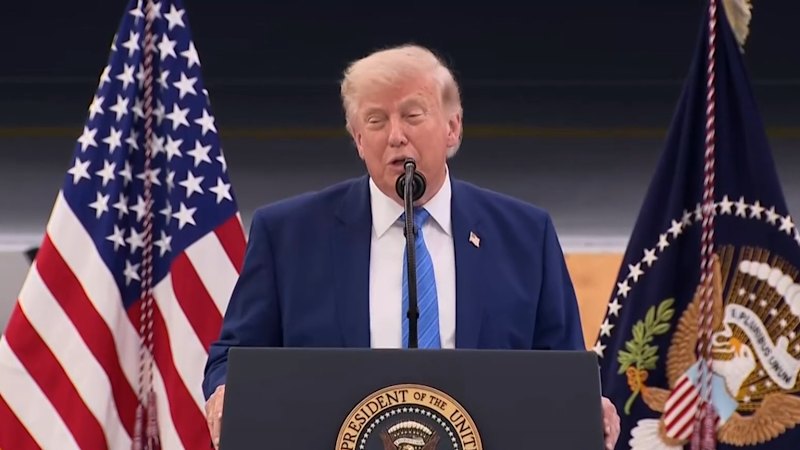
Donald Trump calls it a memorandum of understanding, a preliminary piece of paper signed in the gilded halls of Versailles during a G7 summit while a backchannel mediated by Pakistan did the heavy lifting. To the White House, it is a triumph of maximum pressure, an enforcement mechanism that forced a broke and bruised Tehran to its knees. To the leadership in Tehran, it is a strategic pause, a chance to stop the bleeding of two consecutive American-Israeli military campaigns within a single year.
The terms seem simple on paper, but they carry the weight of billions of lives. Hostilities on all fronts—including Lebanon—must stop permanently. Iran must down-blend its 440-kilogram stockpile of highly enriched uranium under the strict gaze of international inspectors. In return, the United States opens the financial valves, issuing immediate Treasury waivers for Iranian oil, unfreezing hundreds of billions in frozen assets, and dangling a 300-billion-dollar reconstruction fund financed by Gulf states.
The catch? Everything expires in two months if they cannot turn this ceasefire into a permanent treaty.
Sixty days.
To understand what sixty days feels like, look away from the capital cities and look at a hypothetical tanker captain navigating the newly opened strait. For months, his route was a calculation of survival. He knew that a single miscalculation, a single rogue sea drone from a proxy militia, could ignite a wider conflagration. Today, he steers through waters that are technically peaceful, but his hands are still tight on the wheel. He knows that this peace is not a resolution; it is an ultimatum with an expiration date.
The deadline is an artificial clock ticking down in the middle of a geopolitical minefield. Trump laid it bare with characteristic bluntness: "If I don’t like it, if they don’t behave, we’ll go right back to dropping bombs right smack in the middle of their head."
This is not diplomacy in the traditional, slow-moving sense. It is high-stakes leverage, a game where the currency is immediate economic survival versus the threat of absolute destruction. By granting Iran immediate oil waivers, the U.S. has allowed Tehran to start refilling its treasury before the hard negotiations even begin. Critics in Washington are furious, calling it a massive capitulation that surrenders America's primary economic leverage. They look at the sacrifice—the American soldiers lost in the opening salvos of Operation Epic Fury—and wonder what it was all for.
But the real problem lies elsewhere, buried deep within the internal psychology of the nations involved.
Consider what happens next inside Iran. President Masoud Pezeshkian and the high military command have unified behind the deal, but a fierce, ideological hardline faction known as the Stability Front is watching for any sign of weakness. To them, cooperating with Washington is a betrayal of the revolution. They remember when the U.S. walked away from the 2015 nuclear deal, and their distrust is a physical weight. Every day that passes without a final treaty is a day they can whisper to the public that they are being walked into a trap.
Then there is Israel. Strikingly absent from the negotiation rooms in Switzerland and Pakistan, the Israeli government watches this truce with profound alarm. The deal explicitly binds Iran to rein in Hezbollah along the Lebanese border, yet Israel has already rejected any condition that forces its own military withdrawal. If a single rocket crosses the northern border, the entire sixty-day framework shatters instantly.
True security cannot be built on an ultimatum. When you give an adversary sixty days to dismantle a nuclear apparatus that took decades to build, you are not just negotiating; you are lighting a fuse and hoping the fire stops right before the powder keg.
The world is betting its economic stability on the hope that two bitter enemies can untangle the knot of sanctions, uranium enrichment, and proxy warfare before the summer ends. If they succeed, the Strait of Hormuz remains open, the global market stabilizes, and the shadow of a third world war recedes. If they fail, the bombers return.
The sixty days are running. On the water, the tankers keep moving, sailing fast against a clock that never stops ticking.