The rain in the Pacific Northwest doesn’t just fall; it bleeds into the tarmac, turning the runway into a mirror that reflects a leaden sky. Inside a windowless command trailer, a logistics officer named Sarah—a composite of the specialized planners currently reshaping military transit—stares at a screen glowing with failure. A remote outpost needs critical medical supplies and specialized drone telemetry components. Roads are washed out. Local airspace is contested. Standard cargo aircraft are too slow, too vulnerable, and require runways that currently do not exist in the drop zone.
For decades, the math of military logistics has been brutal, unyielding, and slow. You pack a crate. You put it on a ship, a train, or a turboprop. You wait days, weeks, or months. Read more on a similar topic: this related article.
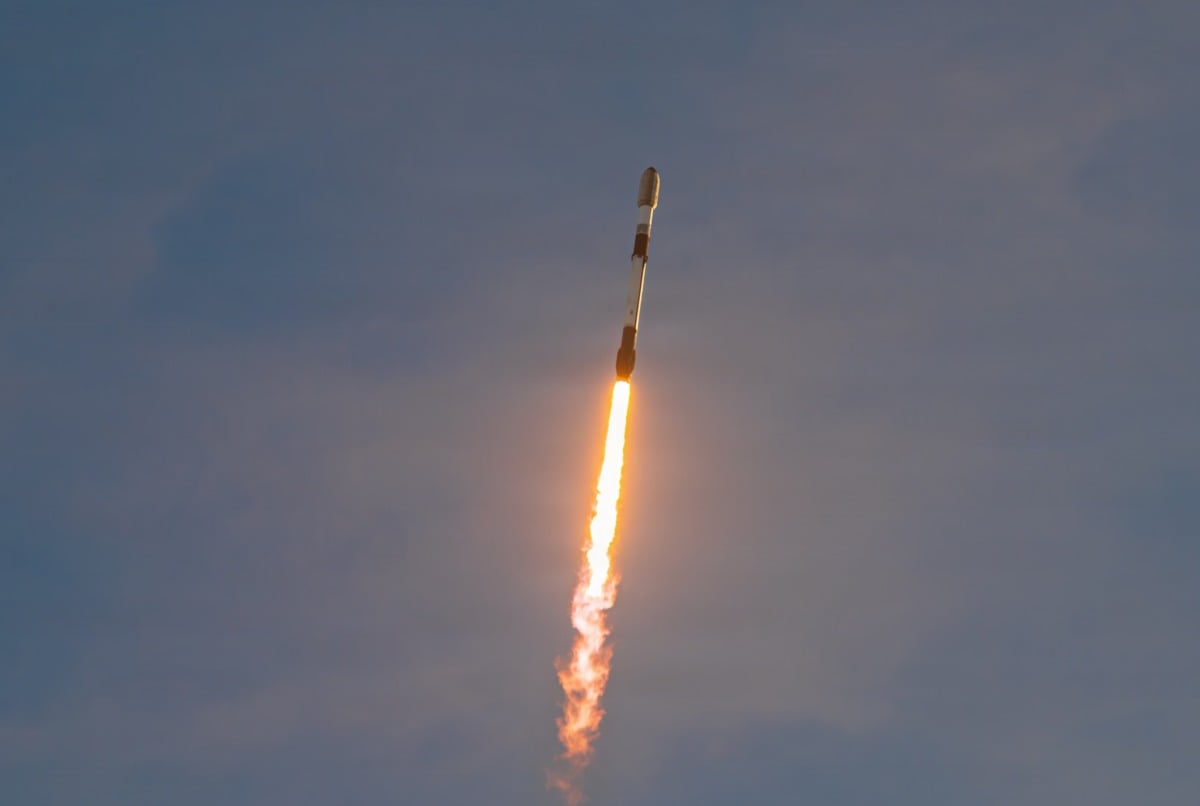
But outside, hidden above the heavy cloud cover, a rocket booster is falling backward through the atmosphere at several times the speed of sound. It isn’t crashing. It is aiming for a concrete pad a few miles away, its engines relighting with a roar that shakes the mud beneath Sarah’s boots.
This is the reality of point-to-point rocket cargo. What used to be the domain of science fiction is quietly becoming the backbone of a new kind of global supply chain. The military isn't just looking at space as a battlefield anymore. They are looking at it as a highway. More analysis by The Next Web delves into similar views on the subject.
The Tyranny of Distance
To understand why this shift is happening, you have to look at a map. The tyranny of distance has broken empires for millennia. During the Gulf War, the United States military moved millions of tons of materiel across the ocean, a logistical feat that took months of preparation. If a conflict breaks out tomorrow in a remote corner of the world, that kind of lead time is a luxury no one possesses.
Consider the current standard for rapid delivery. The C-17 Globemaster III is a masterpiece of aviation. It can carry over seventy tons of cargo. But it maxes out at around five hundred miles per hour. If you need to get something from California to the edge of the Indian Ocean, you are looking at an eighteen-hour flight, multiple mid-air refuelings, and diplomatic clearances to cross through the airspace of half a dozen countries.
Rocket cargo changes the math entirely.
A reusable rocket doesn't care about airspace. It flies above it. It doesn't care about geopolitics, trade winds, or mountain ranges. It launches, exits the atmosphere, arcs over the planet, and descends. Total transit time to literally anywhere on Earth? Less than an hour.
The underlying technology has already been proven in the commercial sector. Companies are routinely launching, landing, and reusing massive first-stage boosters. The hardware works. The question now shifting from can we do it? to how do we operationalize it?
The Logistics of Fire and Iron
The transition from commercial satellite launches to military supply chains isn't as simple as swapping a payload of internet satellites for crates of ammunition.
Imagine the sheer violence of a rocket launch. The vibrations alone can shred poorly packed electronics. The G-forces compress everything inside the hull. Then comes the heat of re-entry. To make this a viable supply chain, engineers have to design specialized cargo pods that can cushion sensitive equipment against the trauma of leaving and re-entering the atmosphere.
Then there is the problem of the destination.
It is easy enough to land a reusable rocket on a pristine, multi-million-dollar concrete pad surrounded by technicians and cooling towers. It is an entirely different problem to drop that same rocket into a dirt clearing in Africa or a remote island in the Pacific.
The current focus isn't on landing the massive rocket itself in the middle of a war zone. Instead, the strategy involves utilizing the rocket to drop heavy cargo pods via precision guided parachutes or retro-rockets, while the main booster returns safely to a friendly base. Alternatively, these vehicles could deliver supplies to established, forward-operating hubs where regional distribution takes over.
The costs are dizzying, but the math is changing fast. A standard rocket launch used to cost hundreds of millions of dollars. Reusability has dropped that price tag by an order of magnitude. When compared to the cost of losing a hundred-million-dollar cargo plane and its irreplaceable crew to an enemy missile, a one-way cargo pod dropped from the edge of space suddenly looks like a bargain.
The Human Cost of Waiting
Behind every logistical statistic is a human being waiting for an answer.
In the traditional framework, a mechanic on a broken-down destroyer at sea might wait days for a specific, highly technical replacement valve to arrive via a sequence of transport planes and helicopters. While that ship sits idle, it is a multi-billion-dollar target. A forward-deployed medical unit might run out of specific blood types or rare anti-toxins during a localized outbreak or a sudden influx of casualties.
The psychological weight of logistics is heavy. Ask any veteran what breaks morale fastest, and they won't say the enemy; they will say the feeling of being cut off. The knowledge that help, parts, or supplies are hours or days away breeds a specific kind of dread.
Rocket cargo offers an psychological paradigm shift for the people on the ground. It creates a reality where no one is truly isolated. If a critical component fails, it can be manufactured at a central depot, loaded into a payload bay, and dropped into the theater of operations before the shift changes.
But this speed introduces profound strategic risks.
The Red Telephone Dilemma
When a country launches an intercontinental ballistic rocket, the rest of the world notices immediately. Early-warning radar systems do not look at what is inside the nosecone; they look at the thermal signature of the exhaust plume and the trajectory of the vehicle.
This is the most terrifying wrinkle in the plan.
If a nation launches a rocket cargo mission to resupply an outpost, how does an adversary distinguish that from a nuclear strike? The trajectory might look identical during the initial boost phase. The time to react is measured in minutes.
The implementation of orbital logistics requires more than just engineering; it requires an unprecedented level of diplomatic transparency. Nations will need to establish hotlines, pre-notification protocols, and verification mechanisms to ensure that a shipment of emergency rations isn't mistaken for the opening salvo of a global conflict. The margin for error is zero.
We are moving into an era where the sky is no longer a boundary, but a corridor. The nations that master the flow of material through that corridor will dictate the pace of global events. Those who rely on the old ways—on the slow, vulnerable ships and planes of the twentieth century—will find themselves marooned in the past.
Back in the command trailer, the roar of the descending booster fades into a low, rumbling vibration that rattles the coffee cups. On Sarah's screen, the red blinking indicator flashes green. The tracking data confirms the payload has cleared the upper atmosphere. Somewhere thousands of miles away, in a dark, wet jungle, a beacon begins to ping, waiting for a box to fall from the stars.