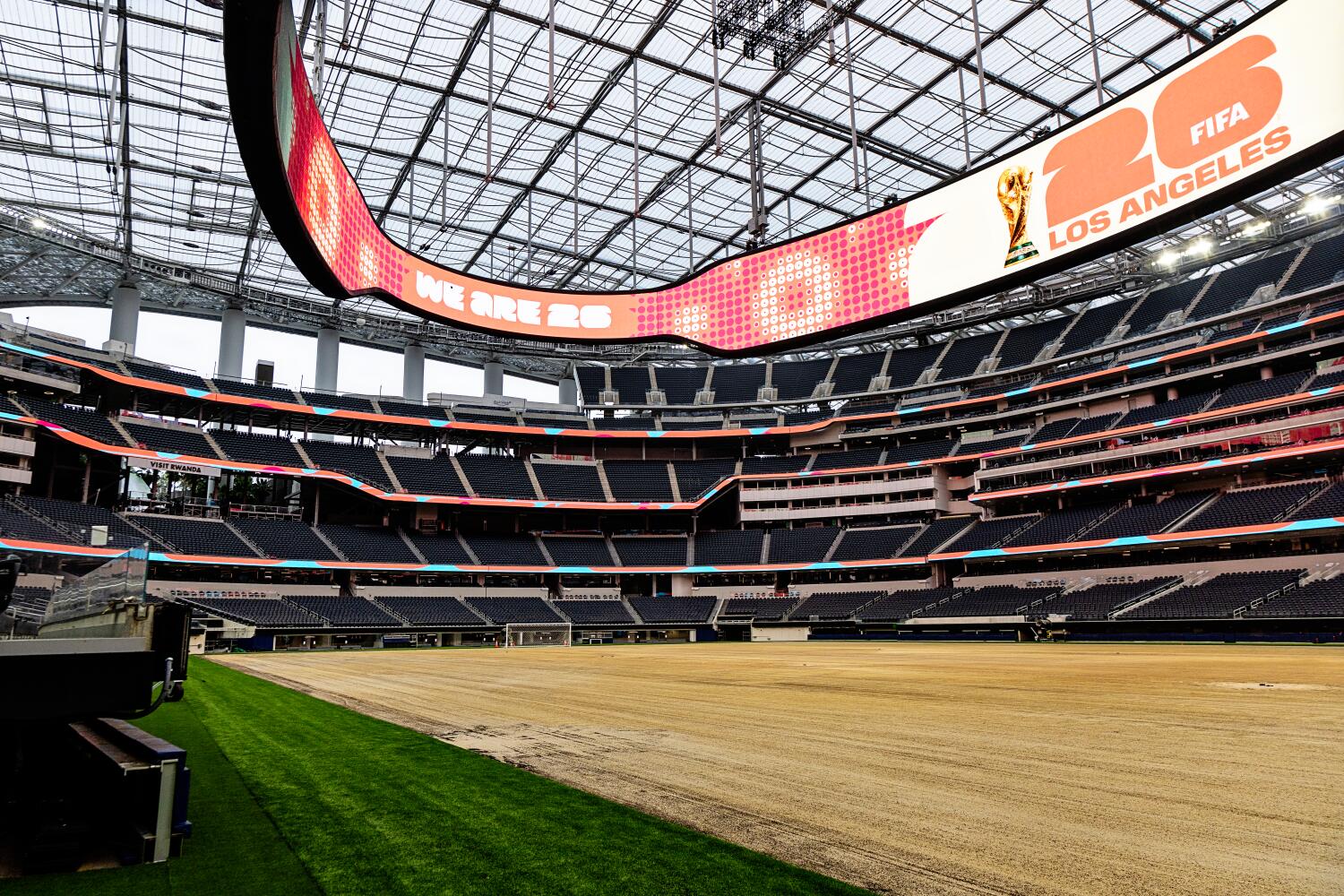
The roar of eighty thousand people is a physical force. It rattles the plastic seats, vibrates through the soles of your shoes, and fills the chest until it is hard to breathe. For decades, this sound was the worst thing a stadium security director had to manage. It was a predictable chaos of flares, pitch invaders, and rowdy fan sections.
But if you stand on the roof of a World Cup stadium today, the security team isn't looking at the stands. They aren't even looking at the pitch. They are looking straight up into the blank, blue sky.
High above the floodlights, the air used to be empty. Now, it is a crowded frontier. A single, plastic quadcopter, weighing less than a bag of sugar and bought online for a few hundred dollars, can halt a billion-dollar tournament in seconds. In a world shaped by shifting geopolitical conflicts and heightened wartime anxieties, those small, buzzing rotors have transformed global sports from a celebration into a high-stakes security operation.
The security apparatus of major sporting events has historically focused on the gates. Metal detectors, bag checks, and concrete barriers are designed to keep the threat outside the perimeter. But a drone ignores the perimeter entirely. It renders the traditional fortress obsolete.
The Ghost in the Airspace
Consider a hypothetical spectator named Marcus. He is sitting in the upper tier, clad in his team’s colors, his phone raised to capture the spectacle of the opening ceremony. To Marcus, the security presence feels familiar—police officers on horseback outside, stewards in high-visibility vests inside.
He does not notice the two men in tactical gear stationed on the stadium roof. They are not looking at the fireworks. One holds a device that resembles a bulky, futuristic rifle with a thick, paneled antenna instead of a barrel. The other watches a screen displaying a live radar feed of the local airspace.
Suddenly, a blinking red dot appears on the monitor. It is moving fast, originating from a park two miles outside the security cordon, heading directly for the center circle of the pitch.
In a standard news report, this moment is summarized in a single, cold sentence: Authorities will enforce a strict no-fly zone and deploy counter-drone technology. But the reality of that sentence is a frantic, silent game of digital chess. The operator on the roof aims the directional antenna toward the unseen dot. This is a radio frequency jammer. It doesn't fire a physical projectile. Instead, it floods the air with invisible noise, severing the umbilical cord of data between the drone and the pilot sitting in that distant park.
The drone freezes mid-air. Its video feed goes black. Deprived of its coordinates, the machine's internal programming takes over. Depending on the software, it will either attempt to fly back to its launch point—revealing the pilot's location to police cruisers already racing toward the park—or it will slowly descend into a designated safe zone, captured before it can cause panic.
This invisible choreography happens in seconds. Marcus never stops cheering. He has no idea that the match was nearly suspended.
From Toy to Tactical Threat
The vulnerability of modern mass gatherings is not theoretical. The shift from hobbyist novelty to national security priority happened gradually, then all at once.
Initially, drones were a nuisance for broadcasters. An amateur photographer would try to sneak a view of a closed training session, or a fan would fly a camera too close to the floodlights to get a viral video. The response was simple: find the operator, issue a fine, and confiscate the toy.
The math changed when these devices became tools of asymmetric warfare.
In recent global conflicts, inexpensive commercial drones have been modified to carry payloads, conduct surveillance, and drop ordnance with pinpoint accuracy. The technology is cheap, accessible, and terrifyingly effective. When authorities plan for a World Cup during times of international tension, they must assume that the tactics used on the battlefield can be replicated in a civilian arena.
The psychological impact of a drone is often greater than its physical capability. Imagine a packed stadium during a crucial knockout match. A rogue drone appears over the center circle. It doesn't need to carry an explosive device to cause catastrophe. The mere presence of an unidentified object in a hyper-vigilant society can trigger a stampede. Eighty thousand people rushing for the exits simultaneously is a weapon in itself.
That is the invisible stake. Security teams are not just protecting the players on the grass; they are managing the collective psychology of a stadium filled with human beings.
The Friction of Total Security
To achieve absolute safety, you must create a fortress. But a World Cup is supposed to be a carnival. Striking the balance between an ironclad defense and a welcoming atmosphere is the great dilemma facing modern host cities.
Implementing wartime security measures at a sporting event introduces friction. It alters the texture of the experience. Airspace restrictions extend for miles around the venues, affecting commercial flights, news helicopters, and local businesses. The deployment of military-grade signal jammers can occasionally disrupt local cellular networks, causing dropped calls and frozen screens for residents who have nothing to do with the tournament.
There is also the problem of technological evolution. Counter-drone systems rely on detecting the radio signals sent between the remote control and the aircraft. But newer generations of drones can fly autonomously using pre-programmed GPS coordinates or optical tracking. They do not emit a signal to intercept.
To counter this, authorities are forced to use more aggressive measures. Cyber-takeover systems can hack into the drone's internal software mid-flight, rewriting its instructions to force a landing. In extreme scenarios, kinetic options—such as automated net-firing drones or directed-energy lasers—are positioned around the venue perimeter to physically destroy the intruder.
This constant escalation happens out of sight, buried beneath the festival atmosphere of fan zones and sponsor activations. The average fan buys a ticket to escape the anxieties of the real world for ninety minutes. They want to witness a moment of human excellence, a beautiful goal, a dramatic victory. They do not want to think about the geopolitical tensions that require military personnel to guard the clouds above them.
The blue sky above the stadium remains calm, giving no hint of the silent waves of energy crossing through it, keeping the modern world at bay. The match kicks off, the crowd roars, and the sentinels on the roof continue their watch, ensuring that the only drama unfolds on the grass below.