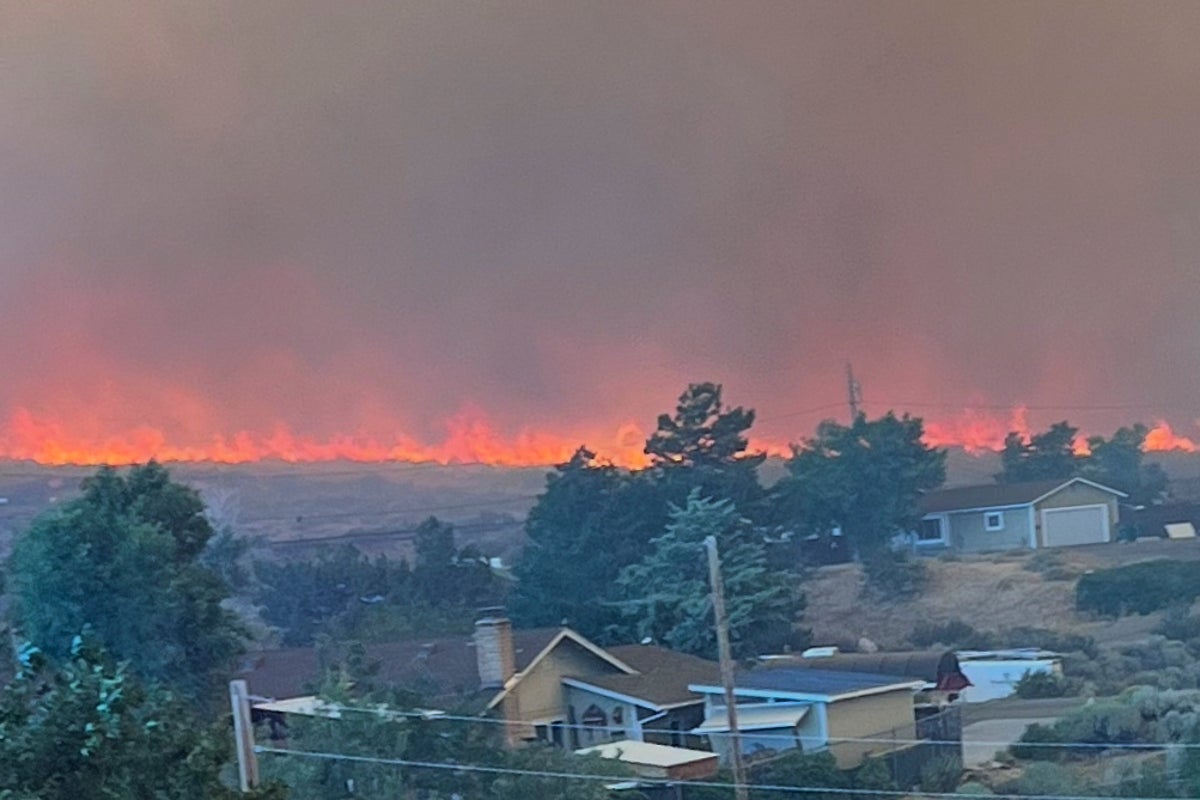
The air did not smell like smoke at first. It smelled like dry pine needles baking under a merciless July sun, a familiar scent for anyone who has ever called the high desert home. Then came the shift. The wind changed direction with a sudden, violent authority, sweeping down from the Sierra slopes and carrying with it the undeniable, metallic tang of scorched earth.
Look out any window in Reno when the mountain burns, and the view has been rewritten. The majestic backdrop of the eastern Sierra Nevada range—usually a sharp, comforting relief of granite and green—disappears behind an opaque, bruised curtain. The light turns the eerie, bruised color of a ripe plum. Streetlights flicker on at two in the afternoon, confused by the sudden dusk.
Thousands of families are packing their lives into the trunks of sedans and the beds of pickup trucks right now.
I know the weight of that packing list. When you have twenty minutes to evacuate your neighborhood, logic fractures. You do not grab the tax returns. You grab the box of old photographs, the ceramic mug your daughter made in kindergarten, and the dog's favorite blanket. Valuables become entirely reclassified. Gold is weightless; memories have gravity.
The Anatomy of a Fast-Moving Front
Wildfires do not crawl; they gallop. Fueled by years of persistent drought and choked underbrush, a modern wildfire behaves less like a natural weather event and more like a living organism with a voracious appetite. When a fire approaches a metropolitan edge like Reno, the danger is rarely just the wall of flames itself. It is the spotting.
Embers, glowing coals the size of fists, ride the superheated thermals miles ahead of the actual front line. They land on dry cedar shake roofs, in parched gutters, and on pristine pine needles lining suburban driveways. A neighborhood can catch fire from the sky hours before the forest itself arrives at the property line.
Emergency sirens wail through the canyon roads, a sharp, mechanical scream that cuts through the roar of the wind. Police cruisers roll down residential streets with their lights flashing, bullhorns barking mandatory evacuation orders.
Leave now.
Not everyone listens immediately. Denial is a powerful psychological shield. We look at our homes—stucco walls, green lawns, double-paned windows—and our brains refuse to accept that centuries of human engineering can be reduced to grey ash in forty-five minutes.
The Long Road Out
Traffic on the main arteries out of the affected zones quickly congeals into a slow-moving, metal-plated river. Interstate 80 and the winding southern approaches become parking lots of hazard lights. Every car is a capsule of high anxiety, carrying stressed parents, crying infants, terrified pets, and quiet teenagers clutching dead phones because the cellular towers are overwhelmed or melting.
Outside the window, the ash falls like dirty snow. It coats the hoods of cars, settles on windshields, and gets trapped in the breath of anyone foolish enough to roll down a window.
Evacuation centers open at local high school gymnasiums and fairgrounds. Cots are unfolded in neat, sterile rows. Volunteers hand out bottled water and paper cups of coffee that taste faintly of tin. Here, the community fractures into two groups: those who know their homes are already gone, and those who are refreshing local emergency radio feeds every thirty seconds, praying for a wind shift.
It is the waiting that breaks you.
The fire does not care about property lines, mortgage rates, or the history embedded in a backyard oak tree. It consumes indiscriminately, driven only by physics and oxygen.
As the sun dips below the horizon, the night does not bring darkness. Instead, the ridge lines glow with a demonic, arterial red. The sky pulses. Every homeowner standing in a distant parking lot is staring at that glow, running a mental inventory of everything left behind, wondering if the front door was locked, wondering if the cat made it under the bed, wondering if the walls they built their lives inside will still be standing when the wind finally dies down.