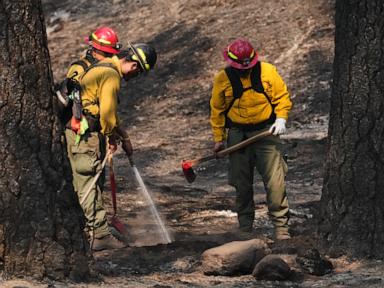
The ash tastes like copper and burnt pine needles. You swallow hard, trying to wet a throat that feels like sandpaper rubbed against coarse gravel, but the air is too thick, too heavy with the ghost of a thousand charred trees.
Out on the line, the heat presses against your skin like a physical weight. Your lungs burn with every inhalation. It is not just the physical exhaustion of humping a twenty-pound Pulaski up a four-hundred-dollar-slope grade in ninety-degree heat; it is the invisible enemy. Carbon monoxide, hydrogen cyanide, benzene, and microscopic particulate matter ride every breath. They slip past your defenses, sinking deep into your alveoli, whispering promises of chronic fatigue, cardiovascular strain, and long-term ruin.
You look around the staging area. Someone is passing around a plastic bottle filled with bright, amber-colored liquid.
"Drink up," they say, wiping soot from their eyes. "Clears the lungs. Flushes out the smoke. Keeps you in the fight."
It sounds miraculous. In a profession defined by brutal endurance, where you are asked to outrun walls of fire and outlast the limits of human biology, a quick fix is intoxicating. But official warnings are mounting, cutting through the haze of fatigue and hope. Health authorities and safety officials are raising red flags about wildland firefighters turning to unverified dietary supplements marketed as smoke exposure defenses.
They are chasing a shield that does not exist. And the bottle in their hand might be packing a different kind of danger entirely.
The Anatomy Of An Invisible Threat
To understand why weary crews reach for these bottles, you have to understand the terror of the smoke.
Wildfire smoke is a chaotic soup of chemistry. When forests, homes, vehicles, and infrastructure burn, they release a toxic cocktail that defies simple classification. The largest particles get trapped in your nose and upper airways, making you cough and sneeze. But the tiny ones, the PM2.5 fractions, travel straight down into the bronchial tubes and slip directly into the bloodstream.
Imagine microscopic needles carrying industrial chemicals, heavy metals, and carcinogenic compounds straight to your heart and brain.
For decades, the standard response was simple endurance, coupled with personal protective equipment like N95 respirators when conditions permitted. Yet, wearing a tight mask while swinging a tool in blistering heat is a special kind of torture. Crews ditch them. They gasp. They breathe it in.
Over time, the accumulation takes a toll. Chronic inflammation sets in. The body’s immune system goes into overdrive, fighting a war it cannot win against an enemy that never stops coming.
Enter the unregulated supplement industry.
Sharks smell blood in the water. Or, more accurately, opportunists smell vulnerability in the smoke. Clever marketers package antioxidants, herbal extracts, and unproven chemical compounds into slick capsules and flavored drops. They promise cellular detox, lung protection, and complete neutralization of wildfire toxins.
It sounds too good to be true. That is because it is.
The Illusion Of Defense
Let us be entirely transparent about how these products operate in the real world.
When we talk about dietary supplements, we are discussing a largely unregulated wild west. Unlike prescription pharmaceuticals, which endure years of grueling clinical trials, randomized double-blind studies, and stringent FDA oversight before ever touching a consumer's lips, supplements enjoy a much easier path to market. Manufacturers can often launch a product with minimal proof of safety or efficacy.
Now, apply that reality to the extreme environment of a wildfire frontline.
A firefighter’s body under heavy exertion experiences massive physiological stress. Core temperatures rise. Dehydration threatens kidney function. Heart rates stay elevated for hours. Introducing an untested, concentrated blend of herbs or high-dose vitamins into this fragile equation is like tossing an unknown chemical into a bubbling cauldron.
Officials from occupational health and safety agencies have begun issuing urgent bulletins. Their concern is not just that these supplements do not work—though scientific evidence backing their ability to block smoke toxicity is virtually nonexistent. The deeper fear is that they cause active harm.
Consider what happens next: a supplement might interact poorly with standard hydration solutions or electrolytes. It could place an unexpected metabolic burden on the liver and kidneys, organs already working overtime to filter out actual smoke toxins. It might trigger allergic reactions, gastrointestinal distress, or unpredictable blood pressure spikes right when a firefighter needs absolute stability.
Worst of all, a supplement creates a dangerous psychological safety net. If you believe a pill has bulletproofed your lungs, you might take bigger risks. You might stay on the line longer. You might ditch your respirator entirely.
The pill becomes a placebo of peril.
The Weight Of The Uniform
Talk to anyone who has spent a season on an engine crew or a hotshot squad, and they will tell you about the culture of endurance.
You do not complain. You do not show weakness. If your chest hurts, you drink some water and get back to cutting line. This stoicism saves lives, but it also makes firefighters prime targets for predatory marketing. When you are coughing up black phlegm at two in the morning in a nylon tent, you are desperate for an answer. You will try anything.
The marketing campaigns know this. They use language that sounds authoritative, borrowing scientific terminology to dress up unproven mixtures. They talk about "pulmonary cleansing" and "free radical scavenging" as if the human respiratory system were a dirty engine block that could be blasted clean with a commercial solvent.
Your lungs are not an engine block. They are delicate, living networks of tissue designed to exchange oxygen and carbon dioxide, not to process concentrated botanical cocktails manufactured in an overseas facility with zero quality control.
When health officials warn against these products, they are not trying to steal a tool from the toolbox. They are trying to stop crews from poisoning themselves twice: once by the fire, and once by the bottle.
The Real Armor
So what remains? If the supplements are a mirage, and the smoke is a relentless reality, how do we protect the people who stand between our homes and total destruction?
The answer is unglamorous. It is institutional, systemic, and frustratingly slow.
It looks like better engineering controls, improved respiratory gear designed for the unique physical demands of wildland firefighting, and rotations that actually give bodies time to heal between shifts. It looks like mandatory exposure tracking and honest conversations about occupational health that do not rely on toxic machismo.
It looks like listening to the toxicologists and industrial hygienists who spend their days measuring the invisible load our crews carry.
Out on the line, the sun is beginning to drop behind the ridge, painting the sky in bruised shades of purple and amber. The wind shifts. A fresh wall of smoke rolls over the camp, stinging the eyes and tightening the chest.
A young crew member pulls a small plastic bottle from his pack, turning it over in his calloused hands, reading the bold claims on the label.
Across the fire break, a veteran squad leader notices. He doesn't yell. He just walks over, places a heavy hand on the kid's shoulder, and points to the standard canteen of water hanging at his hip.
"Put that away," the veteran says quietly, his voice raspy from decades of breathing the work. "The only way out is through."
The bottle goes back into the pack, zip-closed, ignored. Around them, the forest crackles, a low and constant roar reminding everyone present that there are some things you cannot swallow away, and some fires you simply have to outlast.


