Music carries. Across desert floors and through the mud-brick corridors of villages untouched by the hurried violence of distant capitals, the sound of a wedding drum is an anchor. It tells the valley that life continues. It says that despite the border skirmishes, the sanctions, the endless bureaucratic chess matches played by men who have never smelled dust, ordinary people still choose joy. They still gather. They still dance under strings of bare, humming lightbulbs.
Then came the whistle.
Not a warning. Just a tear in the fabric of the night.
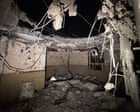
Four lives ended before the final beat of the drum could fade. Four bodies left tangled in festive cloth, beneath decorations meant for a celebration that was supposed to anchor a family into the future.
We talk about foreign policy in rooms lined with mahogany and filtered air. We measure escalation in tonnage, trajectory, and diplomatic cables. We call them incidents. We call them kinetic strikes. We sanitize the tragedy until it fits neatly into a briefing binder, ready to be shelved by Tuesday morning. But out there, in the quiet aftermath of a missile blast, the math looks entirely different. It looks like broken glass mixed with spilled sherbet. It looks like a mother staring at a pair of shoes that will never be worn again.
Consider what happens next.
The political machinery immediately shifts into gear. Accusations fly across oceans with the speed of fiber-optic cables. Tehran points a finger straight at Washington, labeling the strike a war crime, an unforgivable violation of sovereignty, a stain on any nation that claims to champion human rights. Washington processes the claim, weighs the liability, and offers the standard, guarded cadence of military denial or silence.
The news cycles churn. Pundits dissect the hardware. Was it a stray projectile? Was it a guidance failure? Was it a deliberate calculation gone wrong? They debate the nomenclature of destruction while the graves are being dug in the rocky soil.
This is the strange, terrible disconnect of our modern era. We live closer than ever before, yet we are profoundly insulated from the physical reality of our choices. A button is pushed in a climate-controlled room miles away, and an entire wedding party vanishes into smoke.
I remember the smell of cordite. It is not something you read about in policy papers; it is something that clings to the inside of your nostrils, sharp and metallic, refusing to leave for days. It smells like ruined machinery and burnt hair. When you have stood near the edge of a crater where a home used to stand, the abstract debates over international law feel terribly small. Law is supposed to protect the wedding guest. Law is supposed to draw a hard, unyielding line around the civilian, the child, the grandfather holding a string of prayer beads.
When a missile destroys that boundary, it destroys more than four people. It destroys the fragile social contract that keeps the rest of us from sliding entirely into barbarism.
Iran's accusation of a war crime is not merely a diplomatic talking point. It is a scream from the precipice. It highlights a terrifying truth about modern warfare: the distance between the commander and the casualty has grown so vast that empathy has been engineered out of the equation. When you cannot see the faces of the people beneath your crosshairs, they stop being human. They become coordinates. They become collateral.
Think about the groom. He survived, perhaps. Or perhaps he didn't. Either way, his life was cleaved in half by an invisible line drawn on a tactical map by strangers who do not know the name of his village, the scent of its orchards, or the songs his grandmother used to sing.
We are told to accept this as the tragic cost of stability. We are fed the narrative that larger geopolitical chess games require sacrifices on the periphery. But whose stability? At what price? When a wedding becomes a battlefield, the definition of defense loses all meaning.
The smoke clears eventually. The dust settles over the desert. The politicians move on to the next crisis, the next summit, the next press briefing where they will carefully calibrate their outrage. But in that small village, the silence left behind is absolute. It is a silence that no diplomatic communique can ever fill.
The drum is broken. The lights are out. And somewhere, across the sea, another map is being studied by a finger tracing a line toward another village, completely unaware of the quiet, terrible weight of what is about to fall.
/forbidden-city-beijing-8775c18670bd412d9b54daecba137c5c.jpg)