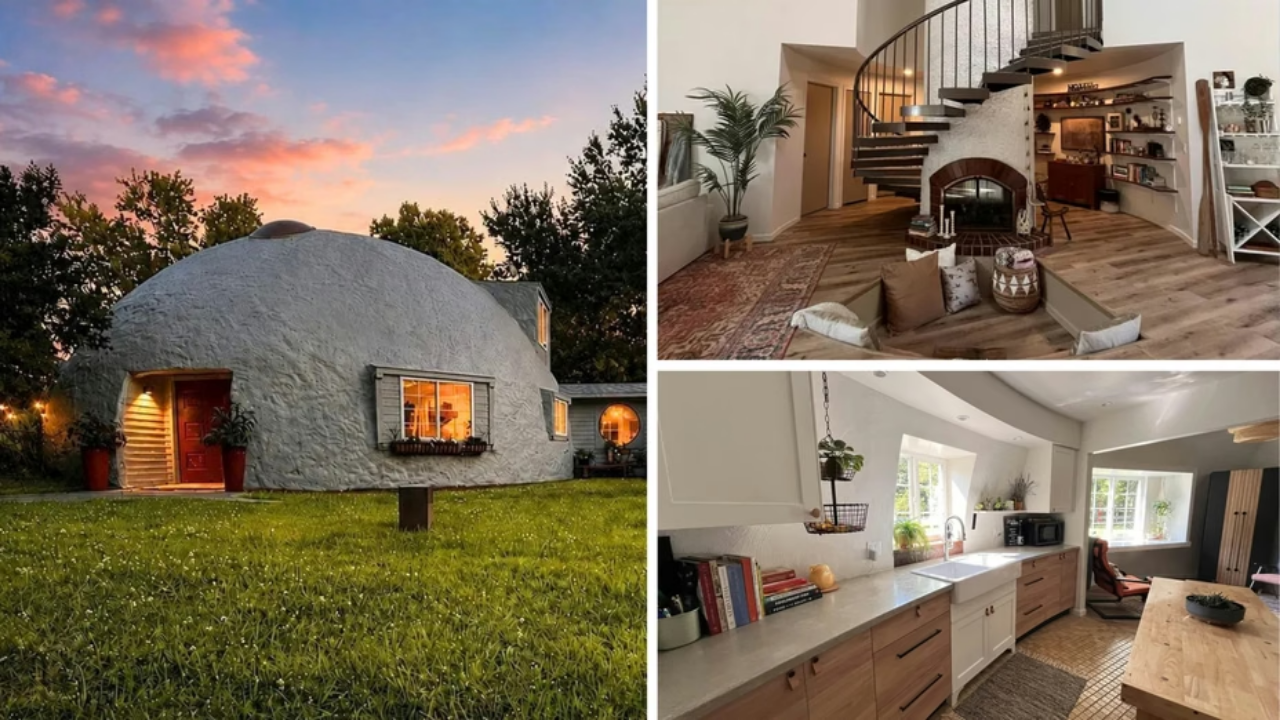
Buying a ruined house sounds like a terrible idea. People do it anyway. In 2023, a crumbling 1979 Michigan concrete dome with caved-in ceilings sold for 87,000 dollars. Think about that number for a second. Eighty-seven thousand dollars gets you a pile of broken concrete, structural damage, and a massive headache in the Midwest. Most people would run away. Someone looked at that disaster and saw potential.
Concrete monolith domes built in the late 1970s occupy a weird space in architectural history. They were supposed to survive nuclear blasts, massive tornadoes, and high heating bills. They rarely lived up to the utopian marketing hype. When maintenance gets ignored for decades, water finds a way inside. Concrete cracks. Ceilings cave in. Fixing them costs a fortune.
The Reality of Monolithic Architecture
Monolithic dome homes look cool in real estate listings. They feel futuristic. You get curved walls and open layouts. Sound travels weirdly through them. Hanging art requires specialized hardware because standard drywall anchors will not work on solid curved concrete.
The structural integrity of a 1970s dome depends entirely on the original shotcrete application and steel reinforcement. If moisture gets behind the concrete shell, rust eats the rebar from the inside out. Concrete spalling follows. You end up with chunks falling off the ceiling. That is basically what happened to the Michigan dome that fetched 87,000 dollars at auction.
People romanticize unconventional living spaces. They watch renovation shows and assume a crew can flip a wrecked dome in six weeks. Real life involves zoning boards that do not know what a dome is, specialized contractors who charge triple normal rates, and insurance companies that panic when they see a non-standard roof.
Why Buying a Damaged Concrete Dome is a Financial Minefield
You cannot treat a concrete dome like a standard stick-built suburban home. Traditional lenders will laugh you out of the room if you ask for a conventional mortgage on a property with caved-in ceilings and a compromised shell. Cash rules this market.
Real estate investors buying properties like the 1979 Michigan dome usually sit on significant capital or possess heavy construction experience. They know that the purchase price is just the entry fee. The actual money disappears into remediation.
- Hazardous material abatement: Older domes often contain spray insulation, asbestos, or lead paint.
- Structural engineering fees: You need an expert who actually understands shell structures, not just standard framing.
- Custom windows and doors: Curved walls mean standard off-the-shelf window units will not fit. Every single opening requires custom fabrication.
What Real Recovery Looks Like
Restoring a collapsed or severely damaged concrete dome requires a complete rebuild from the inside out. The outer shell might act as a permanent umbrella, but once the interior framing rots away, you are essentially building a new house inside an old cave.
Insulation placement causes endless debates among dome owners. Spray foam on the interior changes the thermal dynamics of the concrete. Get the dew point wrong, and moisture condenses inside the walls. Mold follows quickly. A 1970s build rarely featured modern building science principles.
If you stumble across a cheap, damaged concrete dome and feel tempted to place a bid, check local zoning codes first. Some municipalities require specific roof load ratings or architectural reviews for non-traditional structures. You might own the land and the shell, but you might also find yourself legally barred from living in it until you spend three times the purchase price on engineering reports.
Real estate bargains rarely stay bargains once you start fixing them. The buyer who dropped 87,000 dollars on that Michigan ruin bought a massive project disguised as a quirky home. Respect the ambition, but do not pretend it was an easy win.