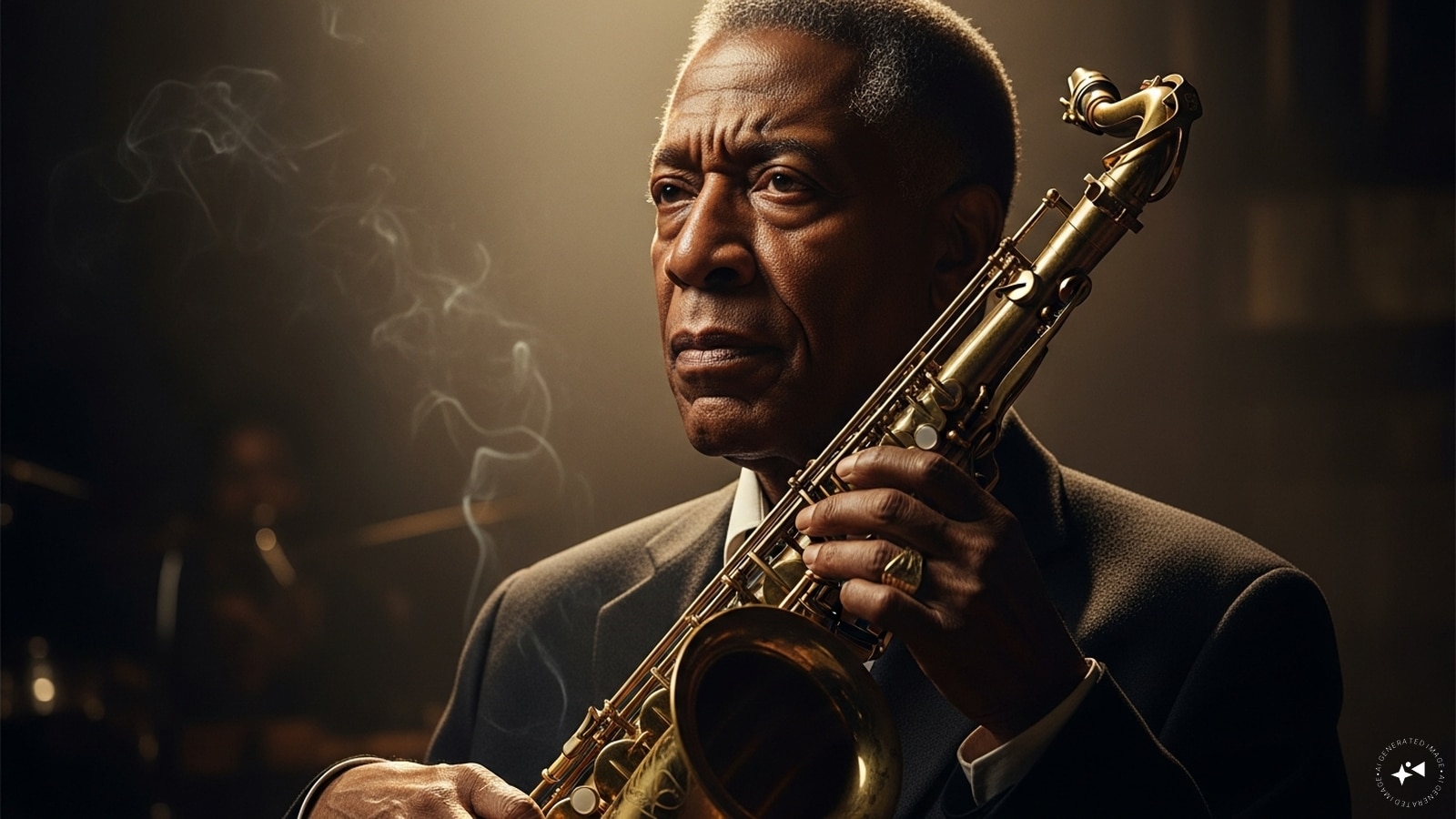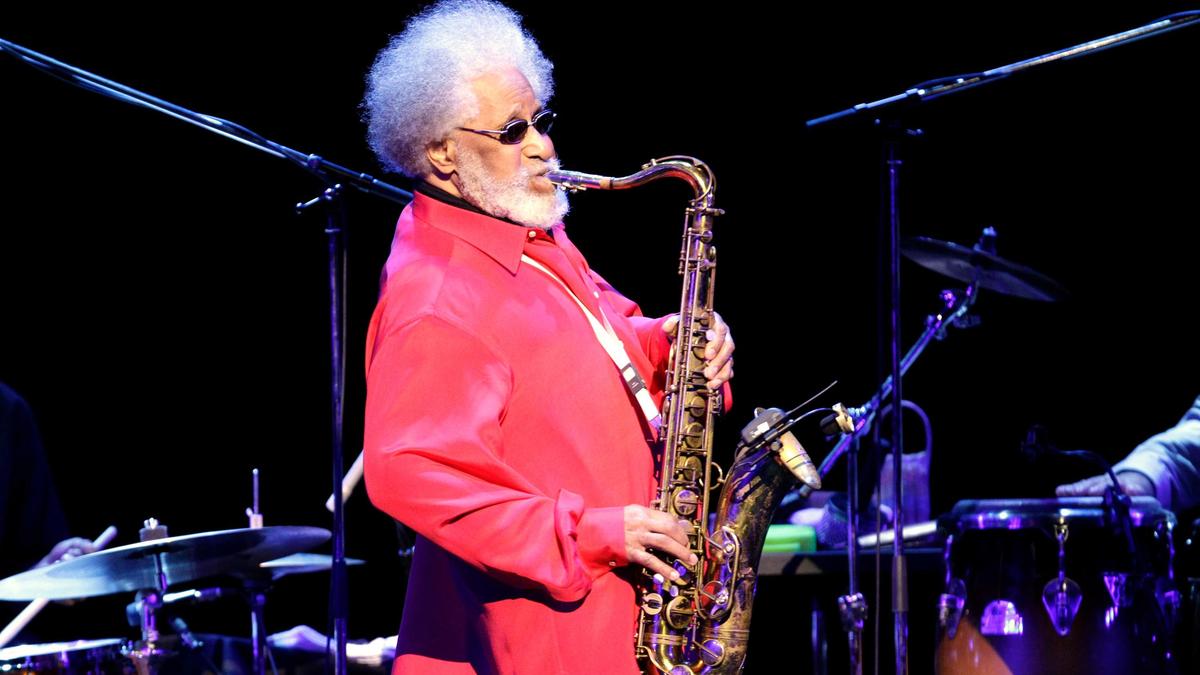
Sonny Rollins didn't just play the saxophone. He wrestled with it. He interrogated it. He made it scream, laugh, and think out loud. With the news of his passing at 95, the world hasn't just lost a musician; it’s lost the last living bridge to the golden age of bebop and the very idea of the restless, seeking artist. If you think jazz is just polite background music for a dinner party, you haven't been listening to Rollins. He was a force of nature who spent seven decades proving that perfection is a boring goal compared to the thrill of a constant search.
He belonged to an era where the music felt like a high-stakes athletic event. You had to have the lungs of a marathon runner and the brain of a grandmaster. Rollins had both. He stood alongside giants like Charlie Parker and Max Roach, yet he always seemed to be walking a path only he could see.
The Colossus Who Walked Away
Most people at the top of their game hold on for dear life. They’re terrified of losing their spot. Rollins was different. In 1959, he was the undisputed king of the tenor sax. He’d already released Saxophone Colossus, a record that basically redefined what a solo could be. Then, he just stopped.
He didn't quit because of drugs or burnout. He quit because he wasn't happy with how he sounded. Think about that. The best player in the world decided he wasn't good enough. He spent the next two years practicing on the Williamsburg Bridge in New York City. He played into the wind, competing with the roar of the subway trains and the tugboats below.
He wanted to find a new way to breathe. He wanted to strip away the clichés. When he finally came back with The Bridge in 1962, he didn't sound like a man who had been resting. He sounded like a man who had seen the mountain top and realized there was another, taller peak behind it. That's the "restless genius" part people talk about. It wasn't a marketing slogan. It was a lifestyle that involved walking away from fame whenever his soul felt crowded.
Why Saxophone Colossus Changed Everything
If you want to understand why every sax player today owes him a debt, you have to look at "Blue 7." It’s a track from the 1956 album Saxophone Colossus. Before this, jazz solos were often just a string of fast notes over some chords. Rollins did something else. He used motifs. He took a tiny fragment of a melody—maybe just three notes—and turned it inside out for ten minutes.
He’d play it upside down. He’d change the rhythm. He’d tease the listener by leaving huge gaps of silence. He wasn't just playing a song; he was building an architectural structure in real-time. The legendary critic Gunther Schuller wrote a famous analysis of this solo, basically treating it like a Beethoven symphony. Rollins actually hated that analysis at first. He felt like it made his playing sound too calculated. To him, it was just a feeling. But that "feeling" had more logic in it than most people's entire careers.
The Sound of Freedom and Political Grit
Rollins wasn't a protest singer in the traditional sense, but his music was deeply political because it was unapologetically Black and fiercely free. In 1958, he released The Freedom Suite. It was a nineteen-minute long trio piece with no piano.
Going "pianoless" was a radical move. Without a piano to dictate the chords, Rollins had total harmonic freedom. It was a metaphor for the Civil Rights movement happening at the same time. He wrote on the original liner notes that "America is deeply rooted in Negro culture" and that the "Negro" had a right to be proud. In the late 50s, saying that on a record sleeve was a massive risk. He didn't care. He knew that his music and his identity were the same thing.
He used his horn to claim space. When he played, his tone was huge. It was gravelly and warm, like a voice that had seen everything. He didn't use the smooth, polished sound that was popular in California "cool jazz." He wanted the dirt. He wanted the truth.
The Power of the Trio
Rollins loved the trio format—saxophone, bass, and drums. It’s the hardest way to play. There’s nowhere to hide.
- Independence: He could change keys whenever he wanted.
- Rhythm: He treated the sax like a drum set, hitting staccato notes that locked in with the percussion.
- Stamina: He frequently played solos that lasted thirty or forty minutes without repeating a single idea.
Living to 95 and the Art of Growing Old
In his later years, Rollins became a sort of jazz philosopher. He stopped playing the horn in 2012 due to respiratory issues, which must have been a localized hell for a man who lived to blow air through brass. But he didn't get bitter. He spent his final decade talking about spirituality, the environment, and the healing power of music.
He lived through the heroin epidemic that killed many of his peers. He survived the rise of rock and roll that pushed jazz out of the charts. He saw the world change a dozen times over. Yet, he stayed relevant because he never stopped being a student. Even in his 80s, he’d talk about how he was still trying to figure out how to play a better "C" note.
That’s the lesson we should take from him. It’s not about the awards or the "Greatest of All Time" lists. It’s about the practice. It’s about being willing to stand on a bridge in the middle of winter just to see if you can hear something you haven't heard before.
How to Listen to Sonny Rollins Right Now
If you’re new to his work, don't just put it on as background noise while you work. You’ll miss the jokes. Yes, Sonny Rollins was funny. He’d quote "Alfie" or nursery rhymes in the middle of a complex bebop solo just to see if you were paying attention.
- Start with "St. Thomas": It’s his most famous tune, based on a calypso song his mother sang to him. It’s pure joy.
- Move to "The Bridge": Listen to the space. Notice how he isn't trying to impress you with speed, even though he could play faster than anyone.
- Find a live recording from the 70s or 80s: This is where the "Colossus" really lived. His studio albums are great, but his live performances were where he truly let the restless genius loose.
Go find a copy of Way Out West. Look at the cover. There he is, standing in the desert with a holster and a saxophone instead of a gun. He was the lone ranger of the tenor sax, and we won't see his like again. The best way to honor him isn't a moment of silence. It’s to put on a record, turn it up way too loud, and marvel at a man who never stopped searching for a better sound.
Pick a track, sit down, and actually listen to the transitions. Watch how he shifts from a roar to a whisper. That’s where the genius lives.