The silence of a failing power grid does not happen all at once. It begins with a stutter.
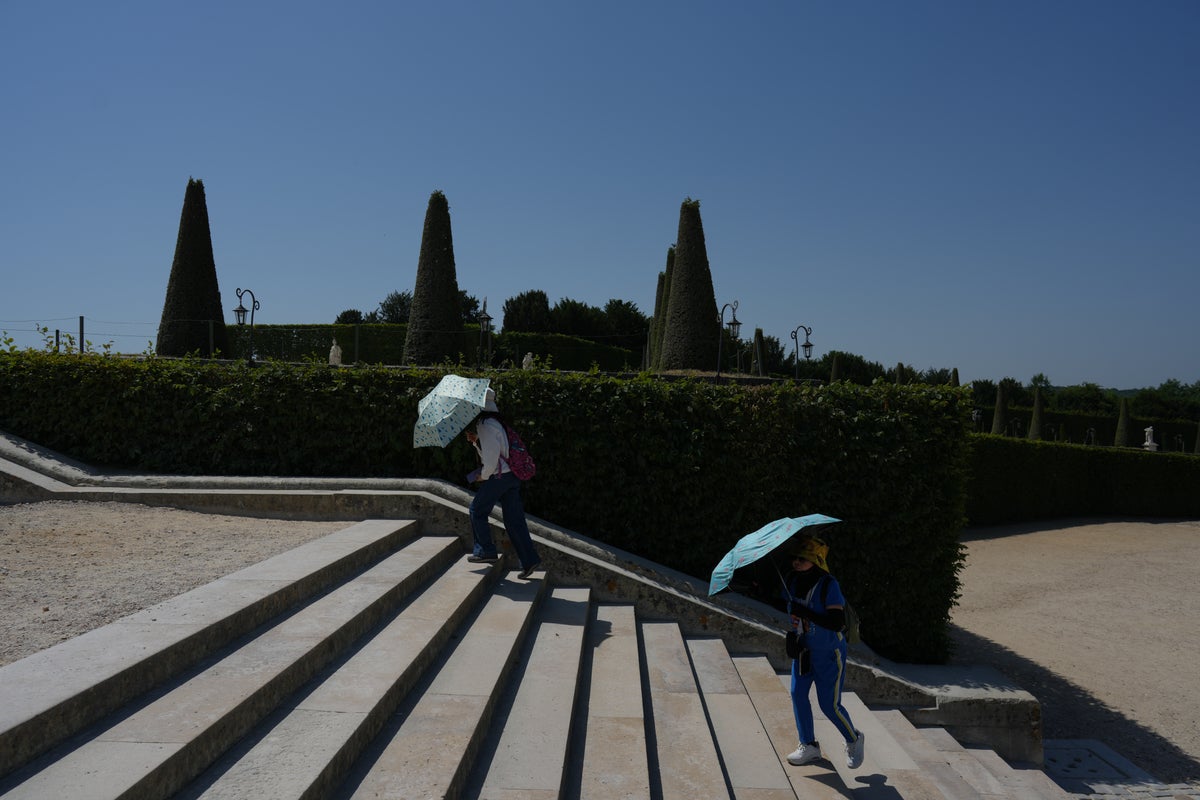
In the eleventh arrondissement of Paris, four flights up a winding limestone staircase, Chantal’s apartment usually hums. The refrigerator clicks. The small, white plastic fan on her bedside table rattles its familiar rhythm against the floorboards. On a Tuesday afternoon in July, with the mercury outside pushing past 41°C, that hum stopped.
First came the click of the circuit breaker. Then, the heavy, suffocating quiet.
When the electricity dies during a European heatwave, the architecture changes. Those beautiful, iconic Haussmann buildings—the ones with the wrought-iron balconies and zinc roofs that tourists photograph from the cobblestones—turn into convection ovens. The zinc absorbs the sun. The thick stone walls, designed to hold the temperate climate of a classic French summer, act like thermal bricks. They trap the heat inside, radiating it back into the living spaces long after the sun goes down.
Within an hour, Chantal’s apartment felt less like a home and more like a closed car left in a supermarket parking lot.
This is the reality behind the clinical headlines broadcasting regional blackouts across France. The official data paints a picture of megawatts, grid overload, and infrastructure strain. The government press releases detail the thousands of households plunged into darkness. But the data misses the smell of souring milk in darkened kitchens. It misses the specific panic of an eighty-year-old woman realizing her body cannot cool itself down without mechanical help.
We have spent decades treating extreme heat as an inconvenience, a temporary discomfort to be managed with a cold shower and a closed shutter. It is time to speak plainly. A modern heatwave paired with a failing grid is a slow-motion natural disaster.
The mechanics of the collapse are deceptively simple. When temperatures spike across an entire continent, everyone reaches for the switch at the same time. Air conditioning, once a luxury in France, has become a survival tool. As thousands of units kick on, the demand on the electrical grid spikes into the red zone. Simultaneously, the very infrastructure meant to deliver that power begins to buckle under the ambient heat. High-voltage cables sag as they warm up, reducing their capacity. Power plants, which require massive amounts of cool water from local rivers to keep their systems from overheating, are forced to dial back production because the river water is already too warm to safely absorb the exhaust.
It is a perfect loop of vulnerability. The hotter it gets, the more power we need; the hotter it gets, the less power the system can give.
Consider a hypothetical neighborhood on the outskirts of Lyon. Let us call it Saint-Priest. In this neighborhood, the concrete grid dominates. There are few trees to provide shade, a phenomenon urban planners call the heat island effect. When the local transformer blows from over-exertion, the temperature inside a top-floor apartment can rise by one degree every twenty minutes.
For a healthy young adult, this is miserable. For the elderly, the infant, or the chronically ill, it is a medical emergency.
The human body cools itself primarily through sweat. As sweat evaporates from the skin, it pulls heat away from the core. But evaporation requires the surrounding air to be capable of absorbing that moisture. When a room is sealed shut against the outdoor glare, the air becomes thick, heavy, and saturated. The sweat stays on the skin. The core temperature rises. The heart begins to pump faster, desperate to push blood to the surface of the skin to dump heat. It is an exhausting, desperate internal marathon.
When you look at the statistics from France's historic heatwaves, the numbers are chilling. The tragedy is almost always quiet. People do not collapse in the street; they slip away in thirty-square-meter apartments while the world outside shimmers with heat distortion.
The current approach to grid management relies on a patchwork of quick fixes. Rolling blackouts are deployed to save the larger system from a total collapse. It is a calculated sacrifice. Engineers sit in air-conditioned control rooms miles away, cutting power to specific postal codes for two hours at a time to let the transformers cool down.
But those two hours feel like an eternity when the air inside your bedroom is thick enough to taste.
Step into Chantal’s shoes for a moment. You cannot open the windows because the air outside is a blast furnace. You cannot run the tap for a cold bath because, in many modern high-rises, the water pumps require electricity to reach the upper floors. You sit in the dark, watching the battery percentage on your phone tick down, wondering if the network tower will survive the outage. The connection to the outside world frays precisely when you need it most.
The dialogue around climate resilience often focuses on massive engineering projects—building better seawalls, upgrading national grids, or investing in next-generation solar arrays. Those are necessary, of course. But they feel abstract when you are wiping sweat from your eyes with a damp dishtowel that is rapidly warming to room temperature.
The real gap in our preparation is social, not just technological.
In the old days, French summers were defined by the canicule protocols, a system born out of the devastating 2003 heatwave that claimed over fifteen thousand lives. The country learned hard lessons then. Municipalities created registers of vulnerable citizens. Volunteers were assigned to call lonely neighbors. Cool rooms were established in town halls, equipped with backup generators and industrial cooling systems.
But a protocol is only as good as the infrastructure supporting it. If the local town hall loses power alongside the residential blocks, the safe haven vanishes.
The sun begins its slow descent over Paris, painting the sky in a bruised palette of orange and purple. But there is no relief. The zinc roofs continue to bleed their stored heat downward into the apartments below. On the street, the asphalt radiates a heavy, oily warmth.
Chantal sits by her window, looking down at the darkened streetlights. A neighbor downstairs opens a courtyard door, the creak of the hinges echoing loudly in the unnatural quiet of the neighborhood. They exchange a look—a silent acknowledgment of shared endurance.
We are entering an era where the comfort of our indoor lives is inextricably linked to a fragile, invisible web of wires and copper. When that web snaps under the weight of a changing climate, we are left naked against the elements, trapped inside structures designed for a world that no longer exists.
The white plastic fan on Chantal's table remains still, its blades caught in the heavy air, waiting for the current to return.