The refrigerator stops humming first. It is a tiny, domestic silence that you only notice because the background noise of modern life has suddenly vanished. Then comes the dark. Not the soft, gradual twilight of a Crimean evening, but the abrupt, heavy blackness of a severed grid.
In Sevastopol, the largest city on the Russian-annexed Crimean peninsula, this silence has become a recurring character in daily life. Recently making news lately: Why the Trump and Netanyahu Bromance is Completely Dead.
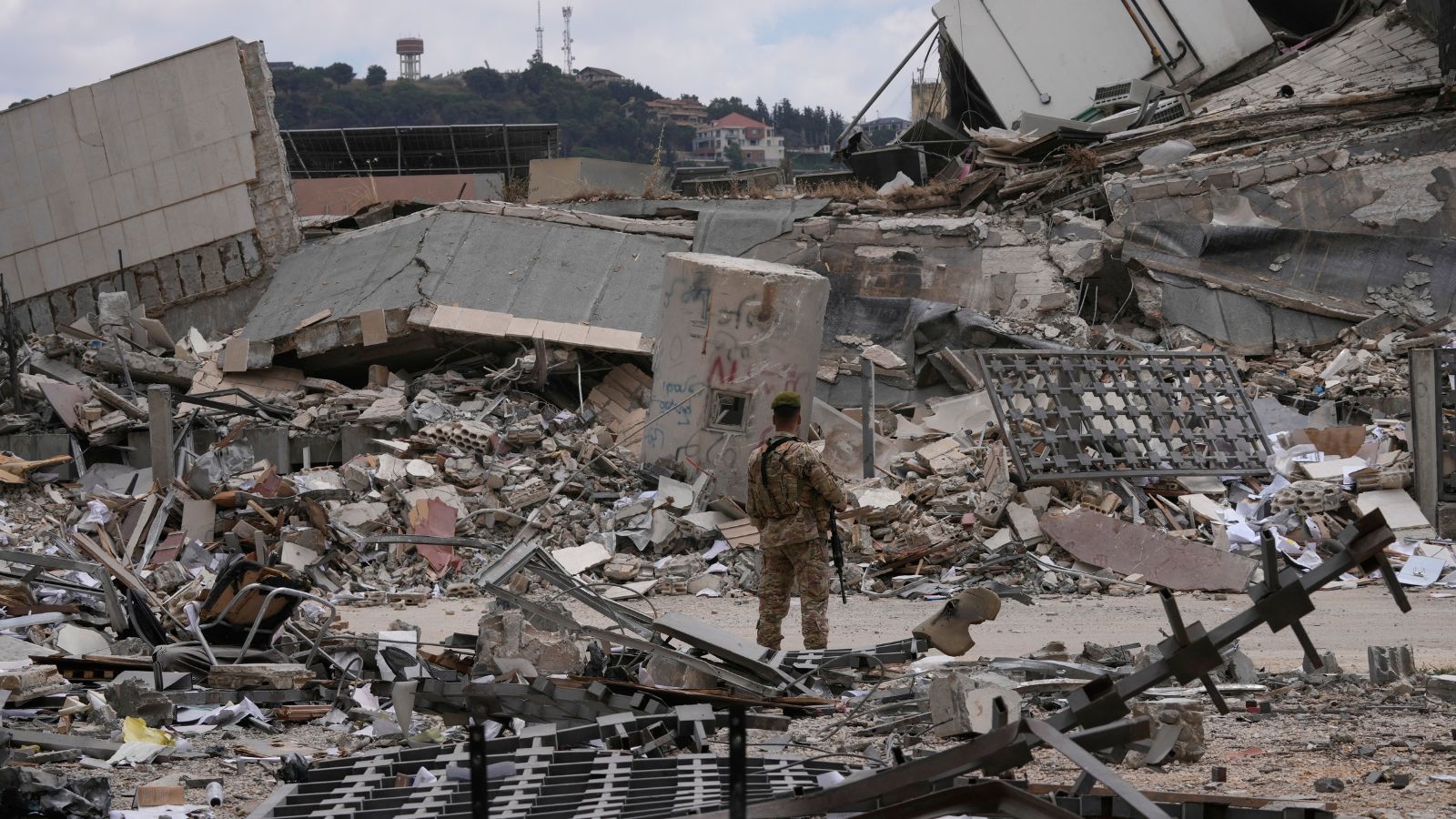
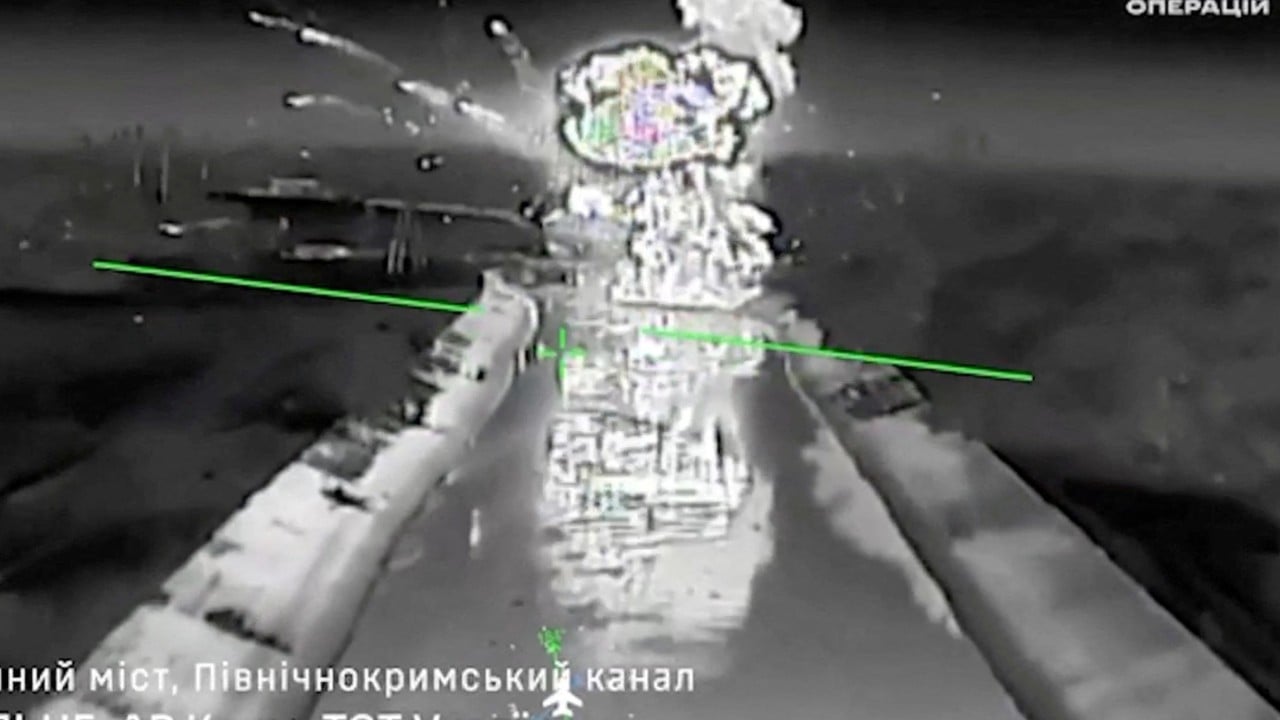
When a long-range drone strikes an electrical substation, the impact is felt miles away from the fireball. It is felt by the baker whose ovens turn cold mid-loaf. It is felt by the mother navigating a pitch-black stairwell with a toddler in her arms. For over a decade, Crimea has been geopolitical shorthand for conflict, arrows on a map, and dry military briefings. But on the ground, war is an accumulation of disrupted routines. It is the sudden fragility of things we take for granted, like a flipped switch or a cold glass of water.
The strategy behind these strikes is not a secret, nor is it unique to this theater of war. By targeting the energy infrastructure in Russia-held territory, Ukrainian forces are executing a precise, mathematical subtraction. If you remove the power, you remove the logistics. More information on this are explored by NBC News.
Consider how a modern military functions. It does not run merely on fuel and ammunition; it runs on data. Servers require constant cooling. Command centers need light. Railway networks, which ferry heavy armor and fresh troops toward the front lines, depend on a steady stream of electricity to keep switching gears and signaling systems alive. When a drone knocks out a substation in Sevastopol, it does not just dim the streetlights for civilians; it creates a friction point inside the entire Russian military apparatus stationed on the peninsula.
To understand the scale of this friction, one must look at the geography of the grid. Crimea is, for all practical purposes, an island connected to the mainland by fragile umbilical cords. For years after the 2014 annexation, Moscow scrambled to build energy bridges and local power plants to achieve self-sufficiency for the region. They constructed massive facilities designed to anchor the peninsula to the Russian network.
But a centralized power grid is inherently vulnerable. It relies on massive transformers—complex machines filled with thousands of gallons of specialized oil, built to regulate voltages that could instantly vaporize a human being. These transformers cannot be replaced overnight. They are not off-the-shelf items. They take months to manufacture, ship, and install.
When a swarm of low-cost, explosive-laden drones navigates through layers of air defenses to find one of these yards, the economic asymmetry is staggering. A drone costing a few thousand dollars can inflict millions of dollars in damage and cause weeks of logistical paralysis.
The sound of these attacks has changed the way people sleep. Those who live near the coast describe a low, lawnmower-like drone that vibrates in the chest before it can be seen. It is the sound of a contested sky. Air defense systems fire into the night, tracer rounds punching glowing holes through the clouds, but the sheer volume of a coordinated attack means some will always get through.
This is the reality of modern attritional warfare. It is a slow, grinding process of exhausting the opponent’s resources, patience, and infrastructure. Every successful strike forces a choice: do you deploy your limited air defense batteries to protect a civilian power plant, or do you keep them at the front lines to shield your troops? There are never enough pieces on the board to protect everything.
The consequences ripples outward in concentric circles. First, the immediate blackout. Then, the water pumps fail because the filtration plants lose pressure. Cellular towers switch to backup batteries, which drain within hours, cutting off communication between families. The city becomes isolated, quiet, and dark, waiting for the crews to patch together what has been broken.
It is a reminder that behind every headline about a geopolitical chess match, there is a physical reality. The lines on the map are abstract. The loss of electricity, the smell of ozone in the air after a strike, and the sudden, cold realization that safety is an illusion—those are real.
As morning breaks over Sevastopol after a raid, the smoke clears to reveal a city waking up to a different kind of day. People emerge onto balconies, looking toward the horizon where the substations sit. They check their phones, still showing no signal. They listen to the silence, wondering how long it will last this time, and what will happen when the low hum returns to the sky tonight.