The dough is stretched thin, translucent at the center, dusted with cornmeal that feels like rough sand between your fingers. Bubbles rise in the sauce. A handful of torn mozzarella sits waiting. On a warm Saturday evening, there is a specific, sensory joy to baking a pizza outdoors. The heat radiates against your face as you slide the pie onto a blistering stone, watching through a small glass viewport as the crust puffs and chars in real time.
Then comes the sound.
It is not a gentle crack. It is a sharp, violent pop, like a small firecracker exploding inches from your eyes. Suddenly, the window into your dinner becomes a chaotic spray of crystalline shards.
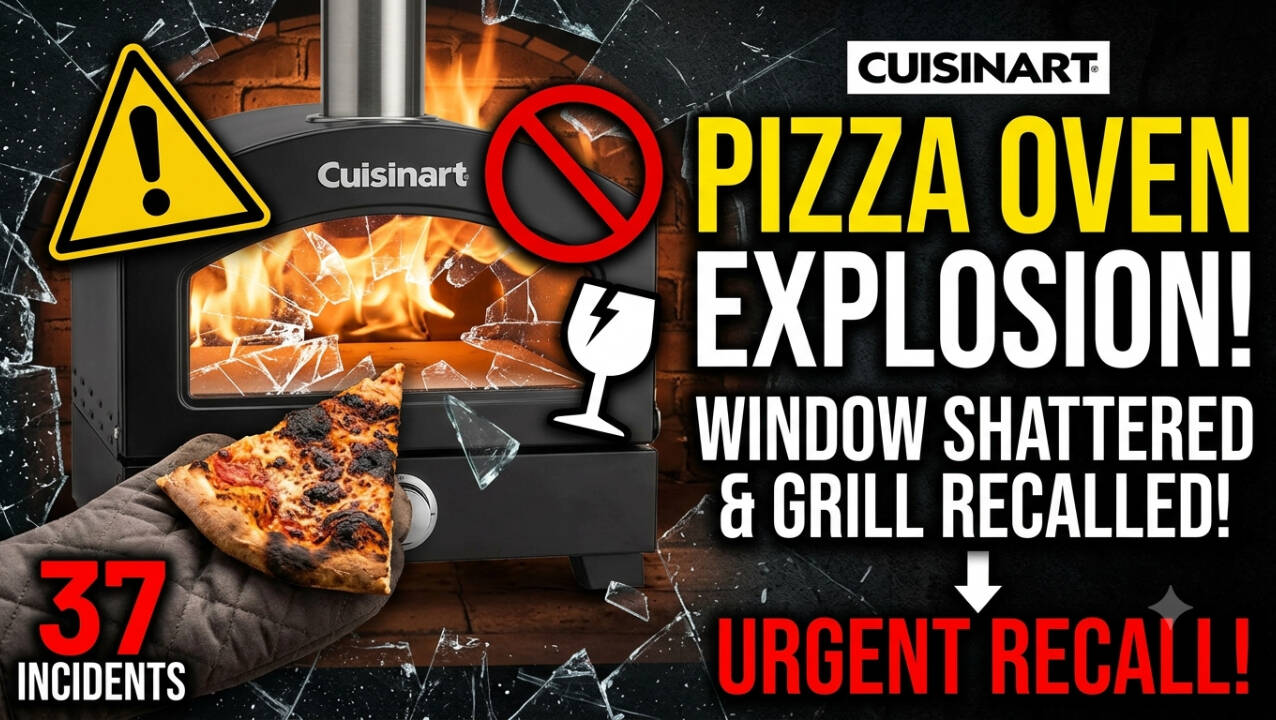
This isn’t a campfire ghost story. It is a reality that has unfolded on dozens of American patios over the last several months. Conair, the parent company behind the ubiquitous Cuisinart brand, has issued a sweeping, urgent safety recall for its massive Cuisinart Propel+ Four Burner 3-in-1 Gas Grill. The culprit is the very feature that made the machine an object of backyard envy: a built-in pizza oven topped with a tempered glass window. Under the intense, shifting thermal pressure of an active propane fire, that glass has a terrifying tendency to self-destruct.
Thirty-seven times, American consumers have watched their evening plans disintegrate into a pile of razor-sharp debris. One incident even sparked an active fire. While the federal safety notices report zero physical injuries so far, the psychological boundary of the safe, comforting backyard cookout has been thoroughly breached.
When Tempered Glass Pushes Past Its Limit
To understand how a premium appliance turns into a liability, you have to look at the physics of a modern multi-cooker. The Propel+ model CGG-6331 was marketed as an all-in-one culinary Swiss Army knife. It offered a traditional griddle, a separate stovetop burner, and that dedicated pizza oven built right into the lid. For a price tag hovering between $500 and $750, it promised to turn any amateur griller into a suburban pizzaiolo.
Between December 2024 and May 2026, roughly 12,660 of these heavy stainless-steel units moved through the sliding glass doors of Lowe’s and Walmart, or shipped directly from Cuisinart’s digital storefront. Another 83 found homes in Canada.
But engineering a machine that handles multiple extreme thermodynamic tasks at once is a delicate balancing act. A pizza oven requires immense, trapped heat to properly crisp a crust from above and below—often reaching internal temperatures that far exceed standard barbecue thresholds. Tempered glass is designed to withstand high heat, but it is also highly sensitive to thermal shock and structural stress. If the glass cools too quickly on the outside while baking under intense heat from the inside, or if the metal frame expands and pinches the edges of the pane, the built-in tension of the tempered material releases all at once.
When tempered glass fails, it does not leave a neat, clean crack. It shatters into thousands of tiny, jagged cubes. If you happen to be leaning over the hood to check on your pepperoni toppings when that happens, the risk of severe lacerations to the face and eyes is immediate.
The $500 Ransom for a Suburban Status Symbol
The response from federal safety regulators and Conair is direct, but the remedy requires an unusual bit of manual labor from the homeowners themselves. This is not a situation where a delivery truck will roll up to swap out the machine.
Instead, owners are being asked to immediately halt all use of the grill and head online. To claim a financial resolution, you have to become a temporary forensic photographer. The safety instructions dictate that you must carefully remove the tempered glass window from the pizza oven assembly yourself.
Once the glass is out, you must take two distinct photographs. The first must clearly show the removed glass pane. The second must capture the grill's unique serial number, which is hidden away on a label plastered to the inside of the right-hand metal door.
After uploading these images to the manufacturer's dedicated recall portal, Conair will issue a full reimbursement or a $500 check. But the final instruction carries a surreal, almost ritualistic note of finality: once the check is secured, the consumer is instructed to take a black Sharpie marker, write the word "Recall" directly onto the glass pane, and throw it in the trash.
It is a stark, visual marker of a product line's sudden death. A black permanent marker scrawled over a window that was supposed to showcase years of family birthdays, late-night pool parties, and quiet Friday nights.
The Vanishing Margin for Error
Consider a hypothetical family using this machine. Let's call them the Hendersons. They spent $600 at a local big-box store, hauled the heavy box home, assembled the stainless-steel frame over three hours on a Sunday morning, and hooked up the propane tank. They bought the specialty flour. They bought the wooden peel. They did everything right.
On a warm evening, they light the burners. The internal thermometer climbs. The kids stand around the patio table, waiting for the first pie to slide out. If that glass blows, the physical damage might be avoided by sheer luck of a turned head, but the investment of time, money, and domestic joy is instantly wiped out. The grill becomes a giant, cold monument of metal sitting idly on the deck, unusable until a check arrives in the mail and a replacement part or a whole new setup can be sourced.
The real casualty in these corporate product failures is rarely just the balance sheet of a consumer goods giant like Conair. It is the unspoken contract of trust between a legacy brand and the person standing over a hot flame. We buy these premium, heavy instruments because we assume the engineering team has factored in every variable, every spike in temperature, and every structural tolerance.
When 37 different households experience the same explosive failure across a single product run, it reveals a narrow margin for error in modern appliance design. Features are packed into single chassis to capture consumer attention on store floors, but complexity often introduces unintended vulnerabilities.
If you have one of these stainless-steel units sitting on your deck right now, leave the propane valve closed. Check the right door. Find the marker. The era of the all-in-one backyard pizza parlor has paused, leaving thousands of home cooks holding nothing but a handful of dough and an empty frame where a window used to be.