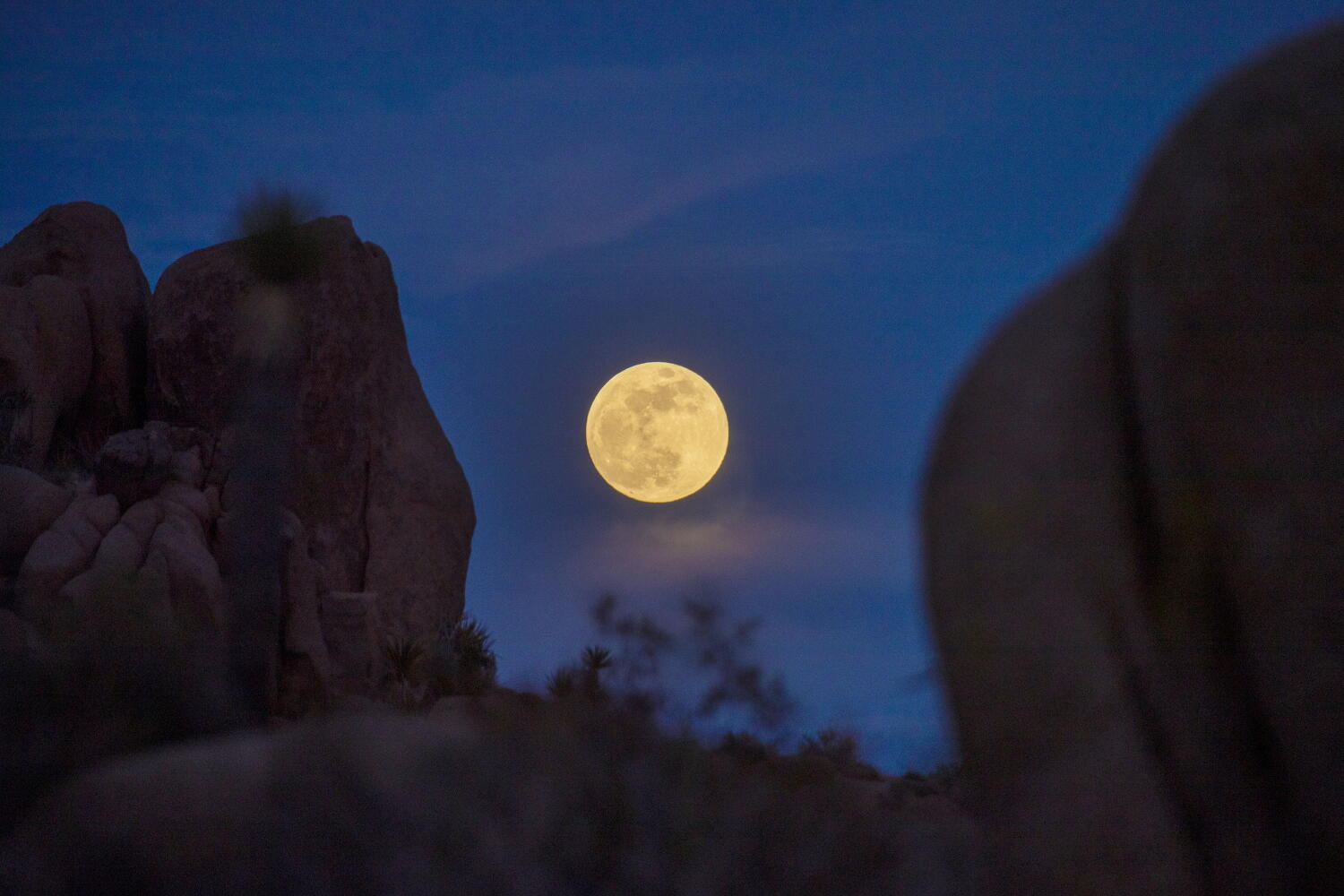
Southern California stargazers face a familiar collision whenever a busy month of astronomical events arrives, promising bright fireballs and a dramatic supermoon while delivering hazy horizons and blown-out contrast. The core problem is not a shortage of celestial spectacles above the Pacific coast. The real friction lies in geography, urban glare, and the gap between breathless skywatching forecasts and what human eyes can actually pull out of a crowded night sky.
Every time a calendar lights up with meteor peaks, planetary alignments, or an oversized full moon, local coverage treats the region like a single dark-sky sanctuary. It is not. A backyard in Burbank, a pier in Santa Monica, and a ridge above Anza-Borrego operate under completely different physical rules. Ignoring those differences sets casual observers up for disappointment before they even pack a folding chair.
The Supermoon Illusion Nobody Explains Straight
Bright moons sell headlines. A supermoon occurs when a full moon lines up near perigee, the point in the lunar orbit that sits closest to Earth. Because the Moon is slightly nearer than average, it appears noticeably larger and brighter than a typical full moon.
Numbers get stretched fast. Casual readers often hear that a supermoon looks twice as big in the sky, which is false. The angular diameter increase over a distant full moon is modest, roughly up to about fourteen percent depending on the exact orbital geometry, while brightness rises by a larger fraction. Your brain does the rest of the work when the Moon sits low near coastal hills, buildings, or palm trees, creating the moon illusion through nearby scale cues.
That extra brightness is a double-edged sword. Moonlight floods the sky with scattered light, washing out faint stars and turning a promising meteor shower into a thin trickle of only the brightest streaks. When a supermoon overlaps with a major meteor peak, the headline sounds like a bonus. In practice, glare steals the show.
Fireballs Versus Ordinary Shooting Stars
Most streaks people call shooting stars are tiny grains of dust or rock vaporizing high in the upper atmosphere through ram pressure and friction. A fireball is a different class of event, produced by a larger meteoroid that burns bright enough to rival or exceed the brilliance of Venus in the night sky.
Bigger debris is rarer. Waiting passively on a lawn chair for a true fireball takes patience, regardless of how hyped a monthly sky calendar looks. Even during active meteor periods, bright fireballs often arrive sporadically rather than on a neat schedule, and a single dramatic streak can leave an observer scanning empty sky for twenty minutes afterward.
Direction matters, too. Meteors belonging to a specific shower trace back along trajectories toward a radiant point in the sky, yet they can appear anywhere overhead. Staring straight at the radiant often produces shorter trails viewed nearly head-on, whereas looking thirty to forty degrees away frequently yields longer, more dramatic paths across the dark.
Southern California Geography Fights Back
Geography in Southern California is both a gift and an obstacle. Within a two-hour drive, you can move from sea-level coastal fog to high desert basins and mountain passes above five thousand feet. Still, weather and air quality make or break a night out.
Coastal Marine Layer and Haze
Along the coast and across the Los Angeles basin, low clouds, marine layer moisture, and urban aerosol haze trap light and mute contrast. A supermoon might punch through thin mist with a ghostly halo. Faint meteors will not survive it.
Light Pollution and Skyglow
Urban skyglow is the cumulative dome of artificial light scattered upward by streetlights, billboards, stadiums, and unshielded fixtures. Under heavily lit skies, the background luminance rises so high that faint meteors never cross the human eye's contrast threshold.
A busy astronomical month only rewards observers who match their site choice to the target—bright lunar geometry favors open sightlines, while faint streaks demand dark skies and clean air.
✨ Don't miss: The Midnight Watch on a Border of Glass
Consider a hypothetical observer in Anaheim who drives ten miles to a local park hoping to catch dozens of streaks during a peak night. Even with clear overhead weather, city glare and bright moonlight will hide most of the activity. Moving inland and upward toward desert or mountain dark-sky areas changes the math completely, provided wind and cloud cover cooperate.
What Sky Calendars Leave Out
Monthly astronomy roundups tend to list dates, times, and peak windows without explaining the trade-offs between events. A busy month is rarely a single continuous show. It is a sequence of distinct viewing problems stacked onto one calendar.
- Lunar phase clashes: Bright moonlight helps you walk safely to your car without a flashlight, yet it ruins dark adaptation and suppresses faint meteors.
- Timing mismatches: Peak activity often hits in the pre-dawn hours when temperatures drop, traffic thins, and coastal clouds sometimes thicken.
- Horizon blockages: Mountains, canyons, and tall buildings clip low-altitude events long before instruments or calculators say they have set.
- False expectations: Photo-stacked images taken with long exposures and fast lenses show colors and star densities that naked eyes cannot match in real time.
Long-exposure photography is another trap. A camera sensor accumulates light over seconds or minutes, turning a dim patch of sky into a rich field of stars. Human vision refreshes continuously and relies on scotopic vision in low light, which takes roughly twenty to thirty minutes of darkness to build and collapses the moment someone checks a bright phone screen.
Choosing Real Vantage Points Over Hype
Good stargazing starts with honest logistics rather than wishful thinking. Check cloud forecasts for your exact elevation, not just a citywide high-low summary. A clear sky at sea level can sit beneath a stubborn cloud deck on a mountain road, and a breezy desert night can stay crisp while basin air turns soupy.
- Pick the target first. Watch the supermoon early as it rises for dramatic framing, or shift attention to darker windows and higher elevations when hunting fireballs.
- Cut local glare. Shield your eyes from nearby lamps, set device screens to red-light or lowest brightness, and give your vision half an hour to adapt.
- Watch wide, not narrow. Lie back or recline so you take in a broad expanse of sky instead of peering through a narrow keyhole.
- Plan for cold and fatigue. Desert and mountain nights cool fast after sunset, and tired eyes miss brief flashes at the edge of vision.
A busy month in the sky does not guarantee a memorable night by default. It gives you raw material—orbital geometry, atmospheric entry, and shifting seasonal skies—that only pays off when you respect the local conditions beneath your feet. Pack warm layers, pick a dark sky with a clear horizon, and give your eyes enough time in the dark to earn every streak you see.