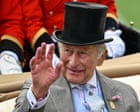
On a drizzly Tuesday afternoon in south London, Arthur washes his hands in a bucket of cold water. He is sixty-four, with knuckles swollen from forty years of laying brick and a spine that aches every time the barometric pressure drops. His small construction firm is struggling under the weight of soaring material costs and a compounding tax bill that feels less like a civic contribution and more like a slow, deliberate drowning. Arthur pays his income tax. He pays his value-added tax. When he buys fuel for his battered transit van, he pays fuel duty. He watches the deductions vanish from his bank account with a grim, routine acceptance. It is the price of citizenship. It is what keeps the streetlights on and the local hospital running, or so he tells himself.
Now, shift the lens four hundred miles north to the rolling hills of the Sandringham Estate, or into the gilded, plush interiors of Buckingham Palace. Here sits a man who owns entire coastlines, vast swaths of prime London real estate, and racehorses that cost more than Arthur’s entire terraced street. He does not worry about the price of diesel. Yet, when the annual figures of the British monarchy’s finances are quietly slipped into the public record, a strange, vertigo-inducing reality emerges. Meanwhile, you can read related events here: Why the Celebes Sea Earthquake Matters More Than the Headlines Say.
King Charles III pays taxes. Technically. But the math operating behind the velvet curtain belongs to a completely different universe than the one Arthur inhabits. It is a universe where hundreds of millions of pounds move in silence, shielded by ancient exemptions and modern compromises, leaving ordinary citizens to shoulder the heavy lifting of a modern state.
The Illusion of the Common Ledger
For decades, the financial inner workings of the House of Windsor were treated like state secrets, wrapped in deference and hidden behind tradition. When public pressure forced a change in the early 1990s, a grand compromise was struck. The monarch would pay income tax on a voluntary basis. To explore the complete picture, we recommend the detailed analysis by TIME.
Voluntary. Take a moment to let that word settle. For anyone earning a wage, taxation is an absolute, unyielding gravity. For the Sovereign, it is an act of royal grace.
When the latest figures emerged detailing the King’s financial contributions, the headlines proclaimed that the royal family was finally opening its books. The reports showed that King Charles paid a tax bill of just over £2.3 million on an income derived from the Duchy of Lancaster, a massive private estate of land, property, and assets held in trust for the reigning monarch. To the casual observer, £2.3 million sounds like a staggering sum of money. It is more than most people will see in three lifetimes.
But true scale is entirely a matter of perspective.
The Duchy of Lancaster generated a surplus of over £26 million in a single year. When you calculate the effective rate, the percentage of wealth actually surrendered to the state, the grand illusion begins to fracture. The top rate of income tax for a regular UK citizen earning over £125,140 is 45 percent. If Arthur’s business somehow cleared millions, the state would claim nearly half of it to fund schools, roads, and defense. The King’s effective tax rate on his private duchy income sits comfortably below that threshold, cushioned by an intricate web of deductible business expenses and structural advantages unavailable to any ordinary company or citizen.
Worse still is what remains entirely untouched. The real mechanism of dynastic wealth generation isn't income. It is inheritance.
The Crown Exemption and the Missing Billions
When Queen Elizabeth II passed away, control of the Crown Estate, the Duchy of Lancaster, and a personal fortune overflowing with priceless artwork, jewelry, and historic properties transferred seamlessly to her eldest son. In the ordinary world, an estate of that magnitude would face a devastating 40 percent inheritance tax. It is a tax designed specifically to prevent the permanent consolidation of vast, untouchable wealth across generations, ensuring that some portion of a dynasty's fortune returns to the public pool.
If applied to the royal transition, the bill would have stretched into the hundreds of millions, perhaps billions. Instead, the total inheritance tax paid by King Charles was exactly zero.
This total exemption is justified by a piece of political engineering known as the 1993 agreement on royal taxation. The official rationale is that the monarchy must maintain sufficient financial independence to carry out its constitutional duties. If the estate were chopped up and taxed every time a monarch died, the institution would eventually be privatized out of existence. The state protects the Crown’s wealth to protect the Crown’s continuity.
But look at this from the perspective of the high street. Consider a family-owned bakery that has operated in a northern town for three generations. When the grandmother dies, the children must navigate complex tax laws, sometimes selling off assets or properties just to settle the inheritance bill with His Majesty’s Revenue and Customs. The state tells that family that their sacrifice is necessary for the greater good of the country. Simultaneously, the state tells the same family that the wealthiest landlord in the kingdom must be exempt from the exact same rule to preserve his dignity.
The contrast is not merely financial. It is emotional. It strikes at the very heart of the social contract.
The Private Profit of Public Space
To truly understand how deep the divide goes, we have to look at where this money actually comes from. The Duchy of Lancaster is not a tech startup founded on innovation. It is a portfolio of land, commercial properties, and agricultural holdings that has existed since the Middle Ages. It profits off the everyday economic activity of ordinary people.
When a small business rents a storefront in a historic town center owned by the Duchy, their monthly rent feeds the royal surplus. When a farmer toils in a field under a ducal tenancy, their sweat subsidizes the palace ledger. The money flows upward, from the pockets of people who pay full taxes on every penny they earn, into a repository that is uniquely shielded from the fiscal pressures facing everyone else.
Meanwhile, the public is simultaneously funding the monarchy through the Sovereign Grant. This is the official annual payment from the government used to support the King’s official duties, maintain occupied royal palaces, and pay staff. The grant is calculated as a percentage of the profits from the Crown Estate, a vast portfolio of land and seafloor that belongs to the nation but is managed on behalf of the monarch.
When the Crown Estate's profits soared due to massive offshore wind farm deals, the government adjusted the funding formula, but the royal payout remained astronomical. The public effectively pays for the upkeep of the institution, while the private profits generated by the monarch's other ancient estates remain largely insulated from the tax collectors.
It is a system where the risks and expenses are socialized, but the vast surpluses are privatized.
The Fragile Thread of Deference
Systems of governance do not survive on laws alone. They survive on belief. They survive because the people at the bottom believe, or at least accept, that the rules are fundamentally fair.
For centuries, the British public accepted the immense wealth of the royal family because it was accompanied by a sense of duty, mystique, and national identity. The bargain was simple: we give you luxury, status, and deference; you give us stability, service, and a symbol of national unity that transcends politics.
But mystique is a fragile shield in an era of economic stagnation. When the cost of living spikes, when energy bills force pensioners to choose between heating and eating, and when public services crumble from lack of funding, the transparency of the internet changes the nature of the conversation. People begin to look past the pageantry of the gold state coach and look directly at the balance sheet.
They see a King who can inherit an untaxed fortune while his subjects face the highest tax burden in decades. They see an institution that costs tens of millions of pounds annually to run, even as local councils across the nation declare bankruptcy and shut down libraries, parks, and youth clubs.
The danger to the monarchy is not a sudden, violent revolution. The danger is a quiet, corrosive cynicism. It is the moment people like Arthur look at the news, shake their heads, and realize that the system isn't broken; it is working exactly as intended for the people who designed it.
The golden umbrella of royal exemption protects the Sovereign from the economic storms that batter everyone else. But as the rain keeps falling on the citizens below, that umbrella looks less like a tool of statecraft and more like a monument to inequality. The ledger may balance on paper, but the human cost is written in the quiet resentment of a nation wondering why the heaviest burdens are always carried by those with the weakest shoulders.


