The headlines want you to believe the universe is a interstellar bakery. "Astronomers find sugar lurking in the space between stars!" they scream, complete with artist renderings of glowing, sweet clouds drifting near pristine protostars.
It is a beautiful image. It is also an intellectual distraction.
Every few years, astrochemistry experiences a collective meltdown because a radio telescope picks up the spectral signature of glycolaldehyde or ribose in some distant molecular cloud like Sagittarius B2. The narrative is always identical: we found a building block of life, meaning alien microbes are practically inevitable, and we are right on the cusp of solving abiogenesis.
This is a fundamental misunderstanding of chemical scale and cosmic reality. Finding a five-carbon sugar molecule in a vacuum is not a discovery of life. It is the chemical equivalent of finding a single, random screw in the middle of the Sahara Desert and claiming a Ferrari is about to assemble itself from the sand.
The Scale Fallacy of Interstellar Chemistry
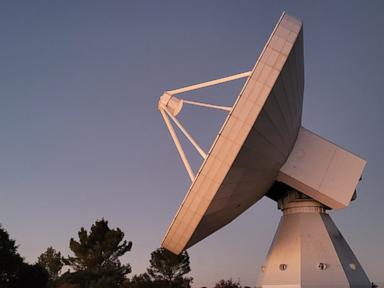
Let us look at the actual physics of these "sugar clouds." When a team uses an array like ALMA (Atacama Large Millimeter/submillimeter Array) to detect glycolaldehyde, they are tracking rotational transitions of molecules billions of light-years away.
The media translates this as "vast reservoirs of sugar."
Here is the cold, unvarnished data they gloss over: the density of these molecular clouds is incredibly low. We are talking about a few thousand molecules per cubic centimeter. For context, the air you are breathing right now contains roughly $2.5 \times 10^{19}$ molecules per cubic centimeter.
If you swept up an entire cubic kilometer of that "sweet, sugary space cloud," you wouldn't have enough matter to sweeten a single cup of espresso.
Calling this a "sugar discovery" is a masterclass in PR hype designed to keep funding flowing to radio observatories, not a breakthrough in understanding our origins. The local chemistry of a freezing, radiation-blasted void is fundamentally hostile to the kind of complex macromolecular organization required for actual biology.
The Problem With Prebiotic Labeling
Astronomers love the term "prebiotic." It sounds scientific. It feels urgent.
But it is a linguistic trick. A molecule is only prebiotic if it actually goes on to form biotic structures. In the interstellar medium, these molecules are subjected to:
- Relativistic cosmic rays
- Intense ultraviolet radiation from nearby O-type stars
- Shockwaves from expanding supernova remnants
The vast majority of cosmic sugar is synthesized on ice grains only to be vaporized and utterly destroyed before it ever gets near a forming planetesimal. We are celebrating the existence of ingredients that are obliterated before the cake can even be mixed.
Why Carbon Chemistry is Inevitable, Not Special
The lazy consensus in modern space reporting assumes that organic molecules in space are rare anomalies. The contrarian truth is much simpler: organic chemistry is lazy and inevitable.
Carbon is the fourth most abundant element in the universe. It has four valence electrons. It wants to bond with everything—hydrogen, oxygen, nitrogen. If you leave carbon and hydrogen in a cold box with a bit of starlight, you will get complex hydrocarbons. You cannot stop it from happening.
[Basic Carbon/Oxygen/Hydrogen]
       │
       ▼ (Inevitably reacts under UV light on ice grains)
[Glycolaldehyde / Formaldehyde]
       │
       ▼ (Blasted by Cosmic Rays / Stellar Winds)
[99.9% Destruction / Total Dissociation]
I have looked at spectral data sets that researchers spend months parsing. They sift through massive amounts of cosmic noise to isolate a few faint spikes corresponding to a specific molecular rotation. Yes, the math is beautiful. Yes, the instrument calibration is a marvel of human engineering. But the conclusion—that this brings us closer to finding E.T.—is wild speculation masked as hard science.
The universe is dirty. It is full of soot, polycyclic aromatic hydrocarbons (PAHs), and basic alcohols. Finding sugar in space is no more shocking than finding dust bunny under your couch. It is just the natural byproduct of physical systems running their course.
Dismantling the Astrobiology Funding Machine
Let us answer the question people are actually asking, but answering incorrectly: Does finding space sugar mean life is common?
Absolutely not.
The planetary science community has created an echo chamber where every detected molecule is a proxy for alien life. This happens because pure, structural astronomy—the simple act of cataloging what exists out there—is incredibly difficult to fund. The public does not care about the rotational partition function of asymmetric top molecules. They care about aliens.
So, the narrative is twisted.
Imagine a scenario where a deep-sea exploration team finds a trace amount of iron ore on the ocean floor and instantly holds a press conference to discuss the structural integrity of underwater civilizations. You would laugh them out of the room. Yet, when an astrochemist finds a trace of simple carbohydrate precursor in a hostile nebula, we invite them onto prime-time news to discuss the origins of the human race.
The downside of my skepticism is obvious: it makes the cosmos feel sterile, cold, and lonely. It strips away the romanticism that drives young students into STEM fields. But trading scientific rigor for a comforting narrative is a bad bargain.
The Real Bottleneck is Not Synthesis, It is Concentration
If you want to understand how life actually starts, stop looking at the space between the stars. Look at the thermodynamic traps on planetary surfaces.
The challenge of abiogenesis is not creating simple organic molecules like formaldehyde or glycolaldehyde. We can do that in a high school chemistry lab with a spark gap and some methane. The real bottleneck is concentration and polymerization.
How do you take highly diluted, chaotic molecules and concentrate them into a localized environment where they can form stable polymers like RNA?
- In space: Molecules are separated by vast chasms of vacuum. They almost never collide. When they do, the energy environment is more likely to break them apart than fuse them into something more complex.
- On a young planet: Hydrothermal vents, evaporating tidal pools, and mineral surfaces provide the actual scaffolding required for life.
The chemistry that happens in the interstellar medium is a sideshow. It is a chaotic, disorganized background hum that contributes next to nothing to the highly specific, low-entropy systems required for biological life to ignite. The sugars found in space are chemical dead ends. They are floating in a graveyard, never to be integrated into a cell wall or a genetic strand.
Stop tracking the celestial sugar rush. The real answers aren't drifting in the pretty neon clouds of distant nebulae; they are buried deep in the volatile, high-pressure crucibles of active planetary crusts. Turn the telescopes around.