Commercial space flight has finally arrived for paying customers. Millionaires are strapping into capsules, leaving the atmosphere, and briefly gazing back at the pale blue curve of the Earth. Yet, despite hurtling through the thermosphere at Mach numbers once reserved for intercontinental ballistic missiles, passengers cannot escape the most mundane annoyance of modern existence. The boarding process remains stubbornly anchored to the ground.
You can cross the Kármán line, experience weightlessness, and return with a certificate declaring you an astronaut. You still have to take off your shoes.
This stark juxtaposition reveals a strange truth about human progress. We completely redesign the vehicle. We invent reusable rockets fueled by liquid oxygen and methane. We calculate orbital mechanics down to the millisecond. But when it comes to the administrative ritual of getting humans from a waiting room into a seat, our imagination completely shuts down. We cling to security checkpoints invented for commercial aviation in the nineteen-seventies like a drowning sailor clutching driftwood.
The Legacy Burden of the Terminal
Every technological leap carries the ghost of the technology it replaces. Early automobiles were literally called horseless carriages because nobody could picture a personal transit machine that did not mimic a buggy. The first television broadcasts were simply radio shows with a blurry camera pointed at the studio announcers.
Space travel is currently suffering from the same lack of conceptual originality.
Private spaceflight providers lease tarmac space near traditional federal launch sites or rural airfields. They process passengers using protocols designed by aviation regulators who spend their days worrying about regional jets and cargo holds. Federal oversight agencies treat a suborbital rocket launch with the same procedural mindset applied to a Boeing flight from Chicago to Denver.
Consider the security briefing. Passengers spend hours in briefing rooms learning about emergency oxygen masks, hatch releases, and gravitational force loads. These precautions are entirely necessary given the physics of combustion and atmospheric re-entry. But they are paired with legacy baggage restrictions, metal detectors, and identity verification steps that belong in a municipal bus station.
The industry pretends that space travel is a radical break from terrestrial transit. The check-in counter tells a different story.
The Bottleneck of Bureaucracy
Let us examine the logistics. A suborbital flight carrying six passengers requires a ground crew numbering in the dozens. Technicians check suits, verify telemetry feeds, run environmental controls, and calibrate life support systems. This is high-stakes engineering at its finest.
Then comes the passenger processing.
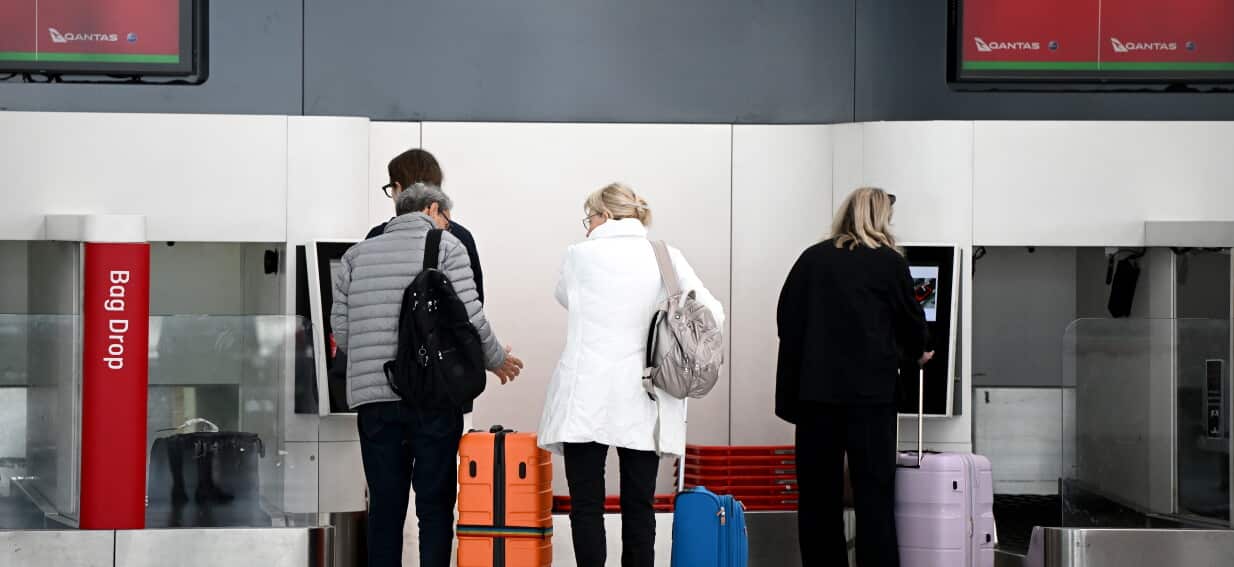
Travelers arrive days in advance for medical clearances, centrifuge training, and suit fittings. This makes sense; the human body reacts poorly to sudden shifts in momentum. But the actual morning of the launch often involves standing in lines, showing government-issued identification cards to guards who look entirely unimpressed by your ticket price, and placing personal items into plastic bins for scanning.
We have built a system where multi-million-dollar spacecraft sit on the pad while humans wait for a scanner operator to finish their coffee break.
The ritual persists because aviation security is built on risk aversion and liability management. Regulators do not care if you reach orbit. They care about compliance. If a government agency creates a rulebook for commercial passenger transit, they apply it universally. A rocket is legally classified as an aircraft or a launch vehicle, depending on the jurisdiction, but the human inside is always treated as a passenger who might pose a security threat.
The paradox is thick enough to cut with a titanium knife. You are cleared to ride a controlled explosion into the upper atmosphere, but you cannot bring a standard bottle of shampoo through the checkpoint because it exceeds liquid volume limits.
The Physics of Waiting
Space tourism companies sell a narrative of infinite freedom. Marketing videos show serene individuals floating effortlessly while looking down at our planet with quiet awe. The background music is always ambient and inspiring.
The reality involves a lot of waiting in windowless rooms wearing blue jumpsuits that make everyone look like an extra in a straight-to-video science fiction movie from nineteen ninety-four.
Waiting is the invisible tax of modern travel. We accept it because we assume it is the price of safety. But in aviation, security lines grew exponentially after decades of specific geopolitical threats. Hijackings, bombings, and smuggling campaigns forced airports to build fortress-like entryways.
Space travel has no history of passenger hijacking. There are no disgruntled travelers diverting capsules to Cuba. The vehicle is entirely controlled from the ground or by automated flight computers. The passengers are strapped into molded seats with five-point harnesses and have zero ability to interfere with guidance systems.
Despite this, the security theater remains intact.
Federal agencies demand jurisdiction over anything that leaves the ground with a human inside. This creates a regulatory friction zone where innovation hits a concrete wall of bureaucratic inertia. Private space companies spend millions of dollars complying with aviation-derived rules that have no bearing on orbital dynamics.
The Psychological Trap of the Ritual
Why do we keep the ritual? Because humans find comfort in familiarity.
Going through a checkpoint, handing over a passport, and stepping onto a tarmac creates a psychological transition. It marks the boundary between the ordinary world and the extraordinary journey. If you teleported someone straight from a luxury lounge into a rocket cabin without the intermediary steps of briefings, checks, and queues, their brain might reject the reality of the situation.
The annoyance of the process is actually part of the product. By making you suffer through administrative friction, the provider validates the difficulty of the achievement. If going to space were as easy as stepping onto an elevator, it would feel like an amusement park ride rather than a heroic endeavor.
This is the dirty secret of luxury adventure travel. The friction creates value. When you recount your suborbital flight at a dinner party, the story always includes the grueling medical tests, the endless waivers, and the tense morning security checks. It proves you earned the view.
The Commercial Reality Check
Right now, space tourism is an exclusive playground for the ultra-wealthy. Ticket prices range from hundreds of thousands to millions of dollars per seat. At that price point, customers are willing to tolerate indignities like plastic security bins and mandatory safety videos because the ultimate payoff is so extreme.
Scale changes everything.
If point-to-point suborbital travel ever becomes a commercial reality—flying from London to Sydney in ninety minutes using rocket propulsion—the current processing model will collapse under its own weight. You cannot spend three days in medical training and six hours clearing security for a flight that lasts less time than a feature film.
To make high-speed atmospheric transit viable for the masses, the ground ritual must be completely stripped away.
The pioneers of this industry know this. They talk about frictionless travel in their investor presentations. They dream of terminals where passengers walk directly from a high-speed rail car into a vehicle without stopping to empty their pockets or remove their shoes.
Yet, every time a new flight window opens, the clipboards come out. The badges are inspected. The rules are enforced.
The Unbreakable Chain
We want to believe that cutting-edge technology obliterates old habits. History suggests otherwise.
When steamships replaced sailing vessels, passengers still packed steamer trunks and went through customs declarations that mirrored medieval trade manifests. When commercial jets replaced ocean liners, airlines adopted the seating classes and dining rituals of luxury steamships.
Now, spaceships are inheriting the security theatre of the commercial airline terminal.
The final frontier turns out to look remarkably like a busy Tuesday morning at Terminal Four. You pay a fortune to escape the bonds of Earth, but you cannot escape the bureaucratic need to verify your identity, inspect your luggage, and make sure you are not carrying a prohibited bottle of water.
The rocket engines roar to life, pushing you past the stratosphere and into the dark void of space. The view is breathtaking, silent, and profound. But when you land, walk back down the ramp, and re-enter the terminal building, the first thing you will do is dig through your pocket for your ID card, waiting for someone in a uniform to tell you that you can finally go home.