The humidity of a Washington summer clings to the marble of the Lincoln Memorial like grease. Imagine an old man standing on those steps, looking out across a newly polished reflecting pool toward the stone needle of the Washington Monument. He is not a politician yet. He is just a father who saved up for six months to bring his teenage daughter here from Ohio because he wanted her to see the place where the country keeps its promises. He wants to believe the promises are still real.
But this July 4, the view from those steps will look different. The National Mall is no longer just a shared civic lawn. It is a stage being set for a collision of history, power, and the inescapable brand of one man.
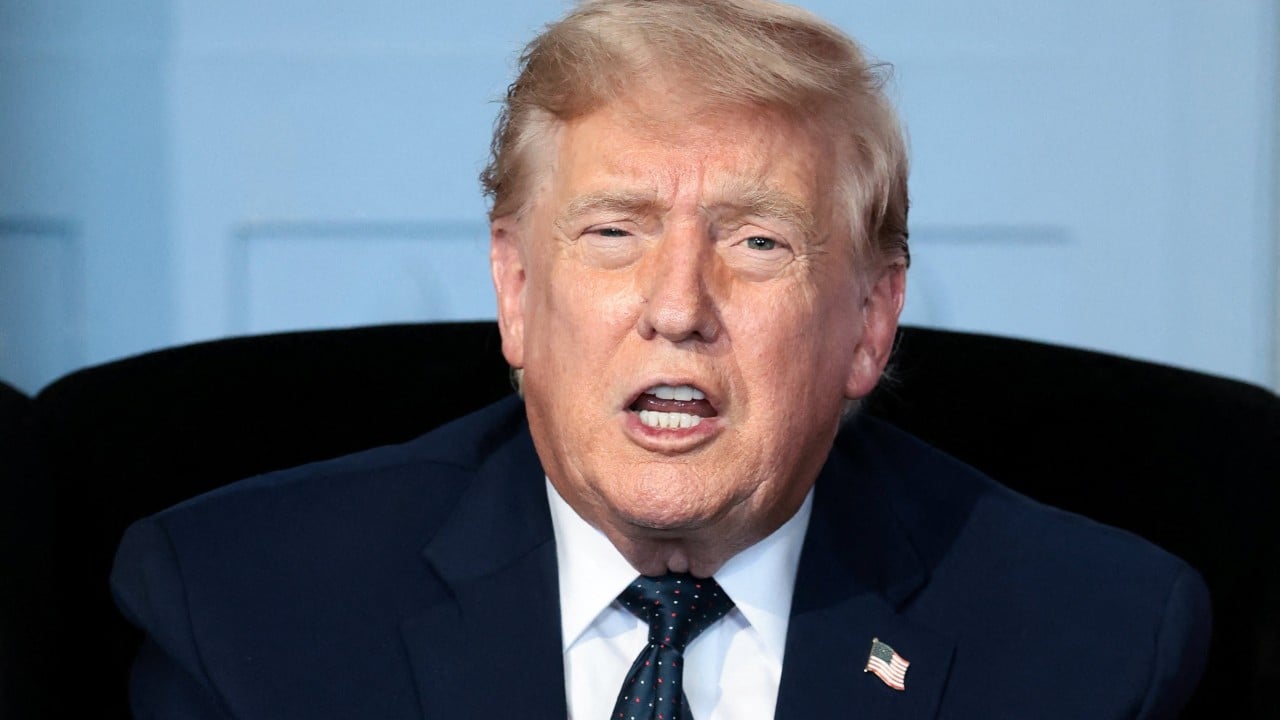
President Donald Trump has just announced that the official United States Semiquincentennial—the 250th anniversary of the Declaration of Independence—will double as a signature Trump rally. He calls it a Tribute to America. Critics call it something else entirely. They see a complete erasure of the line between a sacred national milestone and a hyper-partisan campaign event.
The announcement dropped with the calculated rhythm of a seasoned showman. It came just hours after the White House South Lawn was transformed into a literal combat arena. For his 80th birthday, the oldest sitting president in American history hosted a professional mixed martial arts cage match on the executive grass. Fighter jets screamed through the airspace overhead while men bled into the canvas below. It was a jarring, undeniable statement of how the current administration views American strength: raw, physical, and unapologetically loud.
Now, that same energy is moving down the street to the National Mall.
The scale of what is being built is dizzying. Under the banner of a public-private partnership named Freedom 250, the government is installing a sprawling Beaux-Arts style fairground between 4th and 14th Streets. Every state and territory will have a pavilion. There will be a 110-foot Ferris wheel, a traveling fleet of "Freedom Trucks" operating as mobile museums, and a traditional state fair complete with rodeos and quilting competitions. Organizers expect over a million people to pack the space. The night will end with what is being billed as the largest pyrotechnics display in human history.
But the real friction lies in who is controlling the microphone.
A national birthday is traditionally a moment of fragile truce. It is the one day a year where people who disagree on everything else are supposed to stand under the same sky and agree that the experiment is worth saving. When a president speaks at an anniversary, the words are usually crafted to be architectural—broad enough to shelter everyone.
This event is explicitly designed to exclude the lukewarm. Trump promised the crowd would hear music from his personal rally playlist, specifically mocking the traditional orchestral programming by saying he would have "none of those people that put you to sleep and constantly complain."
The culture war has already hollowed out the guest list. A massive anniversary concert series originally planned for the National Mall collapsed after a succession of mainstream musical artists abruptly pulled out. They discovered how deeply embedded the President’s political apparatus was within the event’s production and chose to walk away rather than be seen as endorsing a partisan rally. Trump’s response was characteristically aggressive. He simply replaced the concert with an additional, separate political rally scheduled for June 24, headlined by country singer Lee Greenwood.
This creates a profound dilemma for the everyday people planning to attend. Consider a family arriving in Washington this July. They came for the history. They came to show their children the parchment signed by fifty-six men who risked the gallows to invent a republic. Instead, they will walk into an environment where patriotism has been explicitly branded. The air will be thick with the familiar iconography of a political movement. The slogans, the merchandise, and the rhetoric will be indistinguishable from a campaign stop in Ohio or Florida.
It forces a painful question: Who owns the milestone?
The administration argues that this is exactly what a celebration of American spirit should look like. To his supporters, Trump’s willingness to fuse the presidency with popular culture—whether it is a UFC fight on the lawn or a massive, high-octane rally at the foot of the monuments—is a refreshing rejection of stuffy, elite norms. They see a leader who refuses to apologize for American power and who treats the nation's birthday with the loud, unvarnished pride of a stadium rock concert.
To the other half of the country, it feels like an eviction notice. It signals that the central monuments of the republic—places built to honor the men who preserved the Union and broke the chains of slavery—are being temporarily converted into private real estate for a political faction.
The danger is not just a breach of political etiquette. The danger is the permanent loss of shared ground. When the symbols of a nation become the exclusive property of one political party, the people outside that party stop looking at those symbols with pride. They begin to look at them with resentment.
As the sun sets on July 4, the largest fireworks show in history will illuminate the sky above Washington. The light will reflect off the marble of the Lincoln Memorial and the glass of the newly renovated reflecting pool. A million people will look up at the same sky. But beneath the smoke and the thunder of the explosions, they will be standing in separate worlds, looking at the same old man on the steps, wondering if they still belong to the same country.