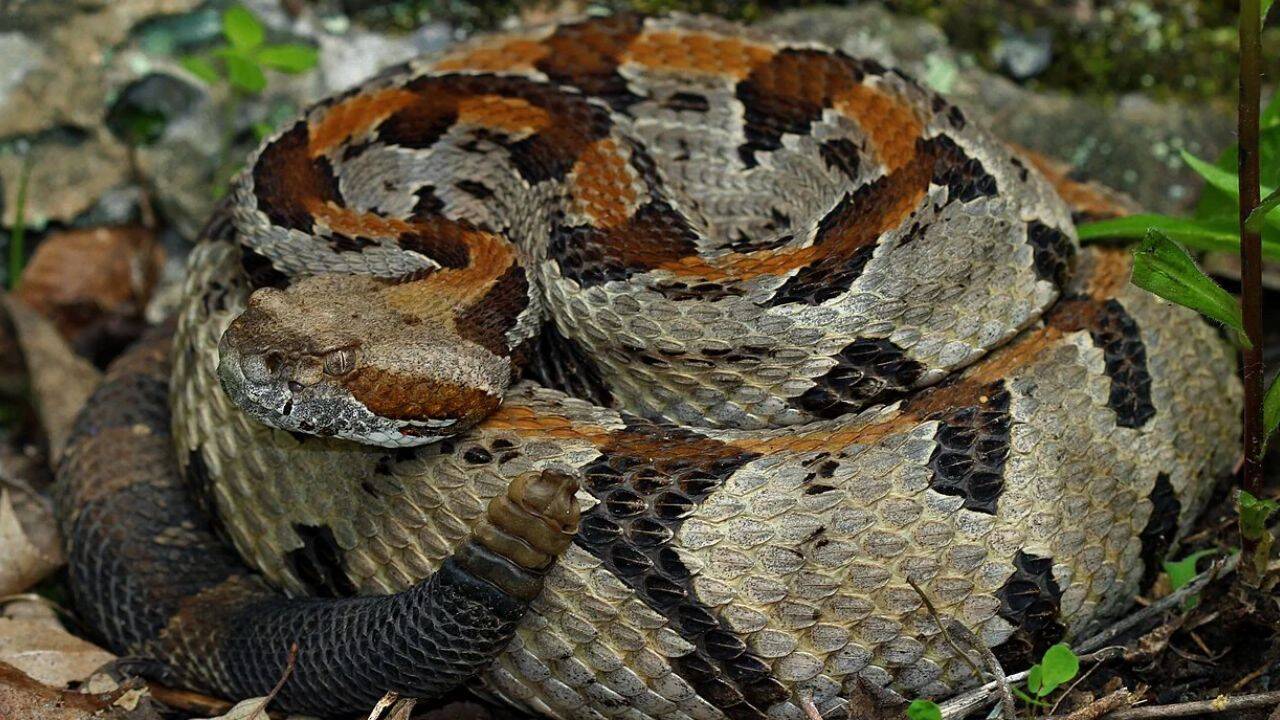
Timber rattlesnakes (Crotalus horridus) do not simply disappear underground when ambient temperatures drop. Recent field telemetry reveals that these pit vipers execute a deliberate, multi-week staging phase directly outside their subterranean winter shelters before initiating full dormancy. Most wildlife management plans and land-use protocols treat den entry as an instantaneous event triggered by a single hard freeze, creating a severe operational blind spot that leaves breeding populations exposed during their most vulnerable metabolic transition.
Standard conservation buffers assume that once autumn dispersal concludes, rattlesnakes are safely insulated beneath the frost line. Field data proves this assumption false. Snakes congregate in exposed rock talus, south-facing ledges, and root-mass microhabitats within meters of their hibernacula for weeks at a time. During this staging window, they are neither actively hunting across their summer home ranges nor protected within subterranean fissures.
The Three-Variable Optimization Model of Pre-Brumation Staging
Ectothermic survival across temperate winters requires solving a complex thermodynamic and physiological equation. Timber rattlesnakes cannot generate internal metabolic heat; their body temperature tracks the immediate microclimate. Entering a deep underground hibernaculum too early forces the animal to burn finite lipid reserves at elevated temperatures. Entering too late risks lethal freezing on the surface. The multi-week staging behavior resolves this optimization problem through three interacting mechanisms.
1. Thermal Buffering and Metabolic Downregulation
Subterranean dens maintain relatively stable temperatures, often hovering between 4°C and 10°C throughout winter. In early to mid-autumn, however, deep rock fissures often retain summer heat, remaining warmer than nighttime surface air. If a rattlesnake enters the hibernaculum prematurely, the higher ambient temperature elevates its standard metabolic rate. Because the snake has ceased feeding weeks earlier, every degree of excess warmth accelerates the depletion of fat bodies required to survive a five-to-seven-month fast.
Staging on the surface allows the snake to exploit diurnal thermal gradients. By basking during peak afternoon solar radiation and retreating into shallow surface crevices at night, the animal steps down its core temperature gradually. This controlled thermal descent acclimatizes cellular enzymes to cold conditions while minimizing caloric expenditure prior to final descent.
2. Digestive Clearance and Gastrointestinal Voiding
A rattlesnake entering brumation with undigested prey in its stomach faces fatal bacterial putrefaction. Low temperatures halt enzymatic digestion and peristalsis long before they stop microbial proliferation. A meal rotting inside the gastrointestinal tract causes systemic sepsis and death underground.
The staging period serves as a mandatory clearance buffer. Snakes remain near the den entrance where afternoon basking elevates body temperatures high enough—typically above 20°C—to complete final digestion and void waste. Once the digestive tract is entirely empty, the snake can safely commit to the thermal drop of the deep hibernaculum.
3. Gestational and Post-Parturient Recovery
For gravid females and those that gave birth in late summer, the staging phase dictates reproductive survival. Timber rattlesnakes are capital breeders; females often require two to four years of foraging to accumulate sufficient energy reserves for a single reproductive event. Giving birth depletes up to 40 percent of a female's body mass.
Post-parturient females rarely disperse back to distant summer hunting grounds before winter. Instead, they remain near the rookery and hibernaculum complex, using the multi-week staging window to maximize solar basking. This extended thermal exposure repairs tissue damage, rebalances water levels, and stabilizes physiological baselines before the winter fast.
The Structural Vulnerability of Spatial Aggregation
While the staging phase solves internal physiological constraints, it creates an acute external vulnerability: extreme spatial aggregation. Timber rattlesnakes exhibit high fidelity to communal hibernacula, often returning to the exact same rock fissure system for decades. Because suitable geological formations—deep fractures extending below the frost line with adequate humidity and drainage—are rare across forested landscapes, dozens or even hundreds of individuals converge on a single hillside.
During summer dispersal, a population spreads across hundreds of hectares of deciduous forest, making detection difficult and insulating the group from localized disturbances. During the autumn staging phase, the entire reproductive core of that regional population compresses into a zone spanning less than a single hectare.
- Predator Swamping vs. Focused Mortality: While group basking offers minor vigilance advantages, concentrated populations attract specialized predators, including raptors, mesocarnivores, and feral hogs. A single localized predation event during staging removes multiple breeding adults simultaneously.
- Anthropogenic Extraction and Disturbance: Illegal collection for the wildlife trade targets communal dens specifically during spring emergence and autumn staging. Poachers do not need to track individual snakes through dense brush; they simply walk known south-facing talus slopes in October and harvest the concentrated group.
- Microhabitat Degradation: Timber harvesting, trail construction, or recreational rock climbing directly adjacent to den sites during autumn disrupts basking schedules. Forced retreats into cold crevices prevent snakes from completing digestive clearance or reaching optimal pre-brumation hydration levels.
Methodological Blind Spots in Current Telemetry and Survey Protocols
Wildlife agencies frequently miscalculate the duration and spatial footprint of the staging phase due to flaws in standard monitoring methodologies.
First, visual encounter surveys rely heavily on opportunistic sightings during peak summer activity or immediate spring emergence. Autumn staging snakes are cryptic, lethargic, and heavily reliant on camouflage, leading surveyors to undercount surface presence by orders of magnitude.
Second, historical radio-telemetry studies often utilized low-frequency tracking schedules—locating instrumented snakes once per week or biweekly. When a snake moves from a summer foraging ridge to a rock outcrop 15 meters from its hibernaculum, coarse spatial resolution misclassifies the animal as already underground. High-resolution data loggers and daily telemetry fixes were required to prove that snakes remain in shallow surface voids and open basking platforms for weeks after arriving at the den complex.
Third, thermal threshold models used by forestry and infrastructure planners rely on macroclimatic weather station data rather than microclimatic surface sensors. A regional weather station recording overnight frost does not reflect the thermal reality of a south-facing limestone ledge absorbing direct solar radiation. Planners prematurely clear heavy machinery for autumn logging operations under the false assumption that freezing nights have driven all reptiles below the frost line.
Limitations of Microhabitat Management
Correcting conservation policy requires acknowledging strict operational constraints. Simply expanding static buffer zones around known hibernacula does not guarantee population stability.
- Detection Failure: The vast majority of timber rattlesnake hibernacula on private and public lands remain unmapped. Creating a 200-meter protection radius around known dens leaves undocumented sites completely exposed to autumn timber extraction and road building.
- Thermal Succession: Fire suppression across eastern North American forests has allowed dense canopy closure over historical basking ledges. Protecting a staging site from physical disturbance fails if unchecked hardwood growth shades the rock face, eliminating the solar radiation required for digestive clearance and gestational recovery.
- Genetic Bottlenecks: Even when staging sites are fully protected, habitat fragmentation surrounding the hibernaculum prevents juvenile dispersal and mate exchange between neighboring dens. A well-managed staging ground cannot rescue a population suffering from severe inbreeding depression.
Operational Protocol for Land Managers and Conservation Planners
To align land management with the biological reality of the staging phase, agencies and private forestry operators must replace calendar-based assumptions with mechanism-driven controls.
- Extend Seasonal Operating Restrictions: Shift autumn heavy-machinery bans and prescribed burn blackouts near known rocky outcrops by four to six weeks past the first regional frost. Operations should remain suspended until continuous ground-surface temperature loggers confirm that diurnal rock temperatures remain below 10°C for ten consecutive days.
- Implement Canopy-Thinning Prescriptions: Conduct selective manual thinning of overhanging trees directly south and southwest of identified staging talus during mid-winter when snakes are verified deep underground. Maintaining 50 to 70 percent open sky exposure preserves the thermal gradient required for autumn staging without disturbing active animals.
- Deploy Automated Thermal and Acoustic Monitoring: Replace sporadic visual surveys with paired microclimate data loggers and trail cameras positioned at suspected den entrances from September through November. Quantifying exact surface residency times allows managers to calibrate local buffer zones based on actual behavioral duration rather than regional averages.
- Restrict Spatial Data Publication: Strip precise geographic coordinates of staging outcrops from public environmental impact assessments and recreational trail maps. Treat den locations as sensitive infrastructure data to prevent targeted poaching during the autumn aggregation window.