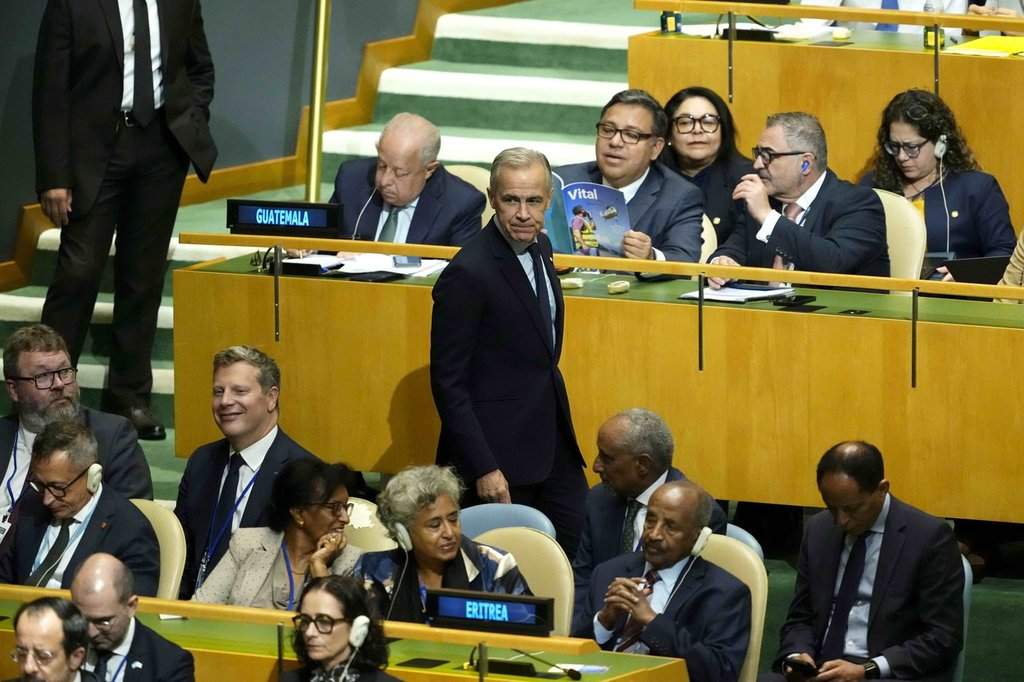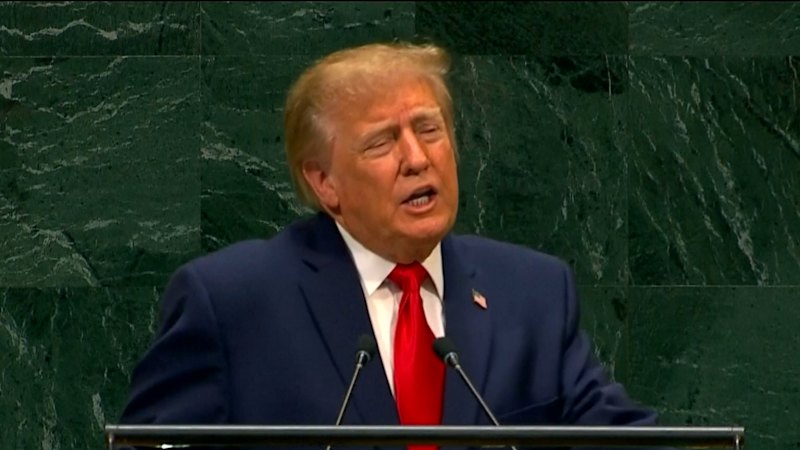
Diplomatic ultimatums delivered at international plenary assemblies rarely function as instruments of immediate capitulation. Instead, they operate as compressed signaling devices designed to shift the burden of risk onto an adversary while managing domestic political constituencies. When executive authorities use international forums to threaten total destruction unless a negotiated settlement is reached, the underlying mechanism is an exercise in forced deterrence restructuring. Observers frequently misinterpret these declarations as raw emotional outbursts, missing the systematic calculus of pressure, timeline manipulation, and structural constraints that govern modern statecraft.
The operational architecture of such threats relies on three distinct variables: the asymmetry of escalation dominance, the temporal horizon imposed by electoral or administrative cycles, and the creation of a binary choice space. By reducing complex geopolitical conflicts to an explicit dichotomy between a comprehensive treaty or total elimination, the signaling state attempts to compress the adversary's decision-making timeline. This strategy seeks to eliminate ambiguity, forcing target regimes to calculate the net present value of continued resistance against the guaranteed cost of systemic collapse.
A critical component of this framework is the manipulation of domestic and international timetables. Coercive diplomacy frequently stalls when the targeted state identifies domestic vulnerabilities within the coercing power, such as impending legislative elections or public fatigue over prolonged military engagements. When an administration faces political headwinds tied to the economic fallout of foreign conflicts, targeted regimes calculate that time functions in their favor. Consequently, public ultimatums serve a dual purpose: they externalize resolve to foreign capitals while attempting to arrest domestic erosion of support by projecting uncompromised strength.
The economic and structural cost function of protracted confrontation imposes severe constraints on both sides. While the coercing state deploys diplomatic isolation and military posturing to degrade the adversary's fiscal and physical infrastructure, secondary effects ripple through global markets, particularly regarding energy supplies and maritime trade chokepoints. The friction between stated objectives and resource allocation creates strategic drag. When military campaigns extend far beyond initial administrative projections, the credibility of ultimate threats undergoes rapid depreciation.
Evaluating the efficacy of coercive ultimatums requires separating rhetorical posturing from actual operational deployment. True deterrence engineering demands that the threatened cost exceed any conceivable value the adversary places on the disputed objective. However, when the demand is framed as total submission or annihilation, the target state faces a preservation paradox. If surrender guarantees regime dismantling, the marginal utility of fighting escalates infinitely, rendering the threat counterproductive.
Future strategic stability depends not on the escalation of rhetoric at international assemblies, but on the creation of off-ramps that allow target states to reconcile national survival with compliance. Without structured mechanisms for face-saving concessions, high-stakes ultimatums harden resolve rather than breaking it, transforming dynamic negotiations into protracted wars of attrition.
For more details on the diplomatic fallout and international reactions to these addresses, you can watch this UN Assembly speech analysis. This video provides a comprehensive look at the global response to high-stakes ultimatums delivered at the United Nations.