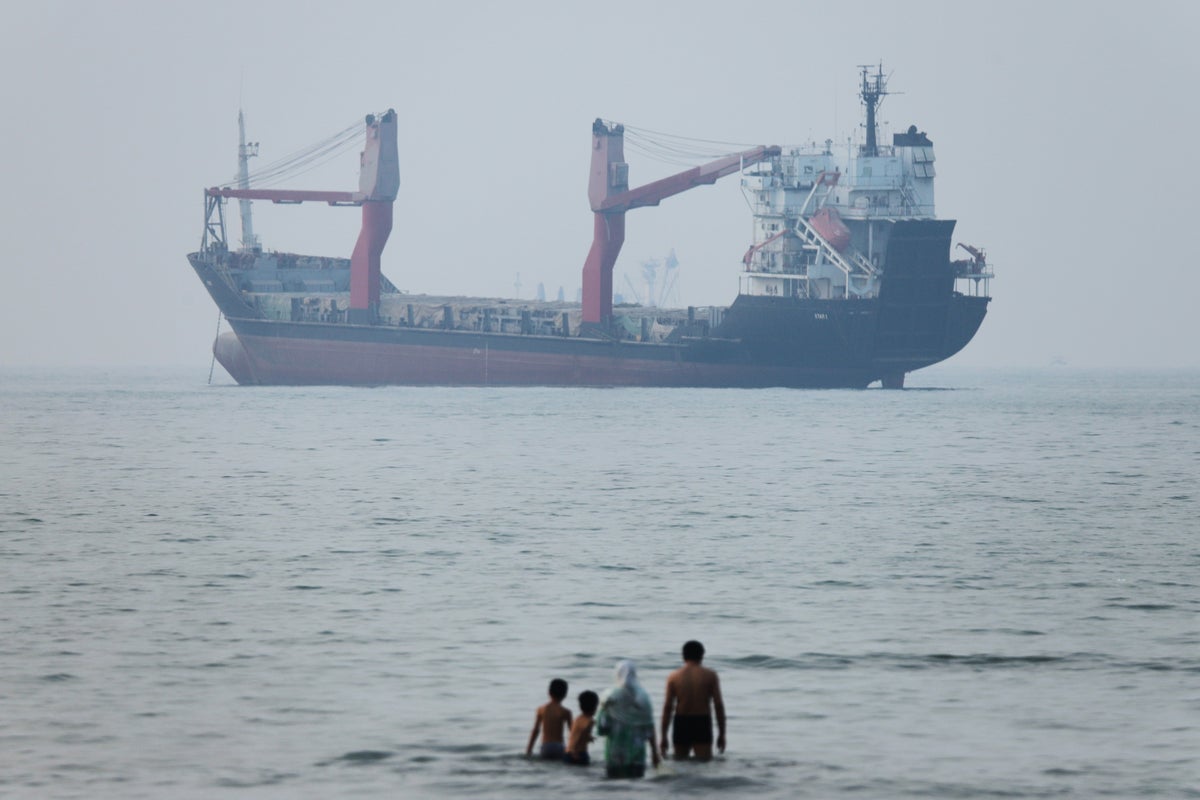
Two hundred miles off the coast, the ocean looks endless, peaceful, and entirely indifferent to human ambition. On the bridge of a 100,000-ton container ship, the view is different. It is a grid of glowing green dots on a radar monitor, every single one representing millions of dollars in cargo, thousands of gallons of heavy fuel oil, and dozens of lives.
Then the radio crackles. A voice over the emergency frequency warns of incoming fire. Air defense batteries in Bahrain hum to life. Somewhere across the gulf, a strike team confirms impact. If you found value in this article, you should look at: this related article.
Warfare used to be fought over trenches, hilltops, and fortified cities. Today, the world's most dangerous battlefield is a narrow ribbon of saltwater where ninety percent of everything you own once floated.
The Chokepoint Trap
Consider a hypothetical container captain named Marcus. He is not a combatant. He does not wear a uniform adorned with medals, nor does he study grand geopolitical doctrine. He tracks diesel fuel prices, weather windows, and sleep schedules. Yet, as American military strikes hit targets tied to regional escalations and coastlines glow with defensive missile launches, Marcus finds his vessel trapped in the middle of a conflict he never asked to join. For another angle on this story, refer to the recent coverage from Al Jazeera.
When long-range strikes ripple across the Middle East, the immediate focus of headlines is military hardware—interceptors, precision-guided munitions, command bunkers. But the real structural damage happens in the water.
Navies do not fight in vacuums. They fight along trade routes. When a missile flashes across the night sky above the Persian Gulf or the Red Sea, the ripple effect is instantaneous. Shipping companies order their fleets to drop anchor or reroute. Marine insurers rewrite policies overnight, raising premiums until moving cargo through narrow straits becomes financially impossible.
It is a quiet, brutal form of leverage. You do not need to sink an entire navy to paralyze global commerce. You only need to make the risk high enough that no sane captain will cross the line.
A Cascade Built on Saltwater
The geography of international trade is surprisingly fragile. Most of the energy, grain, and manufactured goods moving between continents pass through a handful of maritime bottlenecks.
Take those bottlenecks away, or turn them into active firing ranges, and modern life halts.
- Fuel Costs Soar: Tankers pause, waiting for safe passage, driving energy markets into wild speculation.
- Supply Chains Stretch: Rerouting around entire continents adds thousands of miles and weeks of transit time to every journey.
- Cost Stacking: Higher insurance rates plus longer transit times equal immediate price hikes on everyday consumer goods.
We like to think our global economy lives in the cloud, weightless and instantly accessible. It does not. It lives on steel hulls pushing through choppy water at fifteen knots. When those hulls stop moving, the illusion of frictionless modern living disappears.
Consider what happens next on shore. A factory in Munich pauses production because a single specialized valve is delayed on a ship idling off the coast of Oman. A grocery chain in North America raises prices on basic staples to cover spiked freight charges. A family half a world away feels the sting of a war they only skimmed on the evening news.
Everything is connected. The strike on a radar installation or a missile site is not an isolated event. It is a stone dropped into the calm water of global logistics, sending waves that crash onto distant shores long after the smoke clears.
Shadows on the Radar
In cities like Manama, the escalation is not an abstract economic calculation. It is the sudden, sharp blare of air raid sirens against the damp evening heat.
Bahrain has long served as a vital naval hub, a place where international fleets coordinate maritime safety across turbulent waters. When warnings of incoming fire ring out across the island, the stakes shift from commerce to survival. Air defense systems trace bright arcs across the dark sky. Civilians check their phones for emergency alerts. Personnel on military bases double their watch rotations.
Tension eats at human endurance. On board merchant ships, crews take turns scanning the horizon with optical binoculars, knowing that modern anti-ship weapons travel too fast for visual warnings to matter. On shore, military planners work through long nights, calculating missile inventories, interception probabilities, and target lists.
Panic is contagious, but so is miscalculation. In a high-stakes environment where warning times are measured in seconds, the threshold for error vanishes entirely. A stray drone, an unidentified surface contact, or a misinterpreted radar signal can transform a localized conflict into an uncontainable regional firestorm.
The True Price of Open Seas
For decades, the world took open maritime routes for granted. Freedom of navigation felt like a law of nature, as reliable as the tide coming in.
It was never a law of nature. It was an expensive, fragile arrangement held together by international law, naval deterrence, and shared economic self-interest.
When those foundations crack, the consequences fall heaviest on those who had no say in the conflict. The merchant mariner sitting in a darkened wheelhouse, watching missile trails light up the night sky, knows this better than anyone. They are not fighting for territory or ideology. They are just trying to bring a ship home.
As clashes intensify and regional capitals brace for incoming fire, the question is no longer just who wins the tactical engagement. The real question is how much damage the global machinery can sustain before it breaks down completely.
The sky eventually darkens over the gulf. The radar sweeps its steady, endless circle. Somewhere in the dark water below, a vessel pushes forward through the swells, its crew watching, waiting, and hoping the night passes without another flash on the horizon.


