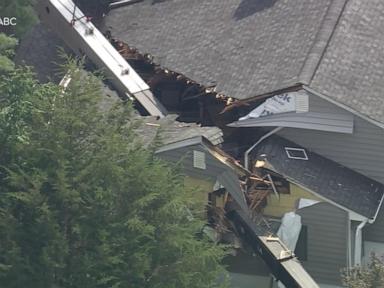
A crane does not simply fall out of the sky. It is a slow-motion accumulation of neglected inspections, rushed timelines, mathematical oversights, and an industry built on the quiet acceptance of calculated risk. When a massive construction crane collapses onto residential homes, sending multi-ton iron booms crashing through roofs where families sleep, the public reacts with shock. Industry veterans do not. They recognize the outcome of a system that treats safety protocols as bureaucratic inconveniences rather than hard physics.
To understand why multi-story construction equipment fails in densely populated neighborhoods, one must look past the immediate wreckage and examine the architecture of modern urban development. The primary driver behind these catastrophic failures is rarely a freak act of nature. It is almost always a failure of operational discipline, compounded by the immense economic pressure to build faster, cheaper, and closer to civilian property lines than ever before.
The Weight of the Rush
Modern cities are vertical puzzle boxes. Space is at an absolute premium. Developers push every square foot of property to its absolute limit, leaving tower cranes and mobile rigs operating within feet of occupied residential structures. This proximity leaves zero margin for error. Yet, the margin for error shrinks daily as construction schedules tighten.
Consider the physics involved. A tower crane is essentially a vertical cantilever fighting gravity, wind shear, and massive dynamic loads. Every bolt, every counterweight, and every tie-in to the building structure must be calculated with absolute precision. When a crane collapses, it points directly to a breakdown in one of three critical phases: engineering design, site-specific rigging, or daily operational maintenance.
The public often hears about wind gusts or sudden mechanical snapping. These are symptoms, not root causes. Wind does not knock over a properly ballasted and anchored crane under normal operating thresholds. The failure occurs when safety margins are quietly shaved away to save hours on a timeline or thousands of dollars in rental fees.
The Subcontracting Labyrinth
Accountability in modern construction is intentionally fractured. If you trace the chain of command on a major urban building site, you rarely find a single entity bearing total responsibility. General contractors hire primary subcontractors, who in turn hire specialized rigging crews, who lease equipment from third-party suppliers, who rely on transient labor pools.
This fragmentation creates a dangerous vacuum of responsibility. When everyone is responsible for safety, no one is.
On paper, safety checklists are exhaustive. Every crane operator signs off on pre-shift inspections. Every structural engineer stamps their calculations. But paper cannot stop a fatigued worker from skipping a torque check on a slewing ring bolt at the end of a fourteen-hour shift. Paper cannot account for the foreman who pressures an operator to lift a load exceeding safe radius limits because halting work means missing a milestone payment.
The investigative record of past crane failures repeatedly highlights this human element. Training standards vary wildly between jurisdictions. Certification programs can be bypassed or rushed. Experienced operators are aging out of the workforce, replaced by younger crews operating under hyper-compressed training schedules. When you combine complex machinery with high turnover and low supervision, accidents stop being accidents. They become statistical certainties.
The Economics of Cutting Corners
Construction is a low-margin, high-stress business. Every day a crane sits idle costs money. Every hour spent repositioning outriggers or re-evaluating ground stability on a soggy suburban street is an hour not spent moving concrete and steel.
Ground conditions represent one of the most frequently underestimated variables in mobile crane operations. A heavy crane exerts immense pressure on its outriggers or tracks. If the underlying soil, utility vaults, or basement voids are not properly mapped and shored up, the ground will give way. When the foundation shifts by even a fraction of an inch under a heavy load, the balance of the entire machine is instantly compromised.
Yet, comprehensive soil analysis and geotechnical engineering take time. On tight residential infill sites, developers frequently rely on visual approximations or outdated municipal maps. They assume the pavement can handle the weight. They guess. And physics does not forgive guesses.
Municipal inspectors are supposed to act as the ultimate backstop against these shortcuts. In reality, municipal building departments are chronically underfunded and overwhelmed. A single inspector might be responsible for dozens of active construction sites scattered across a sprawling district. They cannot be everywhere. They rely heavily on self-certification by the contractors themselves—a system akin to letting tax evaders audit their own returns.
Inside the Collapse Zone
When a crane fails in a residential neighborhood, the immediate aftermath is chaos. Emergency services rush to secure perimeter zones, evacuate traumatized residents, and search the wreckage for survivors. Local politicians step before cameras to express outrage and promise sweeping investigations.
Days later, federal safety investigators arrive. They sift through twisted steel, analyze data logs from the crane’s load moment indicator, and interview surviving crew members. They will eventually produce a dense technical report detailing exactly which pin sheared, which cable snapped, or which outrigger pad sank into uncompacted soil.
The report will be accurate. It will also be largely ignored by the broader industry until the next disaster occurs somewhere else.
The structural vulnerability of our cities to heavy construction machinery is a design flaw of modern urban expansion. As long as economic incentives reward speed over safety, and as long as accountability remains diluted across a dozen subcontractors, residential neighborhoods will remain adjacent to industrial hazards.
The next collapse is already being engineered in a scheduling meeting or a cost-cutting email thread. The only variable is the address.