Stephen Miller has officially assumed the role of White House Chief of Staff, placing the longtime architect of Donald Trump’s hardest-line immigration and nationalist policies in direct control of the executive branch’s daily operations. Unlike his previous tenure as a senior policy advisor, where he operated as an ideological specialist within a fractured West Wing, this promotion hands Miller authority over personnel, legislative strategy, interagency coordination, and direct presidential access.
Washington insiders spent years viewing Miller through a narrow lens. They saw him as a speechwriter with a sharp edge, or an aggressive policy wonk obsessed with border enforcement. That reading missed the larger institutional reality. By surviving the relentless turnover that claimed four chiefs of staff during Trump’s first term—Reince Priebus, John Kelly, Mick Mulvaney, and Mark Meadows—Miller learned something none of his predecessors grasped. You do not manage Donald Trump by acting as a traditional gatekeeper. You manage the presidency by aligning the entire federal bureaucracy with the president's instincts before a single dissent can reach the Resolute Desk. Meanwhile, you can read similar stories here: Why Labour’s Brexit Red Lines Are Finally Running Out of Road.
The End of the Traditional Gatekeeper
To understand why this appointment matters, look at how the role of Chief of Staff has historically functioned. Since Sherman Adams formalized the position under Dwight D. Eisenhower, the job has required an honest broker. The chief’s primary duty was to ensure the president heard competing viewpoints from cabinet secretaries, intelligence directors, and economic advisors before making a final decision.
Miller rejects that model entirely. To explore the full picture, check out the detailed report by Reuters.
During the 2017–2021 administration, the West Wing was defined by internal friction. Establishment Republicans and retired generals frequently slowed down, diluted, or quietly shelved executive actions they deemed legally hazardous or politically toxic. Miller spent four years fighting those internal battles from a corner office in the West Wing, often relying on sheer persistence and late-night appeals to the president to push through measures like the travel ban and Title 42. Now, he holds the keys to the schedule, the paper flow, and the hiring apparatus.
The friction is gone. In its place sits a centralized command structure built for speed and ideological uniformity.
Control Over the Paper Flow
In any administration, power belongs to whoever controls what the president reads and signs. As Chief of Staff, Miller oversees the Staff Secretary’s office—the nerve center through which every executive order, presidential memorandum, and national security directive must pass.
During the first term, staff secretaries like Rob Porter and Derek Lyons occasionally held back documents to give cabinet officials time to raise objections. Under Miller, that bottleneck becomes an accelerator. Executive actions drafted by allied legal teams and outside conservative policy groups can move from concept to signature without undergoing the traditional, slow-moving interagency review process that typically involves the Departments of State, Defense, and Justice.
How Miller Built an Institutional Machine
Critics often dismiss Miller as a pure agitator, overlooking his methodical approach to administrative law and executive power. Following the 2020 election, while other former aides retreated to cable news green rooms or corporate lobbying firms, Miller founded America First Legal.
That organization was not merely a public relations vehicle. It served as a shadow legal laboratory. Over several years, Miller and his team filed dozens of lawsuits challenging federal agencies, corporate diversity initiatives, and administrative regulations. Through that litigation, they mapped out the exact statutory mechanisms required to dismantle existing federal rules and defend aggressive executive actions in front of conservative federal judges.
He is bringing that legal architecture directly into the West Wing.
- Statutory Precision: Rather than relying on broad, easily enjoined proclamations, Miller’s team favors obscure, long-standing provisions of federal law—such as Section 212(f) of the Immigration and Nationality Act or the Alien Enemies Act of 1798—that grant the executive sweeping authority with minimal judicial review.
- Personnel Vetting: Every political appointee across the federal government now passes through an ideological filter overseen by the Chief of Staff's office. Competence in agency management is secondary to demonstrated loyalty to the administration's core agenda.
- Regulatory Deregulation: Miller views the administrative state not as a neutral civil service, but as a hostile political actor. Expect immediate efforts to reclassify thousands of career civil servants, stripping them of traditional employment protections.
This is not improvisation. It is the execution of a multi-year blueprint designed to bypass congressional gridlock through unilateral executive action.
The Friction Points Nobody Is Watching
Elevating an ideological warrior to the top operational job in the federal government solves one problem for the White House while creating several others. A Chief of Staff does not just push policy; they absorb political shrapnel, negotiate with Capitol Hill, and manage inevitable crises that have nothing to do with the president's campaign platform.
Miller’s entire political career has been built on uncompromising maximalism. In the world of legislative negotiation, maximalism is often a liability.
The Capitol Hill Problem
Passing major legislation—whether tax extensions, defense appropriations, or border funding—requires cutting deals with moderate lawmakers in purple districts and navigating razor-thin margins in both chambers. Historically, successful Chiefs of Staff like James Baker or Leon Panetta maintained quiet, trusting relationships with congressional leadership across the aisle.
Miller has spent a decade treating compromise as a dirty word. His confrontational style, which plays well on conservative media and energizes the base, frequently alienates the very senators and representatives whose votes are required to confirm cabinet nominees and pass budget bills. When a crisis hits—a debt ceiling standoff, a government shutdown threat, or an unexpected foreign conflict—the White House will need a negotiator who knows how to give ground without looking weak. Whether Miller possesses that gear remains an open, high-stakes question.
Cabinet Autonomy and Economic Shockwaves
Friction is also guaranteed between the Chief of Staff's office and the administration's economic team. Wall Street executives, Treasury officials, and corporate leaders generally favor predictability, global trade stability, and steady labor markets. Miller’s worldview prioritizes economic nationalism, aggressive tariffs, and massive reductions in both legal and illegal immigration.
Consider a hypothetical scenario involving labor shortages in the agricultural and construction sectors. If mass deportation operations and strict visa restrictions trigger sudden wage spikes and supply chain bottlenecks, the Treasury Department and the National Economic Council will push for targeted exemptions or temporary guest-worker programs. In a traditional West Wing, the Chief of Staff would broker a middle ground between economic stability and campaign promises. With Miller in the chair, economic advisors will find themselves arguing against the very person who controls their access to the Oval Office.
The Historical Precedent for Ideological Chiefs
Washington has seen ideological operatives take the helm before, and the results offer a sobering warning. When presidents elevate true believers over seasoned managers, the administration often gains initial velocity at the expense of long-term durability.
Look at the tenure of H.R. Haldeman under Richard Nixon, or Steve Bannon’s brief, turbulent stint as Chief Strategist in 2017. While Bannon never held the Chief of Staff title, his attempt to run a parallel power structure created relentless internal warfare that paralyzed policy execution until John Kelly was brought in to restore order. Miller’s advantage over Bannon is his mastery of bureaucratic detail and his absolute refusal to seek personal credit in the press at the president's expense. He understands that his power exists entirely as an extension of Trump’s will.
Yet the structural risk remains identical. When an administration eliminates internal dissent, it also eliminates its early warning system. Bad legal theories go unchallenged until they hit a federal appeals court. Political miscalculations go uncorrected until they show up in midterm election losses.
What Changes Immediately Across the Federal Government
The impact of Miller’s promotion will not be confined to the Department of Homeland Security or the southern border. Because the Chief of Staff sets the operational tempo for the entire executive branch, every cabinet agency will feel the shift within weeks.
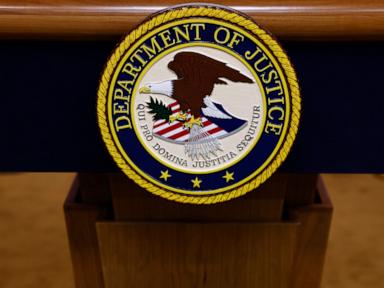
- The Department of Justice: The traditional post-Watergate wall separating White House political priorities from DOJ prosecutorial and civil enforcement decisions will face unprecedented pressure. Expect aggressive civil rights investigations targeting universities, local governments, and private corporations over diversity and hiring practices.
- The Pentagon and Intelligence Community: Miller has consistently pushed for using military assets, National Guard deployments, and intelligence resources to support domestic border enforcement and counter-cartel operations. Defense officials who balk at deploying active-duty personnel on domestic soil will find themselves sidelined quickly.
- The State Department: Foreign policy under Miller’s operational oversight becomes transactional and heavily tied to migration control. Foreign aid, trade agreements, and diplomatic recognition will be wielded openly as leverage to force Latin American and European nations to accept deported nationals and tighten their own borders.
The era of the divided West Wing is over. For better or worse, the guardrails that defined the first Trump administration have been dismantled from the inside, leaving a unified, relentless political machine operating directly out of the Chief of Staff’s office.