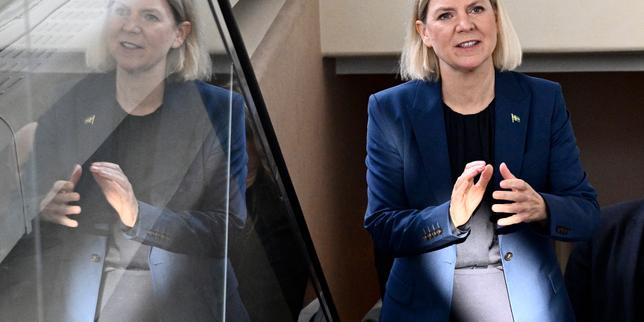
Swedish politics has long worn an international reputation for predictable consensus, orderly transitions, and institutional calm. That veneer is gone. Months after an inconclusive parliamentary election left the Nordic nation floating in bureaucratic limbo under a caretaker administration, Social Democratic leader Magdalena Andersson has recaptured the legislative initiative. Yet being handed the mandate to construct an executive administration is an entirely different enterprise than surviving the arithmetic of the Riksdag. Andersson stands at the center of a volatile ideological tug-of-war, forced to bridge an unyielding gap between rural pro-business pragmatists and hardline leftists.
The immediate catalyst for this renewed political maneuvering arrived when the Centre Party threw its weight behind Andersson's overarching framework rather than backing a center-right alternative. On paper, this breakthrough gives the center-left bloc a fighting chance to reclaim power after months of paralysis. In reality, the mathematics of the Swedish parliament remain stubbornly unforgiving. Andersson's proposed coalition depends on an inherently fragile alignment involving her own party, the Centre Party, and the Greens, while simultaneously requiring passive toleration or active votes from the Left Party. If you enjoyed this post, you might want to check out: this related article.
Herein lies the structural contradiction threatening to tear the coalition apart before it is even sworn in. The Left Party has drawn a hard red line, insisting that ministerial portfolios and direct cabinet seats are non-negotiable prerequisites for their parliamentary support. Simultaneously, the Centre Party has declared an absolute veto against any administrative arrangement that brings the Left Party into government. Andersson is thus caught between two incompatible demands. She cannot satisfy both factions without alienating the other, leaving her to navigate a narrow corridor of diplomatic survival that grows narrower with every passing legislative cycle.
To understand why this gridlock persists, one must look beyond the immediate headlines and examine how Swedish political alignments have fragmented over the past decade. The traditional left-right axis has fractured into multi-party micro-blocs where minor parties wield disproportionate leverage. The Centre Party, historically rooted in agrarian interests and fiscal conservatism, fiercely opposes the state-heavy taxation models demanded by the Left. Meanwhile, the Greens demand aggressive climate interventions funded by broad taxation on polluters and high earners, running headlong into the Centre Party's pro-business sensibilities. Andersson's task is not merely administrative; it is an exercise in political alchemy, attempting to reconcile fundamentally divergent visions of Sweden's economic future. For another angle on this event, check out the recent coverage from NBC News.
Consider a hypothetical household budget committee where four roommates share an apartment but fundamentally disagree on whether to buy luxury furniture, invest in solar panels, or save every crown for emergencies. One roommate refuses to sign if another gets a vote on interior design, while another demands full control over the ledger. Translating that domestic stalemate to the halls of the Riksdag reveals the precarious nature of Andersson's mandate. Every policy concession made to appease the Left on welfare spending risks triggering an immediate walkout by the Centre Party, while any compromise on market flexibility alienates the traditional base of the labor movement.
The stakes extend far beyond Stockholm's political corridors. Sweden faces pressing national challenges, from navigating shifting European security dynamics to managing domestic energy transitions and industrial decarbonization. Operating under an interim budget leaves vital public infrastructure investments in a state of suspended animation. While caretaker ministers manage day-to-day administration, long-term strategic planning requires a fully empowered government with a stable parliamentary majority. Every week spent in negotiation is a week where pressing structural reforms remain frozen.
As the parliamentary speaker prepares to evaluate the next phase of the process, the margin for error has vanished. Andersson's political survival depends on her renowned reputation as a pragmatic, tough-minded negotiator capable of staring down recalcitrant allies. If she blinks, her coalition collapses before it takes shape. If she forces the issue without consensus, she risks presiding over a minority administration that could fall at the first vote of no confidence. The machinery of Swedish governance is grinding forward, propelled not by shared enthusiasm, but by the cold, unyielding arithmetic of survival