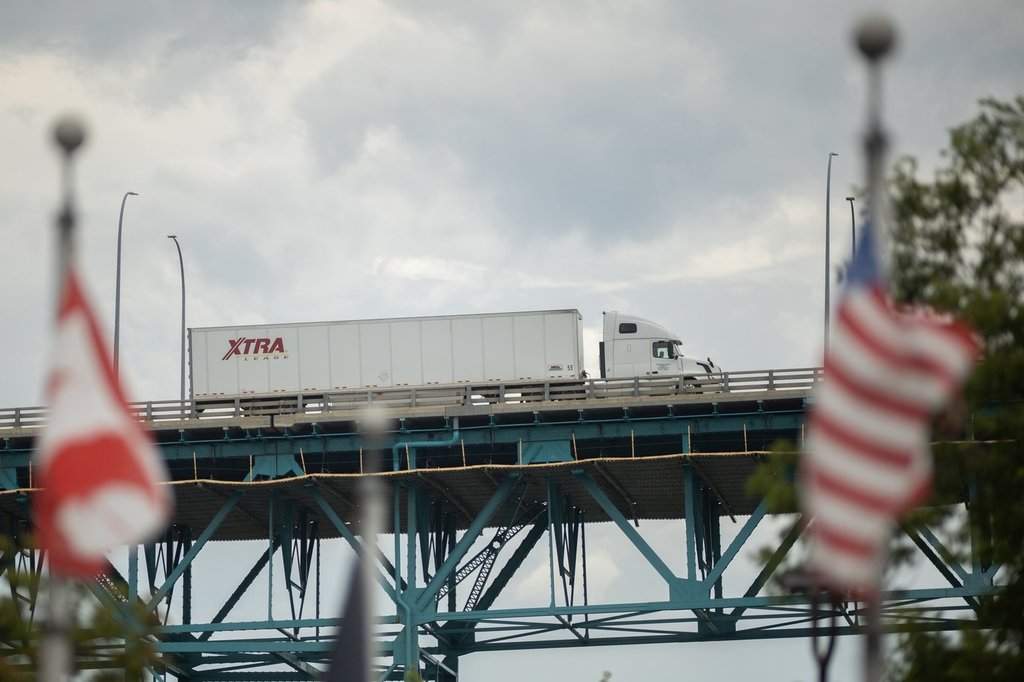
Every time the price at the pump ticks up by ten cents in Toronto, the exact same press release gets dusted off, rewritten, and fed to the local news desks.
The headline writes itself. "Ontario truckers warn rising diesel prices will mean more expensive groceries." Cue the B-roll of a Peterbilt idling at a weigh station along Highway 401. Cue the somber quote from an industry lobbyist explaining how fuel surcharges are squeezing margins. Cue the collective sigh from shoppers staring at a $9 block of cheddar at Loblaws. In other developments, take a look at: The Last Reel Before the Giants Lock the Vaults.
It is lazy journalism. Worse, it is economic fiction.
If you believe that a spike in diesel is the primary culprit behind your ballooning grocery bill, you are falling for the oldest sleight-of-hand in the supply chain playbook. Freight costs are a rounding error on a carton of milk. They are a scapegoat used by massive retail monopolies and legacy logistics operators to distract you from structural inefficiencies, broken spot-market dynamics, and ruthless margin protection. Investopedia has analyzed this fascinating topic in extensive detail.
Diesel doesn't set the price of your food. Spot rates, empty backhauls, and corporate pricing power do.
The Math Nobody Wants You to Do
Let’s strip away the theatrics and look at the actual physics and economics of moving food across Ontario.
A standard 53-foot dry van or refrigerated trailer (a "reefer") holds roughly 40,000 to 44,000 pounds of freight. Let’s do a conservative thought experiment. Imagine a scenario where a truck hauls 40,000 pounds of boxed cereal, canned goods, or produce from a distribution center in Mississauga to a regional hub in Ottawa—a run of roughly 450 kilometers.
A heavy-duty Class 8 tractor burns about 35 to 40 liters of diesel per 100 kilometers, depending on load weight, aerodynamics, and whether it’s battling a Lake Ontario headwind in January. For that 450-kilometer trip, the truck burns roughly 170 liters of fuel.
Now, assume diesel surges by a massive, headline-grabbing 30 cents per liter overnight.
Do the arithmetic. 170 liters multiplied by $0.30 equals $51.00.
Fifty-one dollars. Across 40,000 pounds of food.
If that trailer is carrying 20,000 two-pound items, the actual, physical fuel cost increase per item is $0.0025. A quarter of a cent. Even if you factor in the extra fuel needed to run the reefer unit's auxiliary diesel engine to keep lettuce from wilting, you are still looking at fractions of a penny per unit.
So when the price of that lettuce jumps by 75 cents at the checkout counter two weeks later, where did the other 74.75 cents go? It certainly didn't go into the fuel tank of an owner-operator out of Brampton.
The Fuel Surcharge Shell Game
To understand why trucking associations love talking about diesel prices, you have to understand how freight is actually billed in North America.
Carriers do not eat sudden spikes in fuel costs. Not the real ones, anyway. Decades ago, the freight industry invented the Fuel Surcharge (FSC)—a sliding-scale fee tacked onto the base linehaul rate, pegged directly to weekly government fuel indices (like the U.S. EIA or the Freight Carriers Association of Canada benchmarks).
When diesel goes up, the surcharge automatically clicks upward on the invoice. When diesel drops, the surcharge clicks down. For major asset-based carriers running dedicated grocery contracts, fuel is effectively a pass-through cost.
I’ve sat in boardrooms where logistics VPs spent weeks agonizing over a two-cent variance in their fuel surcharge matrix while completely ignoring the fact that their trucks were sitting idle for six hours at a grocery warehouse receiving dock.
Here is the dirty secret of the Ontario trucking market: fuel is rarely what kills a carrier.
What destroys a trucking company—and drives up your food prices—is dwell time and capacity collapse.
When a truck arrives at a major grocery distribution center in Milton or Cornwall, it frequently gets trapped in detention. Major grocers run their warehouses like fortified castles, forcing drivers to wait four, six, sometimes eight hours just to get a dock door. During those hours, the truck isn't moving. It's burning fuel just to keep the cab warm or the trailer cold, while the driver's federally mandated Hours of Service (HOS) clock ticks down to zero.
If a driver loses half their shift sitting behind a chain-link fence waiting for a lumper to unload pallets, that truck can't make its next pickup. That lost productivity costs a carrier $800 to $1,200 a day in missed revenue. Comparing that to a $50 swing in diesel is like complaining about the price of windshield wiper fluid while the engine is on fire.
Why Ontario’s Freight Market Is Actually Broken
If you want to know why moving food in Ontario has become absurdly expensive, stop looking at the price of crude oil and start looking at spot rates versus contract rates, and the lingering aftermath of the Driver Inc. shadow economy.
Over the last several years, Ontario’s trucking sector has been distorted by a massive influx of under-capitalized carriers operating on razor-thin margins—many utilizing the controversial "Driver Inc." model, where drivers are misclassified as independent contractors to dodge payroll taxes, WSIB premiums, and benefits.
This artificially depressed freight rates for years. Shippers—including the massive grocery conglomerates—got addicted to cheap, subsidized freight. They squeezed carriers mercilessly during bid cycles, driving base linehaul rates below the actual cost of operating a compliant, insured, safely maintained rig.
When you crush a carrier's base rate down to the bone, they have zero buffer. When insurance premiums jump 20% in the Greater Toronto Area, or when the cost of a new Freightliner Cascadia surges past $220,000 CAD, those carriers don't have the margin to absorb it.
They can't go back to a grocery giant and say, "Hey, our insurance broker just doubled our rates, and we forgot to price in preventative maintenance." The grocery procurement team will laugh them out of the building and hand the lane to the next desperate carrier in line.
So, what do the carriers and their industry associations do instead? They wait for diesel to spike.
Diesel is the one variable cost that every consumer understands. Nobody understands the actuarial tables behind commercial fleet liability insurance in Peel Region. Everybody understands the big glowing numbers on the sign at the Esso station. Fuel becomes the Trojan horse used to justify the rate increases carriers desperately needed six months ago just to keep their doors open.
| The Scapegoat (What the News Says) | The Reality (What Actually Moves Prices) |
|---|---|
| Retail Diesel Spikes: Adds fractions of a penny per grocery item via automated fuel surcharges. | Warehouse Dwell Time: 4–8 hour delays at grocer docks that destroy fleet utilization and driver hours. |
| Carbon Tax on Fuel: A convenient political talking point that represents a tiny fraction of total transit cost. | Spot-to-Contract Volatility: Grocer procurement teams squeezing base rates until carriers go bankrupt, causing sudden capacity crunches. |
| Long-Haul Fuel Burn: The myth that highway miles dictate retail shelf pricing. | Empty Backhauls: Trucks returning empty from Northern Ontario because regional manufacturing has hollowed out. |
What People Are Actually Asking (And Getting Wrong)
When shoppers search online to figure out why their grocery bills are out of control, the common questions reveal just how deeply the logistics myth has taken root. Let’s dismantle the most common ones.
"How much of my grocery bill is actually transportation?"
Depending on the commodity, total freight and logistics costs generally account for 3% to 7% of the final retail price of food. For high-value, dense goods like meat or cheese, it’s closer to 2%. For bulky, low-value goods like bottled water, paper towels, or fresh iceberg lettuce shipped from California or Arizona, it can creep higher.
Notice that this 3% to 7% covers the entire logistics chain—the driver's wages, the truck payment, the tires, the insurance, the warehouse handling, and the fuel. Diesel itself is typically only 25% to 30% of a trucking company’s total operating cost. Do the math: fuel is roughly 1% to 2% of the retail price of your groceries. If fuel goes up by 20%, your grocery bill should theoretically rise by 0.2% to 0.4%. Anything beyond that is retail margin expansion disguised as supply chain inflation.
"Won't cutting fuel taxes immediately lower food prices?"
No. Never. Not once in modern economic history has a temporary cut in fuel excise taxes resulted in a measurable, permanent drop in retail grocery prices.
When governments slash fuel taxes, the immediate savings are absorbed at two points: the fuel retailer's margin and the grocery conglomerate's bottom line. Food pricing is sticky on the way down and elastic on the way up. Once a grocer trains the consumer to accept $6.99 for a box of strawberries, they will not lower that price to $6.84 just because diesel dropped fifteen cents. They will pocket the spread and call it "shareholder value."
"Are independent truckers gouging grocery stores?"
Quite the opposite. The independent owner-operator in Ontario is currently experiencing one of the most brutal freight recessions in a generation. Spot rates have hovered near operating-cost breakeven for months. The guys actually driving the trucks aren't getting rich off your grocery bill; many of them are liquidating their equipment because brokers are offering $1.80 a mile for loads that cost $2.10 a mile to haul. The money is being captured further up the food chain—by third-party logistics (3PL) brokers taking 25% cuts and retail monopolies controlling the shelf space.
The Empty Backhaul Trap
There is another massive geographic reality in Ontario that completely eclipses diesel prices: freight imbalance.
Ontario’s population is hyper-concentrated in the Golden Horseshoe, while its geography stretches thousands of kilometers north and west toward Thunder Bay and the Manitoba border. When a truck hauls groceries from a distribution center in Brampton up to Sudbury, Timmins, or Sault Ste. Marie, that freight only moves in one direction.
Northern Ontario consumes far more finished goods than it produces. Once that reefer trailer is empty in Timmins, there isn't a warehouse full of electronics or packaged foods waiting to be hauled back south. That truck often has to deadhead—drive completely empty—for hundreds of kilometers just to find a reload, or burn fuel all the way back to Barrie.
When a carrier prices a grocery lane to Northern Ontario, they aren't pricing a one-way trip. They are pricing a round trip where half the miles generate zero revenue. If fuel goes up, the pain isn't that the loaded miles got more expensive; it's that the unbilled, empty miles suddenly become an unrecoverable cash hemorrhage.
Yet, you rarely hear grocery executives or industry spokespeople talk about optimizing backhaul networks or collaborating with raw-material shippers to keep trailers full. It is much easier to blame OPEC and the local gas station.
The Downside of Calling Their Bluff
Of course, there is a danger in dismissing fuel costs entirely. If you are a shipper or a mid-sized food manufacturer, treating trucking companies like endless sponges that can absorb every macro-economic shock will eventually blow up in your face.
The risk of my argument—that fuel is a negligible factor in retail food pricing—is that big grocery buyers use this exact logic to deny legitimate rate adjustments to smaller, honest carriers. When a carrier’s fuel surcharge formula lags behind a sudden, violent spike in wholesale rack prices (which happened dramatically in 2022), a small fleet with five trucks can run out of working capital in three weeks. They have to pay for diesel at the pump today with a credit card, while the grocery chain takes 60 to 90 days to pay the freight invoice.
That cash-flow mismatch kills good companies. And when good companies die, supply shrinks, leaving the market entirely in the hands of mega-carriers who do have the leverage to dictate pricing.
How to Actually Fix Food Logistics
If Ontario’s grocers, policymakers, and logistics leaders actually wanted to stop transportation costs from inflating food prices, they would stop staring at the diesel pump and fix the structural rot in the supply chain.
- Enforce Mandatory Detention Penalties: If a grocery warehouse holds a driver past a two-hour window, an automatic, non-negotiable $150-per-hour penalty should trigger, paid directly to the carrier. Watch how fast warehouse efficiency improves when grocers actually have to pay for wasting a driver's life.
- Audit the Freight Brokers: Shippers need to demand transparent billing. When a grocery distributor pays $3,000 for a load and the 3PL pockets $900 while paying the actual trucking company $2,100, the system is parasitic. Cap broker margins on essential food commodities.
- Scrap Net-90 Payment Terms for Carriers: Stop using trucking companies as an interest-free bank. Mandate Net-15 payment terms for asset-based food haulers so they aren't financing diesel spikes on high-interest lines of credit.
- Build Regional Cold-Storage Hubs: Stop centralizing every single pallet of food in the Greater Toronto Area only to truck it right back out to the regions where it was grown. Decentralizing cold storage cuts deadhead miles in half.
The next time you see a local news segment warning that a dime increase in diesel is going to force you to skip buying orange juice, turn off the TV.
Diesel isn't robbing you at the checkout counter. You're paying for a bloated, consolidated retail oligopoly that uses transportation headlines as cover to protect its margins, paired with a supply chain that wastes billions of dollars letting trucks sit idle in warehouse parking lots.
Stop watching the pump. Start watching the dock doors.