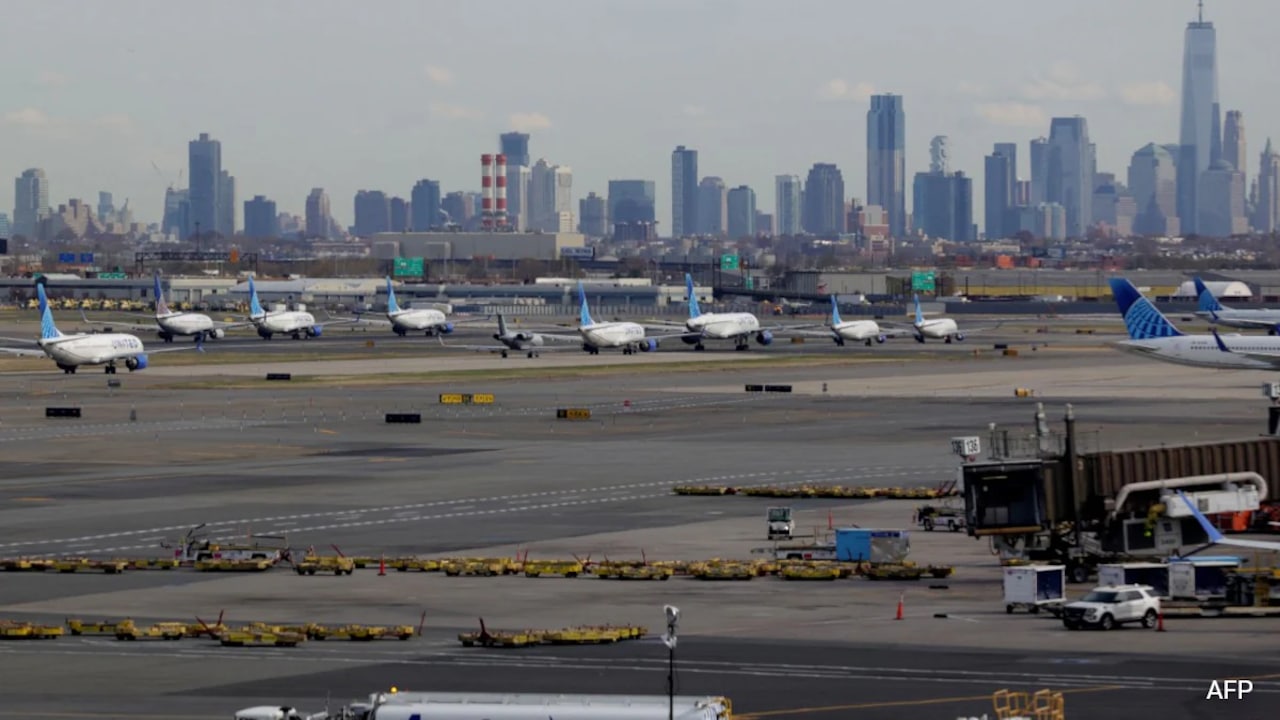
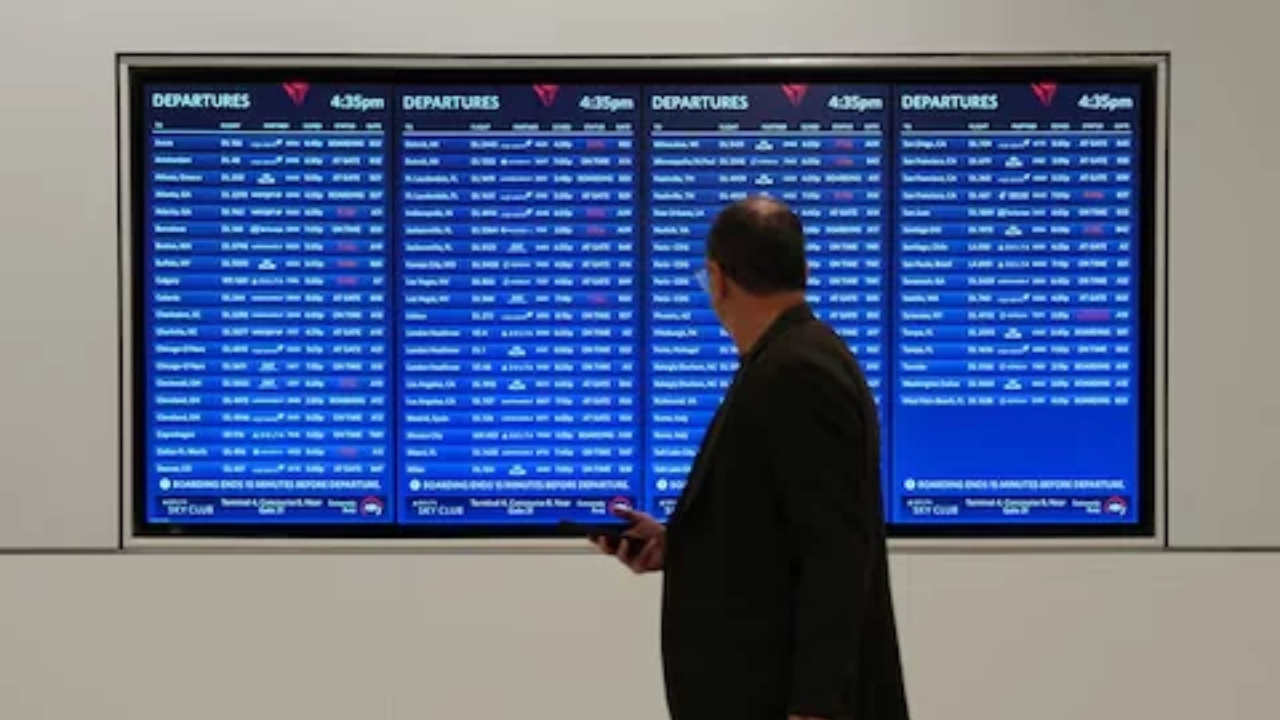
Every time the Federal Aviation Administration issues a nationwide ground stop, legacy media outlets copy-paste the exact same press release. They paint airlines as heroic victims valiantly "digging out" from an unexpected regulatory avalanche while stranded passengers sleep on terminal floors.
It is a convenient fairy tale. And it is completely backward. Discover more on a connected issue: this related article.
When thousands of flights evaporate over a weekend following an Air Traffic Control (ATC) outage or severe weather event, the FAA isn't the reason you are stuck in Chicago until Tuesday. The real culprit is an airline business model engineered to run with zero slack, brittle crew-scheduling software from the 1990s, and a corporate strategy that prioritizes stock buybacks over operational recovery.
I have spent fifteen years analyzing aviation operations and watching major carriers burn hundreds of millions of dollars on PR spin every time their networks implode. The "lazy consensus" treats a ground stop like a hurricane—an act of God that nobody could possibly prepare for. In reality, an FAA ground stop is merely the spark. The airlines themselves spent decades stacking the dry kindling. Further analysis by National Geographic Travel highlights comparable perspectives on this issue.
The Myth of "Digging Out"
When you read headlines about airlines working around the clock to "dig out" from thousands of cancellations, you are supposed to picture dedicated executives heroically untangling a chaotic web.
Stop buying the PR framing. Airlines do not "dig out" of disruptions; they deliberately execute mass cancellations to protect their profit margins and reset their networks on the backs of paying customers.
To understand why, you have to understand the hub-and-spoke network architecture. Almost every major U.S. carrier—Delta, United, American—operates by funneling flights from smaller spoke cities into massive fortress hubs (Atlanta, Newark, Dallas-Fort Worth) in synchronized waves. An aircraft lands, unloads passengers, reloads new passengers, and takes off within 45 to 60 minutes.
When everything goes right, this system prints money. Load factors routinely exceed 85 percent, meaning nearly every seat is sold.
When the FAA halts departures for even two hours, that precision turns into a cascading failure. Because planes are scheduled back-to-back with minimal buffer time—known in the industry as turnaround padding—a two-hour delay at 10:00 AM doesn't stay a two-hour delay. By 4:00 PM, that aircraft is three legs behind schedule. By 8:00 PM, the flight crew hits their federally mandated FAR Part 117 duty-time limits and legally cannot fly the plane, even if the skies are clear and the tarmac is dry.
If an airline actually tried to fly every delayed passenger to their destination using spare aircraft and reserve crews, it would cost tens of millions of dollars in overtime pay, repositioning flights, and maintenance. Instead, operations centers make a cold, mathematical calculation: cancel thousands of flights preemptively, strand the passengers, keep the aircraft parked at hubs, and "reset" the schedule for the next morning so the profitable business travelers on Monday aren't affected.
You aren't watching a rescue mission. You are watching a controlled demolition of your weekend plans to save fourth-quarter earnings.
Why Your Airline’s Software Breaks Before the Weather Does
The public assumes that when the FAA lifts a ground stop, planes immediately start taking off. Anyone who has worked inside an Airline Operations Control Center (AOCC) knows the truth: the skies clear hours before the airline's computers can figure out where their own pilots are.
The dirty secret of commercial aviation is that behind the sleek mobile apps and biometric boarding gates lies an archaic tangle of mainframe computer systems. While carriers spent billions over the last decade on cabin retrofits, branded credit card partnerships, and share repurchases, they starved their core crew-management and irregular operations (IROPS) software of capital.
Consider what happens during a nationwide disruption:
- Aircraft routing is tracked by one legacy system.
- Pilot and flight attendant pairings are tracked by another.
- Maintenance schedules live in a third.
When thousands of flights are disrupted simultaneously, these systems often lose synchronization. Crew schedulers—human beings working phones and green-screen terminals—have to manually match qualified pilots to specific aircraft types at specific airports.
Imagine a scenario where a Boeing 737 is sitting at Denver International Airport, fueled and ready to fly to Seattle. A captain is sitting in the terminal ready to fly it. The FAA has lifted the ground stop. Yet the flight cancels. Why? Because the first officer scheduled for that flight timed out in Houston, and the airline's tracking software shows three reserve first officers sitting in a Denver hotel, but the phone lines to the crew scheduling desk have a four-hour hold time. Nobody can legally assign them to the flight before the captain's clock runs out too.
This isn't a theoretical flaw. It is the exact mechanism that caused Southwest Airlines to cancel nearly 17,000 flights during the December 2022 holiday meltdown—a disaster that cost the company over $1.1 billion and triggered a Department of Transportation investigation. Southwest blamed winter weather. The DOT and the pilots' unions proved it was catastrophic underinvestment in crew-scheduling technology.
Yet every time the FAA issues a ground stop, the exact same airlines trot out the exact same excuse, and reporters dutifully print it without asking why a two-hour pause breaks a multi-billion-dollar corporation for four days.
The FAA Is Easy to Blame Because It Doesn’t Have a Marketing Department
Let’s be brutally honest about the FAA. The agency deserves plenty of criticism. Chronic air traffic controller shortages—particularly at critical facilities like the New York Terminal Radar Approach Control (TRACON)—have left the national airspace system fragile. Outdated Notice to Air Missions (NOTAM) infrastructure has caused high-profile system crashes.
When the FAA orders a ground stop, they are pulling the emergency brake because the system cannot safely separate aircraft in the sky.
Airlines love this. An FAA ground stop is a golden ticket for carrier executives because it shifts liability. Under U.S. Department of Transportation regulations, airlines are only required to provide hotel vouchers, meal stipends, and rebooking on partner carriers when a cancellation is "within the airline's control" (like mechanical failure or crew shortages).
Events caused by "Air Traffic Control" or "weather" are classified as outside the airline's control.
Watch how airlines exploit this loophole:
- The Initial Trigger: The FAA issues a 90-minute ground stop due to an equipment glitch or thunderstorm line.
- The Domino Effect: Because the airline scheduled zero buffer time and keeps minimal reserve crews on standby, that 90-minute pause causes crews to time out six hours later in cities thousands of miles away where the weather is 75 degrees and sunny.
- The Classification Trick: When your sunny-weather flight is cancelled because the airline failed to position a backup pilot, the airline codes the cancellation in its internal system as "ATC/Weather—Cascading Disruption."
By tying the cancellation to the original FAA ground stop, the airline legally absolves itself of paying for your hotel room, your dinner, or a ticket on a rival carrier. They take a failure of their own operational resilience and bill it to the taxpayer's perception of the federal government.
Dismantling the Questions Travelers Always Ask
When travel collapses, frustrated flyers flood search engines with the same predictable questions. Almost all of them are built on false premises. Let’s tear them down.
"Why don't airlines just hire more pilots and buy more spare planes?"
They could, and your ticket prices would double overnight.
Aviation is a brutal, capital-intensive business with razor-thin net profit margins—often hovering between 2 and 5 percent in a good year, according to International Air Transport Association (IATA) financial data. A single narrowbody aircraft like an Airbus A321neo costs roughly $50 million to $60 million after standard industry discounts. Keeping ten of those sitting idle at hubs just in case the FAA hits pause means tying up half a billion dollars in depreciating assets that generate zero revenue 350 days a year.
The contrarian truth is that you, the consumer, voted for this fragility. Every time you sort flights by "lowest price" on Google Flights or Kayak and choose a basic economy ticket over a carrier with slightly higher fares and better operational buffers, you reward the airline that strips out spare capacity. Airlines optimize for maximum asset utilization because passengers refuse to pay the premium required for idle redundancy.
"Which airline recovers fastest from an FAA ground stop?"
Most travel blogs will point you to DOT on-time arrival rankings and tell you to fly Delta. That is incomplete advice.
While Delta historically leads legacy carriers in completion factor (the percentage of scheduled flights that actually operate), recovery speed depends entirely on network geometry, not brand loyalty.
Point-to-point carriers like Southwest or Allegiant operate networks where planes bounce from city to city all day (e.g., Baltimore to Nashville to Phoenix to Oakland). When a ground stop hits one node, the disruption ripples across the entire map like a virus because the planes never return to a central base to reset.
Hub-and-spoke carriers (Delta in Atlanta, United in Chicago, American in Dallas) suffer massive initial pain at their hubs, but they recover faster. Because the majority of their aircraft, maintenance hangars, and reserve crews are concentrated in one geographic fortress, they can execute a hard reset within 24 to 36 hours. If you are flying during peak disruption season, a hub-and-spoke airline will trap you worse on Friday, but a point-to-point airline will still have you stranded on Monday.
"Should I wait in the airport customer service line or call the airline?"
Neither. If you are standing in a 200-person line at the gate desk or sitting on hold for three hours, you have already lost the seat inventory war.
When thousands of flights cancel, the automated rebooking algorithms immediately scoop up every open seat over the next 72 hours. By the time a human agent answers the phone, the only seats left are middle seats on flights departing three days later.
The Contrarian Playbook for Surviving Ground Stops
If you want to survive the next nationwide aviation meltdown, stop trusting airline status updates and start operating like an aviation dispatcher. Here is what actually works when the system breaks:
1. Track the inbound aircraft, not your flight.
The airline app will tell you your flight is "On Time" right up until 15 minutes before boarding, even if your plane is currently sitting on a tarmac 800 miles away under a ground stop. Use free flight-tracking tools like FlightAware or Flightradar24 to click the "Where is my plane now?" link. If your inbound aircraft hasn't taken off yet and the flight time is two hours, your flight is delayed—regardless of what the departure board says. Move before the crowd realizes it.
2. Book the "Insurance Flight" on a rival carrier immediately.
The second you see an FAA ground stop affecting your hub, open your phone and book a refundable ticket (or use points, which are almost always refundable) on a competing airline departing later that day or the next morning. Do not wait for your airline to rebook you. Once your original flight officially cancels, you can claim a full cash refund under DOT rules—even on non-refundable basic economy tickets—and you will already hold a confirmed seat on the rival flight while everyone else fights over scraps.
3. Exploit the "Co-Terminal" rule.
When an airline's automated rebooking tool offers you flights, it only searches your exact departure and arrival airports. If you are stuck trying to get into New York (JFK), the system won't automatically offer you Newark (EWR), LaGuardia (LGA), or Philadelphia (PHL). When you do get an agent on the line—or use the airline's app chat—explicitly demand a co-terminal switch within a 100-mile radius. Airlines are routinely authorized to waive change fees for nearby airports during irregular operations, and most passengers never ask.
4. Call the international support desk.
When U.S. reservation lines are jammed with four-hour wait times, pull up Skype or use your international calling plan to dial the airline’s UK, Australian, or Singapore customer service number. Those call centers access the exact same global reservation system (Sabre or Amadeus) as the U.S. agents, and they aren't being flooded by thousands of angry Americans standing in Atlanta.
The Uncomfortable Reality
Let’s be clear about the trade-offs of this reality. Nobody wants to pay $900 for a domestic round-trip ticket just so airlines can keep thirty spare Boeing 737s parked in the desert waiting for a bad Saturday. High utilization and lean operations are the exact reasons commercial air travel became accessible to the middle class over the last forty years.
There is no magic wand that gives us cheap fares, nonstop routes to secondary cities, and bulletproof reliability during national airspace shutdowns. You can have two of those things, never all three.
What needs to stop is the dishonest theater surrounding these collapses. The next time thousands of flights vanish from the departure boards after an FAA ground stop, don't fall for the narrative of heroic airlines battling an unpredictable storm. You are looking at an industry that voluntarily traded away its shock absorbers to maximize profit—and left you sitting on the terminal floor to absorb the impact.