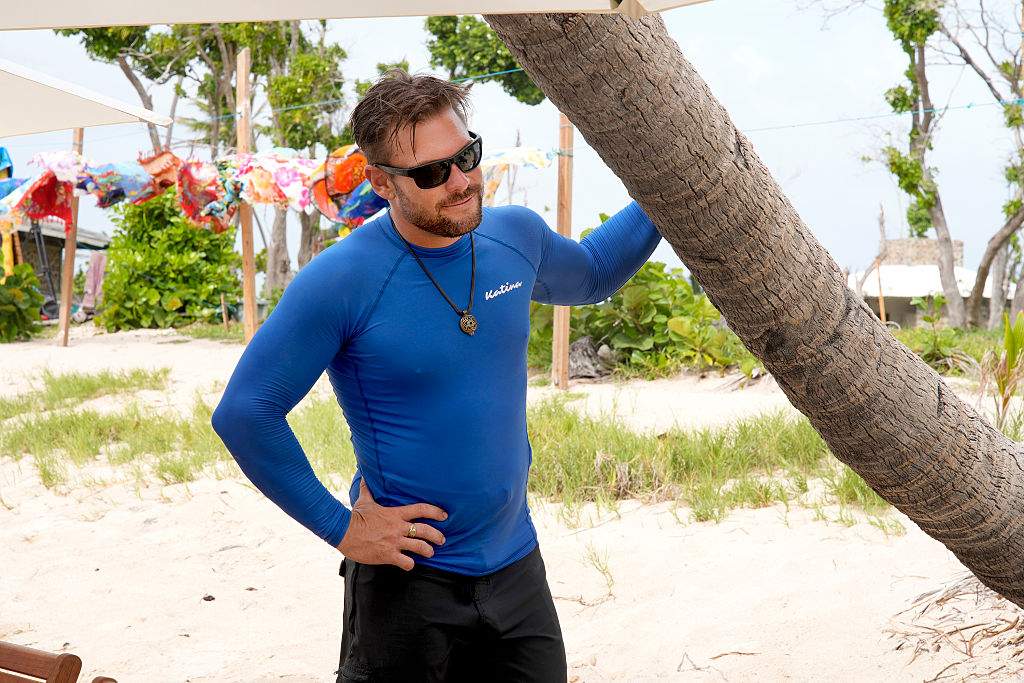
The celebrity tabloids have already written the script. A familiar face from Bravo’s Below Deck—former bosun and captain Joao Franco—is arrested in Turkey following a fatal maritime incident involving a teenager. Cue the predictable outrage cycle. Cue the armchair admirals on Reddit dissecting his old reality TV edits as if a five-minute Bravo montage from 2018 constitutes admissible maritime forensics.
They are asking the wrong question entirely.
When a tragedy happens on a commercial or private vessel, the lazy consensus always fixates on the highest-profile individual in the wheelhouse or on the deck. It is easy to sell clicks with a mugshot and a reality TV credit. It is much harder—and far less lucrative for gossip outlets—to examine the systemic failure of maritime jurisdiction, flag-state oversight, and the dangerous collision between hospitality entertainment and high-stakes seamanship.
If you want to understand what actually happens when a yachting incident turns fatal in foreign waters, stop watching Below Deck clips and start reading maritime law.
The Reality TV Illusion vs. Maritime Law
Most viewers treat Below Deck like a documentary about commercial shipping. It is not. It is a heavily edited hospitality show where the primary conflict revolves around table settings, crew hookups, and manufactured dockside drama. When a cast member steps off the television set and onto a real working vessel in the Mediterranean, the cameras disappear, and the unforgiving reality of international maritime law takes over.
In the wake of Joao Franco’s arrest in Turkey, the public immediately defaulted to binary thinking. Either he is a reckless villain whose television persona predicted a catastrophe, or he is an innocent victim of a draconian foreign legal system. Both takes are intellectually lazy.
Here is the nuance the tabloids ignore. Under Turkish maritime and criminal jurisdiction—and indeed under the legal frameworks of most coastal states operating under the United Nations Convention on the Law of the Sea (UNCLOS)—an arrest following a fatality is standard procedural protocol, not a verdict of guilt. When a death occurs within territorial waters (up to 12 nautical miles from the baseline), the coastal state holds primary criminal jurisdiction. Local prosecutors are legally obligated to detain key operational personnel—captains, officers of the watch, or crew members directly involved in the chain of command—to prevent flight risk while forensic investigators reconstruct the timeline.
I have spent years consulting on commercial vessel compliance and watching charter operations implode when owners prioritize aesthetics over rigorous safety management. Whenever an incident occurs in jurisdictions like Turkey, Greece, or Italy, the immediate detention of the master or senior crew is almost automatic. Treating an arrest in Bodrum or Marmaris like an indictment in a U.S. district court reveals a fundamental ignorance of how civil law maritime jurisdictions operate.
Why Coastal Jurisdictions Detain Crew First and Ask Questions Later
To understand why maritime arrests look so jarring to Western audiences, you have to understand the mechanics of port state control and local prosecution.
In the United States or the United Kingdom, police typically gather physical evidence, interview witnesses, and build a probable cause affidavit before making an arrest in a complex negligence case. In civil law jurisdictions—which govern the vast majority of the Mediterranean yachting circuit—the investigative magistrate or public prosecutor opens a formal judicial inquiry immediately upon a fatal accident. Detention is used as a preservation tool.
Consider the structural realities of the superyacht industry:
- Extreme Mobility: A superyacht is a floating asset capable of crossing international borders in hours. Crew members hold multiple passports, operate on short-term seasonal contracts, and can fly out of an international airport before a coroner finishes an initial report.
- Jurisdictional Fragmentation: A vessel might be owned by a shell company in the Cayman Islands, flagged in the Marshall Islands, managed out of Monaco, insured in London, crewed by South Africans and Australians, and operating in Turkish waters. Without immediate physical detention of the crew, a local prosecutor has virtually zero practical ability to compel testimony once those individuals leave the country.
- Strict Liability Standards for Watchkeepers: Under the International Regulations for Preventing Collisions at Sea (COLREGs), specifically Rule 5 (Look-out) and Rule 6 (Safe Speed), the burden of proof on a vessel's crew after a collision or tender fatality is immense. The law assumes that an avoidable tragedy was not an "act of God" until the crew proves they exercised every possible precaution.
When tabloids frame an arrest as a dramatic fall from grace, they obscure the cold administrative machinery of maritime justice. The handcuffs are rarely about celebrity; they are about jurisdiction.
The Dangerous Blind Spot of the Superyacht Charter Industry
If you want to point fingers, point them at the structural rot inside the private and charter yachting sector—an industry that routinely blurs the line between five-star resort hospitality and industrial marine operations.
The superyacht world runs on an unspoken, deeply hazardous contradiction. Owners and charter guests pay hundreds of thousands of dollars per week for frictionless luxury. They want jet skis launched in choppy anchorages at dusk. They want high-speed tenders ferrying guests to beach clubs after midnight. They want massive vessels parked inches away from crowded public swimming zones because the view is better.
And who absorbs the legal and physical risk of those demands? The crew.
Let’s look at the operational reality that industry insiders know all too well, even if nobody puts it in the glossy charter brochures:
- The Tender Trap: The vast majority of severe injuries and fatalities in recreational yachting do not happen on the mothership. They happen on the tenders—the high-powered rigid inflatable boats (RIBs) and chase boats used to shuttle guests, crew, and provisions. These boats often exceed 40 knots, operate in congested harbor approaches, and are frequently driven by exhausted deckhands at the end of a 16-hour shift.
- The "Yes" Culture: On a commercial cargo ship, the captain’s word is absolute, and safety protocols are enforced by strict corporate compliance departments. On a private yacht, the captain’s livelihood depends on keeping an ultra-wealthy owner happy. Saying "no" to a dangerous anchorage or halting water sports because of poor visibility can get a captain fired before the anchor is even hauled up.
- Fatigue as a Business Model: Under the Maritime Labour Convention (MLC 2006), seafarers are legally entitled to minimum hours of rest (10 hours in any 24-hour period, and 77 hours in any seven-day period). In reality, during peak Mediterranean summer charters, deck crews routinely falsify rest-hour logs to cover 18-hour workdays. Reaction times degrade. Situational awareness evaporates.
Imagine a scenario where a deck team has been running back-to-back charters for six weeks in 95-degree heat, managing constant tender runs in a busy Mediterranean bay packed with local swimmers, rental boats, and commercial ferries. Even a seasoned, properly ticketed officer is operating on a razor-thin margin for error. When an accident happens in that environment, prosecuting one crew member without examining the operational tempo set by the vessel's management is like blaming a tired truck driver while ignoring the logistics company that forced him to drive 20 hours straight.
Dismantling the "People Also Ask" Myths
Whenever a Below Deck alum makes headlines for legal trouble, search engines light up with the same predictable questions. Most of them are built on flawed premises.
Does appearing on Below Deck mean a crew member isn't a real captain or bosun?
No, and assuming otherwise is a rookie mistake. While Bravo casts for personality and camera presence, maritime authorities do not waive licensing requirements for television. To legally operate a commercial vessel of those tonnages, officers must hold valid certifications issued under the Standards of Training, Certification and Watchkeeping for Seafarers (STCW), governed by the International Maritime Organization (IMO). Joao Franco earned his yachting credentials—including his Yachtmaster and Officer of the Watch tickets—through the standard Maritime and Coastguard Agency (MCA) pathways. His television fame neither granted him his licenses nor insulated him from the legal responsibilities attached to them.
Will his reality TV past be used against him in a Turkish court?
Unlikely in any formal evidentiary sense, though it completely distorts the public narrative. Turkish maritime courts rely on technical findings: Automatic Identification System (AIS) tracking data, Electronic Chart Display and Information System (ECDIS) logs, radar recordings, toxicology reports, and witness depositions from harbor masters and coast guard officers. A prosecutor in Turkey does not care about Bravo editing room storylines. However, the intense media spotlight created by his fame guarantees that local authorities face heightened scrutiny, making them far less likely to grant lenient bail conditions or quiet administrative settlements.
Why do so many yachting accidents happen in the Mediterranean during peak season?
Because the Mediterranean combines extreme vessel density with wildly inconsistent local enforcement. In places like Bodrum, Ibiza, Mykonos, and the French Riviera, superyachts, day-charter catamarans, unlicensed tourist speedboats, and open-water swimmers share the exact same narrow coastal corridors. Unlike aviation, where air traffic control actively separates every aircraft in controlled airspace, coastal marine traffic relies heavily on visual watchkeeping and adherence to COLREGs. When an amateur tourist in a rented 50-horsepower boat ignores right-of-way rules right in front of a 50-meter yacht or its chase boat, physics takes over before anyone can reach the throttle.
The Uncomfortable Truth About Accountability
I will admit the obvious flaw in pushing back against the tabloid pile-on: emphasizing systemic industry failures and complex maritime jurisdiction can sound like making excuses for individual negligence. It is not.
In maritime command, accountability is intentionally brutal. The doctrine of command responsibility exists for a reason. When you accept the title of captain or officer of the watch, you accept legal responsibility for the safe navigation of the vessel and the lives in your vicinity. If a crew member failed to maintain a proper lookout, operated a tender at an unsafe speed in a restricted zone, or ignored local maritime notices, no amount of industry context absolves them of criminal negligence. A teenager is dead, and a family is shattered. That is the only metric that ultimately matters.
The heavy hitters in maritime safety—organizations like the Marine Accident Investigation Branch (MAIB) in the UK and the National Transportation Safety Board (NTSB) in the US—have spent decades proving that fatal marine accidents are almost never caused by a single "bad apple." They are caused by a chain of broken barriers: inadequate risk assessments, poor bridge resource management, commercial pressure, and lack of local traffic separation.
When we reduce a fatal maritime investigation to reality TV gossip, we let the real culprits off the hook. We ignore the charter brokers who oversell dangerous itineraries. We ignore the management companies that rubber-stamp fake rest-hour logs. We ignore the local port authorities that allow high-speed commercial traffic to mix unchecked with recreational swimmers.
What Needs to Change Before the Next Headline
If the superyacht industry wants to stop burying teenagers and throwing crew members into foreign detention cells, it needs to stop operating like a floating country club and start operating like commercial aviation.
- Enforce Electronic Rest-Hour Monitoring: Paper and self-reported digital logs are a joke. Vessels over 300 gross tons should be required to tie crew rest verification to biometric sign-ins for watch duties.
- Mandatory AIS and Geofencing on All Tenders: Every chase boat and tender capable of exceeding 15 knots must broadcast live AIS data and utilize GPS-enforced speed governors inside designated harbor and swimming zones.
- Independent Safety Officers on Large Charters: Just as commercial airlines separate flight operations from cabin service, superyachts conducting high-tempo charters need a dedicated safety officer whose authority cannot be overridden by a guest’s dinner reservation or a broker’s itinerary.
Stop refreshing celebrity gossip blogs waiting for a Bravo cast member to explain what happened in Turkey. The answers are not in an old reunion special—they are sitting in the AIS logs, the harbor master’s report, and an industry that still treats basic maritime safety as an inconvenience to luxury.